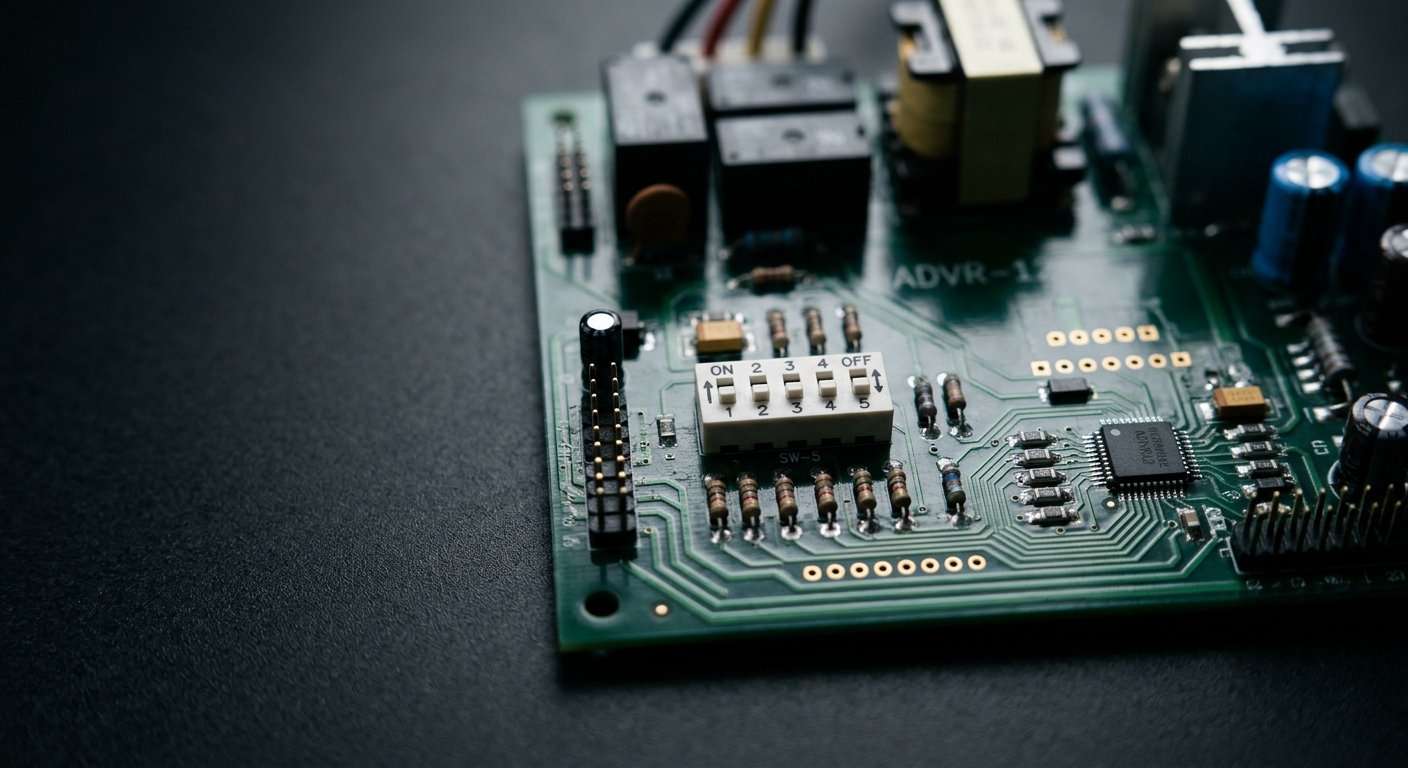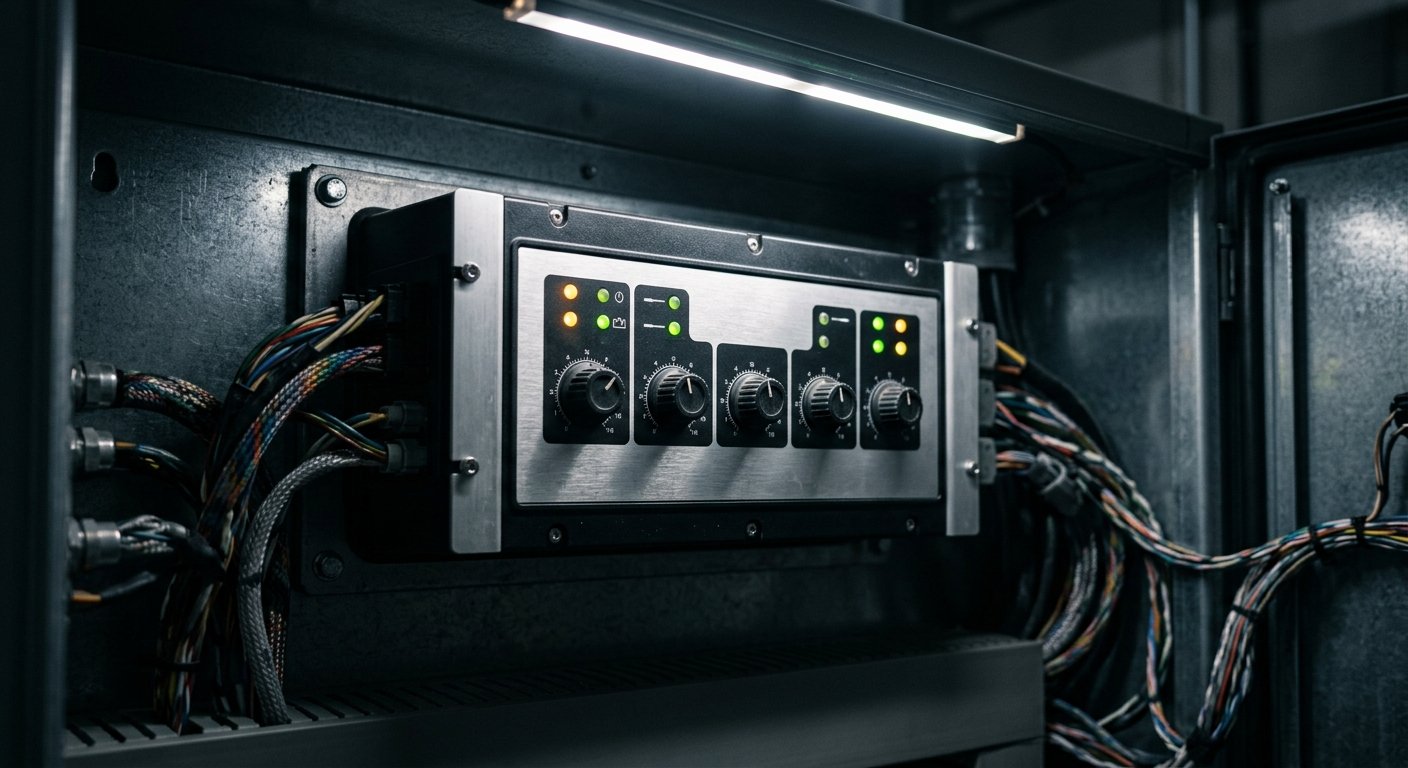



The ATS-22A programmable transfer switch controller has five adjustable time delays — TDES, TDNE, TDEN, TDEC, and a center OFF delay — stored in NVRAM and set directly on the front panel. Each delay controls a distinct phase of the start-transfer-retransfer-shutdown sequence. Matching the right timer to the symptom is the fastest way to stop nuisance starts, prevent early retransfer to an unstable utility, and protect your engine with a proper cool-down.
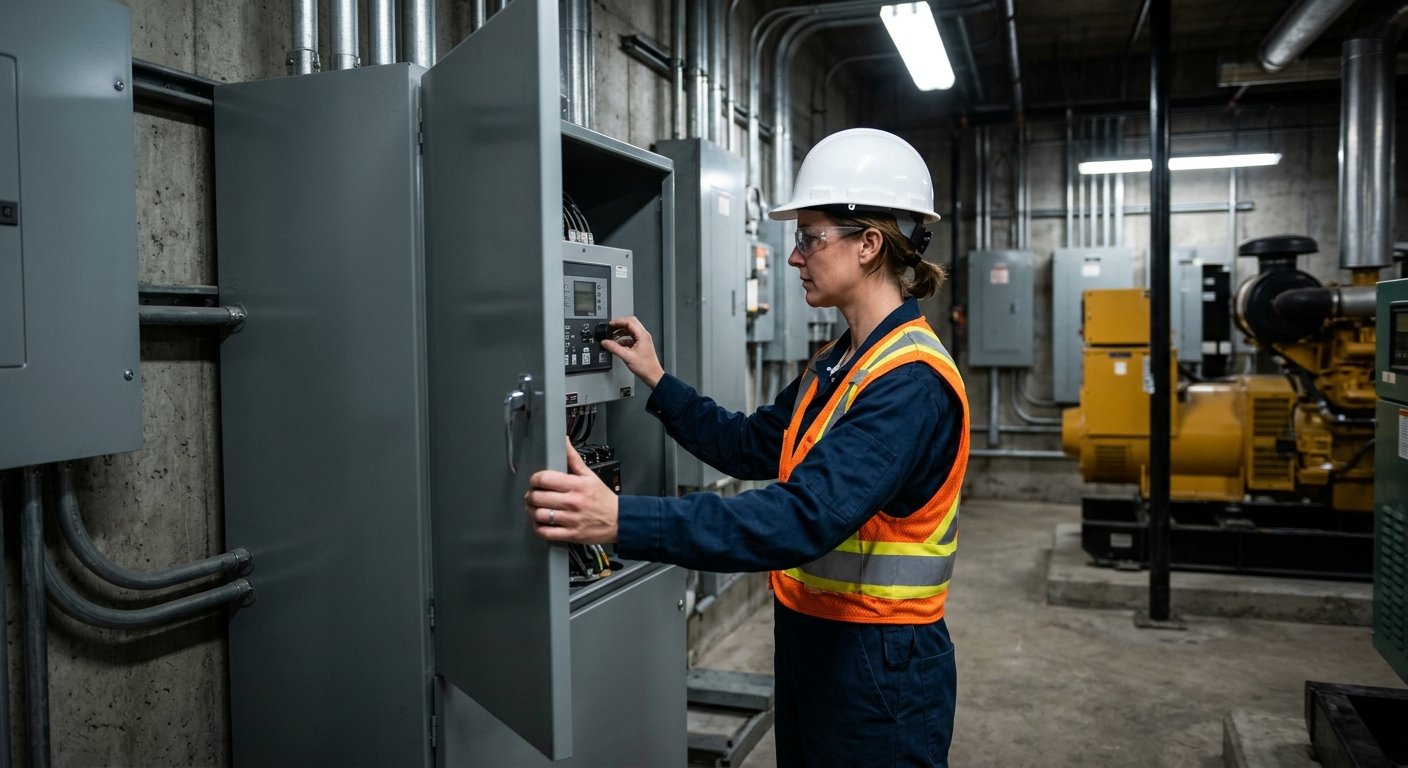
The ATS-22A is a programmable PLC-based automatic transfer switch controller suitable for both single-phase and three-phase systems. It monitors the Normal (utility) source and the Emergency (standby generator) source, then manages the entire start-transfer-retransfer-shutdown cycle based on a user-configurable program table. Settings are entered on the front panel and held in non-volatile memory, so a power interruption to the controller itself will not erase your configuration.
The program table is where most of the work happens. Lines 3 through 7 house the five time delays covered here. Each line is a discrete parameter with its own range; changing one does not affect the others. That independence is what makes symptom-based diagnosis straightforward once you know which line maps to which event.
The ranges and program line numbers referenced throughout this article come directly from the ATS-22A manual. If your unit’s firmware version differs, verify against your specific manual or contact MTS technical support before changing any setting.

The four acronyms are abbreviations for the stage of the transfer cycle each timer governs. Read them left to right and the stage becomes clear:
TDEN and TDNE are the pair most often swapped by technicians in a hurry. The easiest way to keep them straight: the last two letters indicate the direction of transfer. NE = Normal to Emergency (transfer to generator). EN = Emergency to Normal (retransfer to utility).

When the ATS-22A detects that the Normal source has fallen outside acceptable limits, it does not start the generator immediately. TDES — program line 5, adjustable from 0 to 30 seconds — introduces a deliberate pause before the start signal is issued. If the Normal source recovers before the TDES countdown expires, the start is skipped entirely and the timer resets. No fuel burned, no unnecessary engine cranking.
If a site is experiencing repeated nuisance starts during storms or during periods of utility sag and recovery, TDES is the first setting to review. A value of zero means any qualifying voltage deviation triggers a start immediately. Increasing TDES to filter out momentary glitches is the correct fix — not extending TDNE, which is a different stage and a different timer entirely.
For utility feeds that fluctuate frequently — common in areas prone to storm-related grid disturbances — a TDES value toward the upper end of the 0–30 sec range helps filter transient dips without leaving the load unprotected for long. Balance it against how fast your load can tolerate running without power.
Once the engine starts, it needs time to reach stable frequency and voltage before it picks up the load. TDNE — program line 4, range 0–250 seconds — starts counting when the standby source becomes available and confirmed as within spec. Only after TDNE expires does the ATS execute the Normal-to-Emergency transfer.
Too short a TDNE and you transfer load onto a generator that is still hunting or slightly under-frequency. Too long and your load sits unprotected longer than necessary. Most standby diesel sets stabilize well within the low end of the range; check your engine’s manufacturer specs for warm-up and stabilization time under load.
When utility power returns, the ATS does not immediately transfer back. TDEN — program line 3, range 0–999 seconds — holds the load on the generator while it times out and verifies that the Normal source is genuinely stable. Only after TDEN expires without another utility dropout does the retransfer proceed.
Early retransfer is one of the most damaging ATS behaviors a facility can experience. Reconnecting critical loads to a utility that is still cycling up and down risks equipment damage and forces an immediate re-transfer back to the generator — a hard switching event that also stresses the engine. The 0–999 second range gives plenty of room to match TDEN to how unstable a particular utility feed tends to be. For more background on how transfer switches interact with voltage regulation components, see our guide on how AVRs and transfer switches serve different roles in a standby power system.
After the ATS retransfers the load to Normal, the generator should not stop immediately. TDEC — program line 6, range 0–250 seconds — runs the engine unloaded from the moment the ATS reconnects to Normal until TDEC expires, at which point the shutdown command is issued. This unloaded run allows turbocharger bearings and exhaust components to cool before oil pressure drops to zero.
A generator that shuts down immediately on retransfer — with no unloaded run time — is a sign that TDEC is set to zero or that it has been inadvertently zeroed out. This is worth catching on commissioning. Skipping cool-down consistently shortens engine life, particularly on turbocharged units.
Program line 7 is the center OFF delay, adjustable from 0 to 99 seconds. When the ATS retransfers from Emergency back to Normal, the switch passes through a center OFF position. This delay holds the switch in that neutral position before it completes the move to Normal, providing a brief dead-band that prevents simultaneous source connection. It is a brief but important step in a clean retransfer sequence.
| Timer | Program Line | Range | Symptom it fixes |
|---|---|---|---|
| TDES — Engine Start | 5 | 0–30 sec | Nuisance generator starts on brief utility flickers |
| TDNE — Normal to Emergency | 4 | 0–250 sec | Load transferred before generator is stable |
| TDEN — Emergency to Normal | 3 | 0–999 sec | Early retransfer to an unstable utility |
| TDEC — Engine Cool-down | 6 | 0–250 sec | Generator shuts down with no cool-down run |
| Center OFF Delay | 7 | 0–99 sec | Both sources briefly connected during retransfer |
If you have programmed the timers correctly per the manual and the ATS-22A is still behaving erratically — skipping delays it should observe, failing to register source availability, or refusing to hold settings — the controller itself may be faulty. Intermittent NVRAM write failures and damaged front-panel interfaces are known failure modes in older units.
MTS Power Products stocks ATS controllers including the ATS-22A and can supply a replacement unit or a pre-configured controller ready to drop in. For facilities that need a broader transfer switch solution — whether two-pole, 200-amp, or 400-amp — the automatic transfer switch category covers a range of configurations. All Kutai/McPherson products we ship are 100% tested and carry serial numbers for authenticity verification. For specifications, compatibility questions, or help selecting the right controller for your system, the MTS support page is the right starting point before you order.
Match the timer to the symptom first — only after correct programming should you suspect the controller hardware itself.
TDES is Time Delay Engine Start, TDNE is Time Delay Normal to Emergency, TDEN is Time Delay Emergency to Normal, and TDEC is Time Delay Engine Cool-down. Each controls a distinct phase of the automatic transfer cycle on the ATS-22A and is set independently on the front-panel program table.
TDES on program line 5 (range 0–30 seconds) delays the engine start signal after a utility dropout is detected. If utility power returns before the TDES countdown finishes, the start is skipped and the timer resets — no unnecessary start occurs.
TDEN on program line 3 (range 0–999 seconds) holds the load on the generator while the utility stabilizes after returning. Set it long enough to filter out repeated utility cycling. The correct value depends on how stable your utility feed is; there is no universal number.
TDEC on program line 6 (range 0–250 seconds) runs the generator unloaded after the ATS reconnects the load to Normal power, before the shutdown command is sent. It protects turbocharged engines by allowing heat to dissipate before oil pressure drops.
No. Settings are entered on the front panel and stored in NVRAM, which retains data without power. A power interruption to the controller will not erase the program table.
Contact MTS technical support to match the right controller to your system or to order a replacement ATS-22A unit — direct from the manufacturer, with every unit tested before it ships.
MTS Power Products is a Miami-based, manufacturer-direct supplier of generator parts — including AVRs, transfer switches, battery chargers, and governors — serving commercial, marine, and residential backup power needs nationwide. They combine deep technical expertise with personalized service, helping generator technicians, electricians, facility managers, marine operators, and homeowners select the right parts and keep their backup power systems running reliably. Their direct-from-manufacturer model delivers fair pricing and knowledgeable support that big-box distributors cannot match. Visit mtspowerproducts.com →