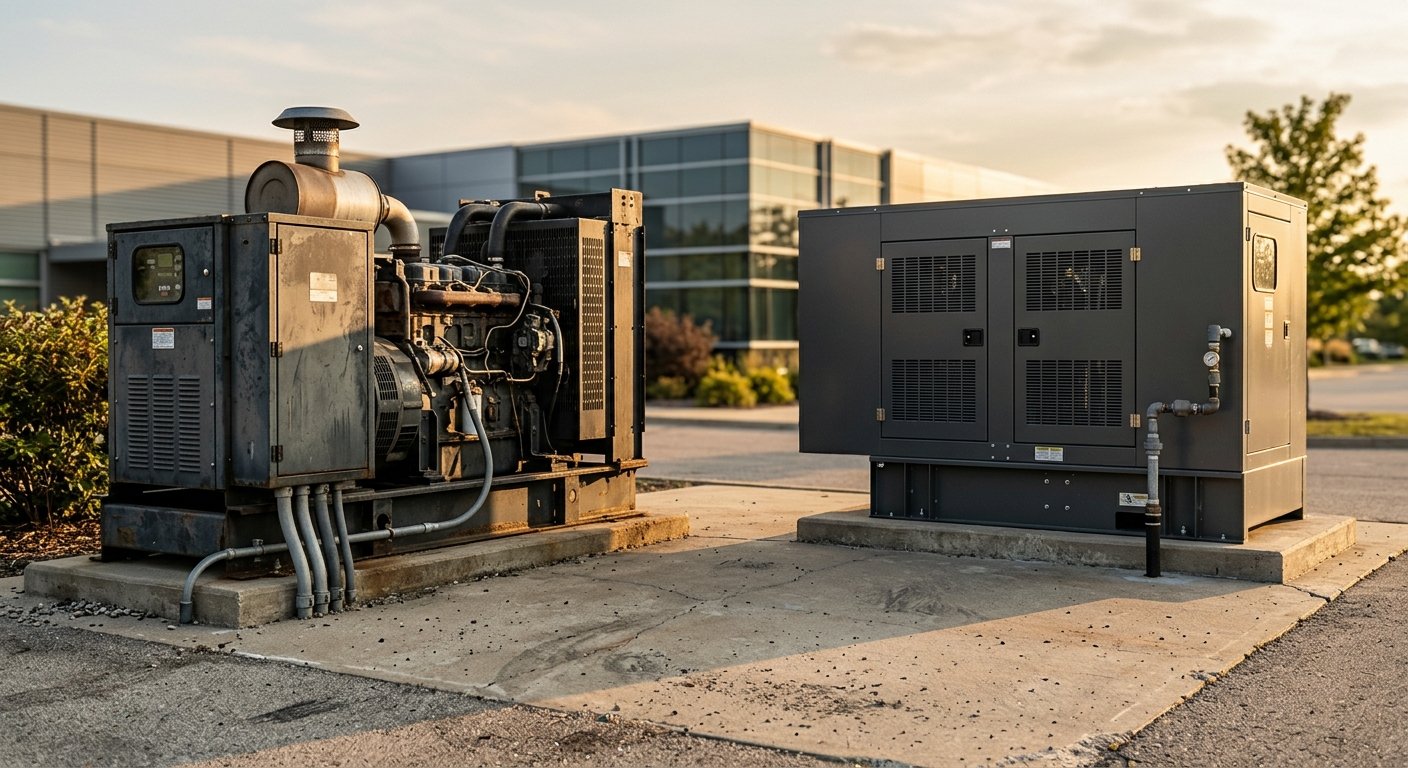



Choosing the right generator size means matching your total electrical load — measured in kilowatts (kW) — to a unit with enough rated capacity to run that load continuously, plus a margin for motor starting surges. Undersized generators overload, overheat, and fail. Oversized ones waste fuel and wear out wet stacking engines. This guide walks homeowners and facility managers through an accurate load calculation so they buy right the first time.
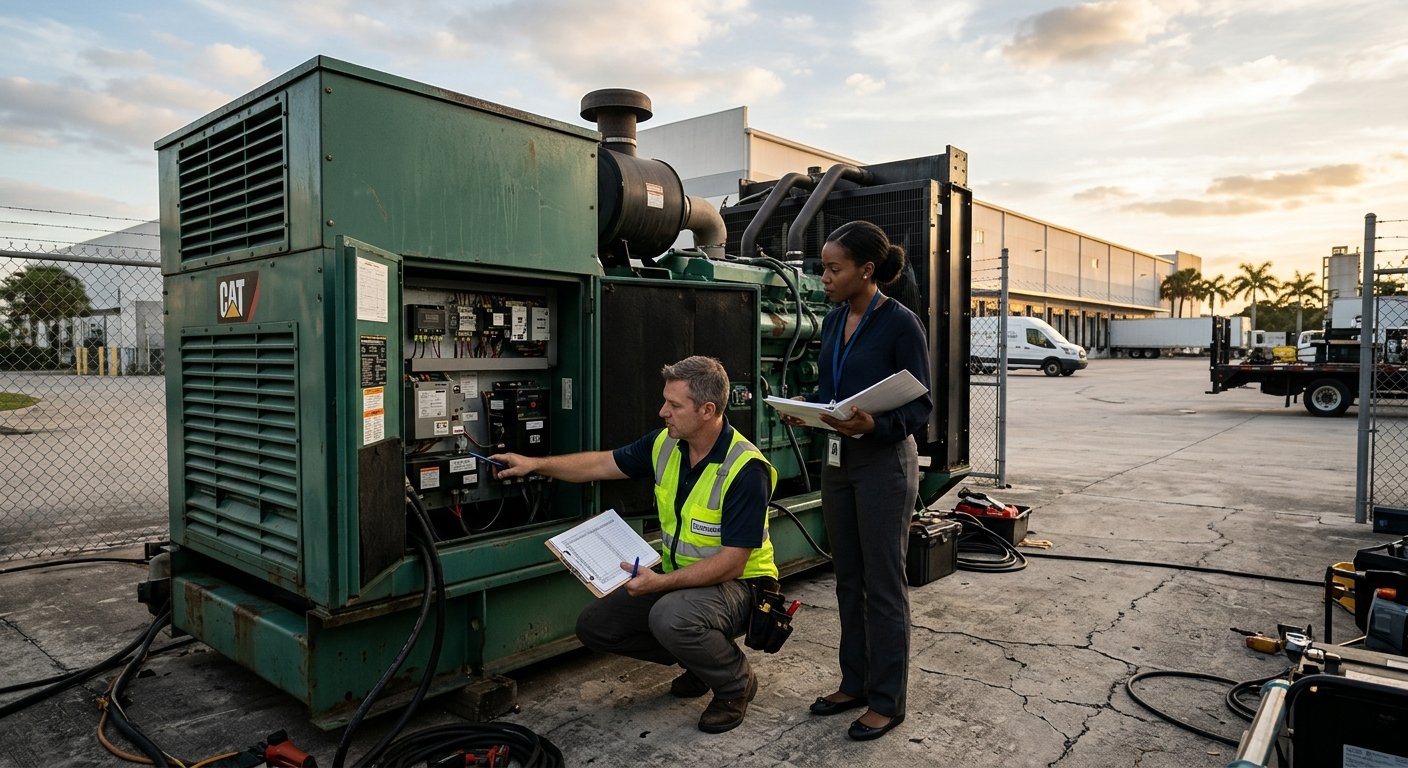
Every generator has two output ratings: a standby rating (maximum load for short-duration outages) and a prime or continuous rating (sustained load for extended run time). A unit advertised as “20 kW standby” may be rated 18 kW prime. If your facility or home draws 19 kW continuously, that generator is already in trouble — even though the nameplate sounds sufficient.
Getting this right before you buy — or before you order replacement parts for an existing unit — is where the real expertise lies. The math is straightforward; the discipline is making sure you haven’t missed any loads.
Many homeowners size a whole house generator based on their utility panel’s main breaker rating (e.g., 200A service) rather than their actual running load. A 200A, 240V service represents a theoretical maximum of 48 kW — far more than most homes ever draw at once. Always calculate from real loads, not service capacity.

Start by deciding what must run during an outage. For a South Florida homeowner facing hurricane season, that typically means air conditioning, refrigerators, lighting, and medical equipment. For a commercial facility, the list expands to HVAC systems, servers, elevators, and process equipment.
List every load in watts (W) or amps (A). Most appliances have a nameplate rating. If you have amps but need watts: Watts = Amps × Volts. A 20A, 240V central AC compressor draws 4,800W running — call it 4.8 kW.
Include HVAC compressors, refrigerators, sump pumps, well pumps, lighting circuits, computers, and any medical devices. Don’t guess — check the nameplate label on each unit.
Motors require 2–3× their running wattage to start. A 1.5 kW pump motor may draw 4.5 kW for the first two seconds. Your generator must handle that surge without tripping.
Total your running watts, add 20–25% for surge headroom, then convert to kW by dividing by 1,000. That’s your minimum generator rating.
Generators come in standard kW increments — 10, 14, 17, 20, 22, 25, 30, 48, 60 kW and beyond. Always round up to the next full increment.
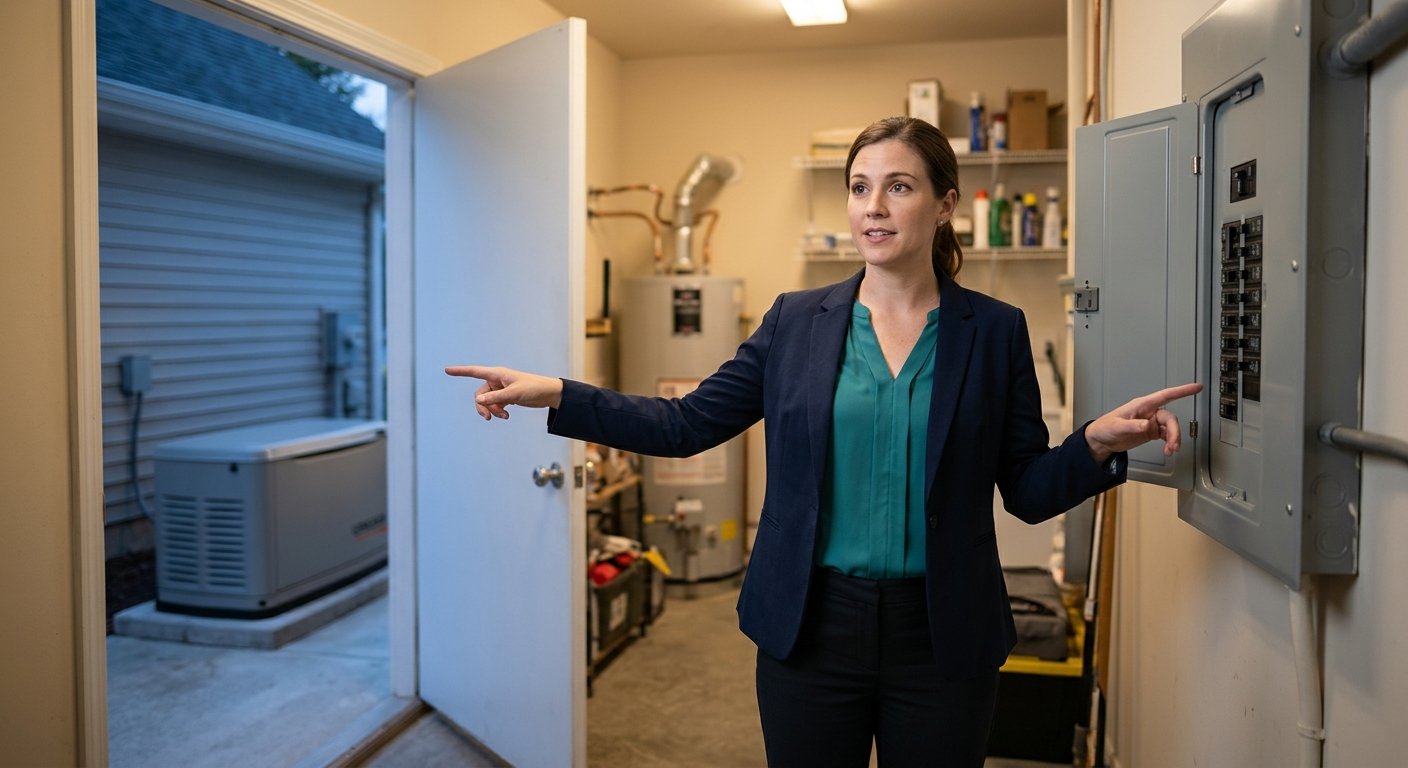
As a practical reference, here’s how loads typically stack up. These are illustrative examples to help you build your own list — your actual loads will vary.
| Application | Typical Running kW | Recommended Standby Size |
|---|---|---|
| Small home, essential circuits only | 5–8 kW | 10–12 kW |
| Whole-house (2,000–3,000 sq ft, central AC) | 12–18 kW | 20–22 kW |
| Large home or small office | 20–30 kW | 35–40 kW |
| Small commercial facility | 40–80 kW | 60–100 kW |
| Hospital or data center wing | 200 kW+ | Engineered system required |
For commercial and industrial sizing, the NFPA 110 Standard for Emergency and Standby Power Systems provides engineering requirements for load classification, transfer time, and system testing. Facilities with life-safety systems — hospitals, high-rise buildings — must comply with these requirements, which influence both generator sizing and the specification of automatic transfer switches.
Generator output is sometimes stated in kVA (kilovolt-amperes) rather than kW (kilowatts). The relationship is: kW = kVA × Power Factor (PF). Most residential and light commercial loads run at a power factor of 0.8. So a 25 kVA generator produces 20 kW of usable power. Never assume kVA equals kW — the difference matters when you’re sizing for real loads.
When comparing generator specs, always compare kW at the same power factor. Manufacturer spec sheets for quality engine brands like Cummins, John Deere, and Mitsubishi will clearly state both kW and kVA ratings at 0.8 PF — use the kW figure for load matching.
Fuel type affects rated output, storage logistics, and how long your generator can run unattended. Each option involves tradeoffs.
Diesel delivers the highest energy density and is the standard for commercial and prime-power applications. Diesel gensets from MTS Power Products — built on John Deere, Cummins, and Mitsubishi engines — are designed for sustained run times and are well-suited to South Florida’s extended post-hurricane outage scenarios. Diesel must be stored and rotated, and fuel polishing is recommended for long-term standby tanks.
Natural gas eliminates on-site fuel storage since it draws from the utility grid. For home standby generator applications in established neighborhoods, natural gas is convenient. The tradeoff: output derate at altitude (less of a concern in South Florida) and dependency on the gas distribution network during a disaster.
Propane (LPG) bridges the gap — stored on-site like diesel but burns cleaner. Useful when natural gas service isn’t available. Propane generators typically derate output by roughly 10% compared to their gasoline or diesel equivalents; verify the propane-specific rating on any unit you evaluate, per the manufacturer’s documentation.
The right fuel type isn’t always the cheapest — it’s the one that keeps running when your utility infrastructure is compromised.
Most residential standby generators operate on single-phase 120/240V power, which matches standard home wiring. Three-phase power (typically 208V or 480V) is standard for commercial facilities, industrial equipment, and larger HVAC chillers. If you’re specifying backup power for a commercial property, verify that your facility’s distribution panels and critical equipment match the generator’s output voltage and phase configuration. An automatic transfer switch must be specified to match both the source voltage and the load panel configuration — mismatched equipment is a common and costly error.
Understanding how an ATS coordinates with your generator is fundamental. If you’re new to how these components interact, this breakdown of AVRs versus transfer switches explains what each component does and why both matter to a reliable backup power system.
A generator without a properly rated automatic transfer switch is an incomplete system. The ATS monitors utility voltage, senses an outage, starts the generator, confirms it’s stable, and transfers the load — all within seconds. For residential whole-house backup, transfer times of 10–30 seconds are typical. For life-safety applications under NFPA 110, the maximum transfer time is 10 seconds for Level 1 systems.
Size your ATS to match both the generator’s output and your load panel’s amperage rating. An undersized transfer switch is a fire hazard; an oversized one wastes money. The generator parts catalog at MTS Power Products includes ATS units and the components to support them, sourced direct from the manufacturer.
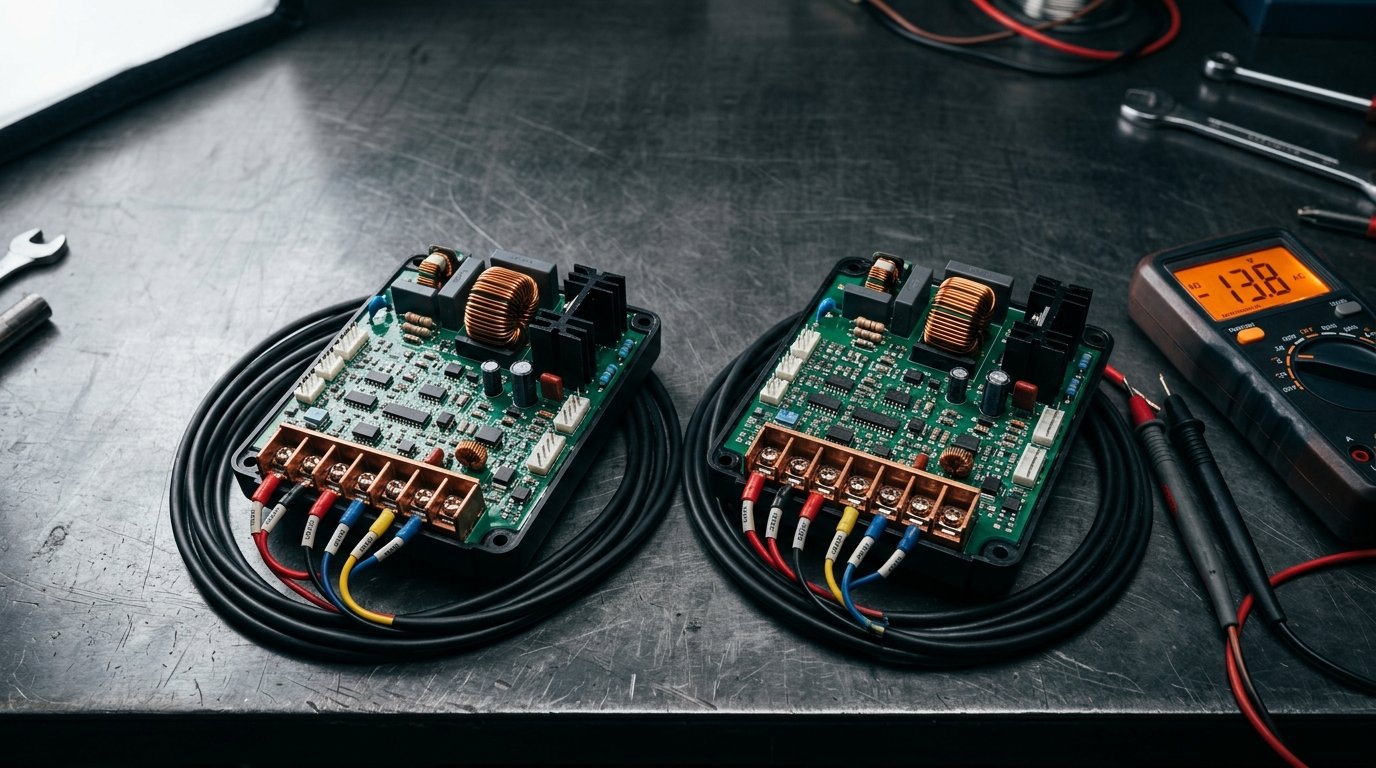
Once your generator transfers load, stable voltage output depends on a properly functioning automatic voltage regulator (AVR). A failing AVR causes voltage fluctuations that can damage sensitive electronics. If your generator is producing unstable voltage under load, the AVR is the first component to test. MTS stocks AVRs for a wide range of generator models — sourced direct, with knowledgeable support to help confirm compatibility.
For engineers and facility managers doing formal load analysis, IEEE 446 (IEEE Recommended Practice for Emergency and Standby Power Systems) provides a documented methodology for calculating generator sizing, including motor starting kVA, load diversity factors, and growth allowances. If you’re specifying backup power for a data center, hospital, or manufacturing facility, referencing IEEE 446 alongside NFPA 110 keeps your specification defensible and code-compliant.
Most homes between 2,000 and 3,500 square feet with central air conditioning need a standby generator rated between 20 kW and 25 kW to run all critical loads simultaneously. Larger homes with multiple AC zones, electric water heaters, or pool equipment may need 30–40 kW. Always calculate your actual load rather than estimating by square footage alone.
Standby rating is the maximum output a generator can sustain for short outage periods, typically with variable load. Prime rating is the output the unit can sustain continuously at 100% load for unlimited hours. For extended outages — such as post-hurricane recovery — operating at or above the prime rating will shorten engine life significantly.
Electric motors — air conditioner compressors, pumps, refrigerator compressors — draw two to three times their running current for a brief period on startup. Identify the largest motor in your load list, multiply its running kW by 2.5 as a worst-case surge, and verify your generator’s motor starting kVA rating meets or exceeds that figure. This number appears on the generator’s spec sheet.
Yes, but with limits. Running a diesel generator at less than 30–40% of its rated load for extended periods causes wet stacking — incomplete combustion that deposits unburned fuel in the exhaust system and damages the engine over time. Size generously, but not so large that your normal load falls below the manufacturer’s recommended minimum load percentage. When in doubt, consult the engine manufacturer’s guidelines.
Most commercial facilities in the US are wired for three-phase power, particularly anything with large HVAC systems, industrial machinery, or elevator equipment. A single-phase generator will not serve three-phase loads. Before specifying backup power, confirm your facility’s utility service voltage, phase count, and the phase requirements of all critical equipment. Your electrical drawings will show this clearly.
The MTS Power Products team in Miami has 30 years of hands-on generator experience — from helping technicians order the right ATS or AVR to engineering custom gensets built on John Deere, Cummins, and Mitsubishi engines. Reach out with your load list and we’ll point you in the right direction.
MTS Power Products is a Miami-based, manufacturer-direct supplier of generator parts — including AVRs, transfer switches, battery chargers, and governors — serving commercial, marine, and residential backup power needs nationwide. They combine deep technical expertise with personalized service, helping generator technicians, electricians, facility managers, marine operators, and homeowners select the right parts and keep their backup power systems running reliably. Their direct-from-manufacturer model delivers fair pricing and knowledgeable support that big-box distributors cannot match. Visit mtspowerproducts.com →