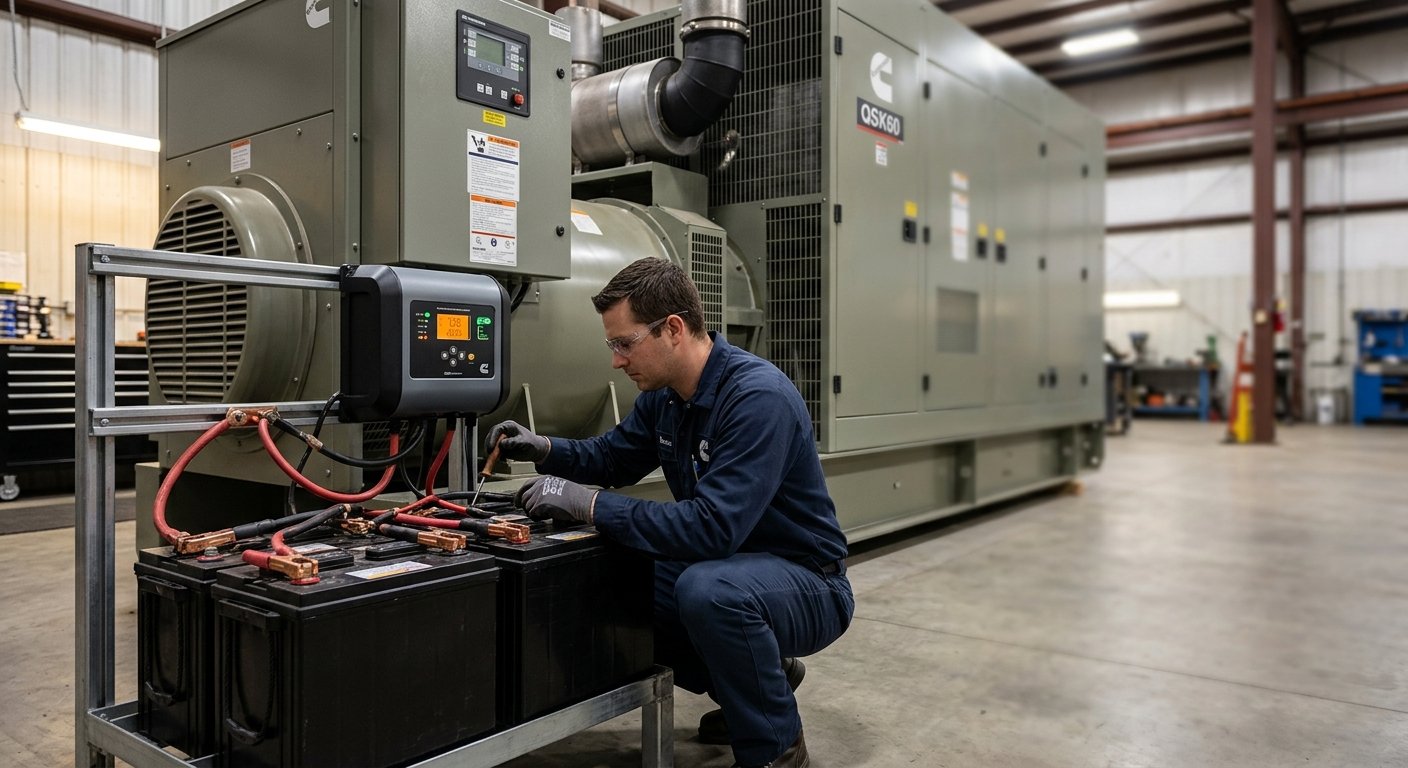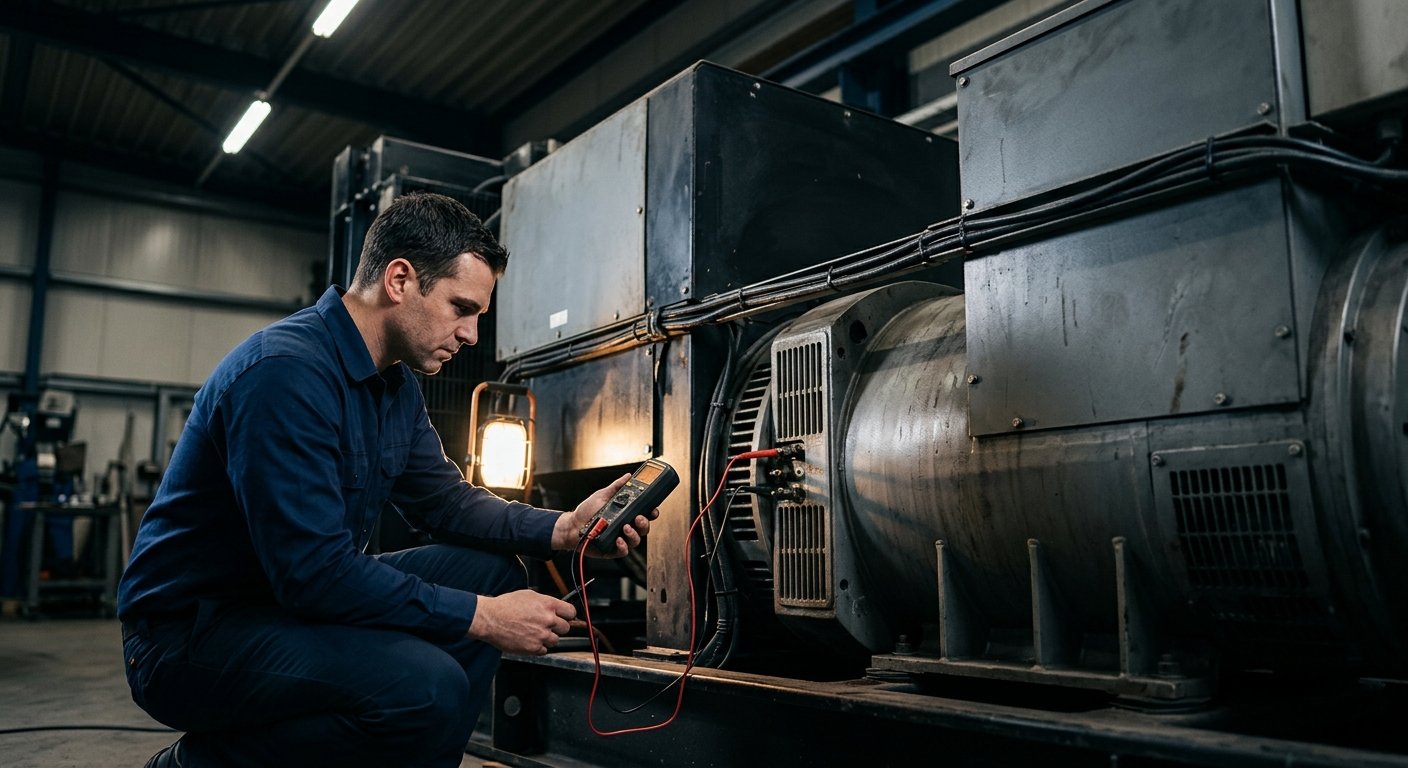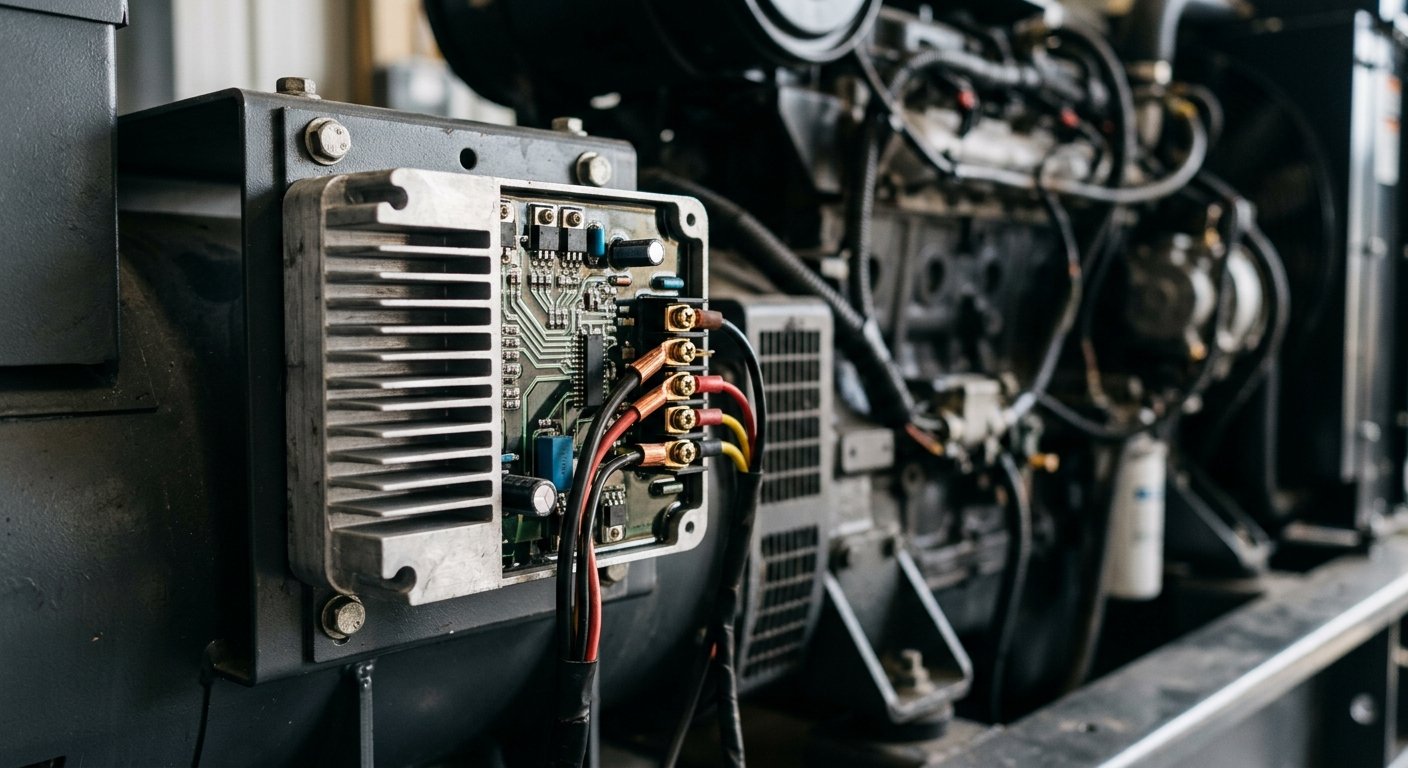



Voltage instability is one of the most common — and most preventable — causes of generator failure in the field. If you’ve ever watched a standby unit surge, hunt under load, or trip sensitive equipment downstream, there’s a good chance the automatic voltage regulator is at the center of the problem. Understanding how a brushless generator AVR actually works isn’t just academic knowledge. It’s the difference between a five-minute parts swap and an expensive diagnostic rabbit hole.
This guide breaks down the mechanics, the failure points, and what to look for when you’re sourcing a replacement AVR for a brushless generator — whether you’re a technician keeping a commercial facility online or a South Florida homeowner who can’t afford to guess wrong when hurricane season rolls in.
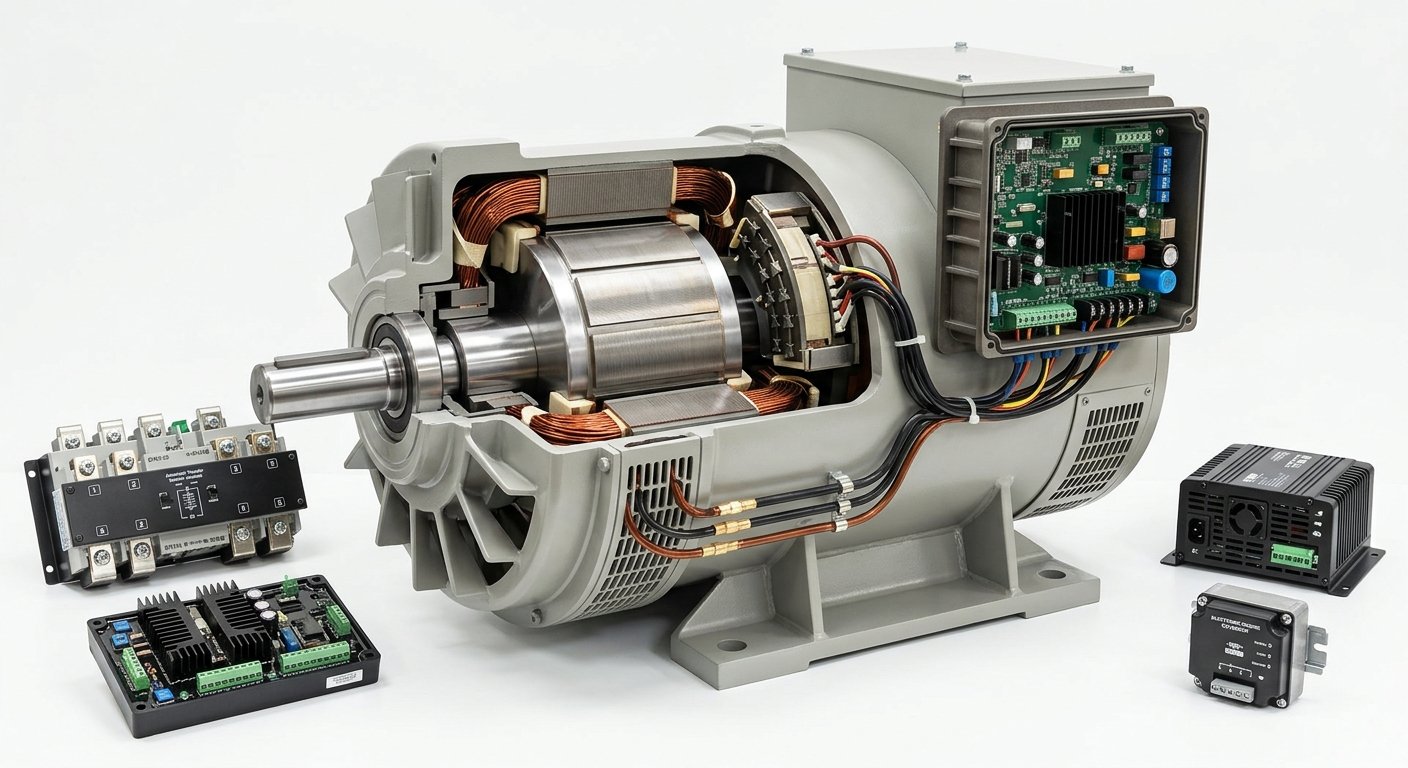
An automatic voltage regulator (AVR) is the electronic control module that maintains stable AC output voltage from a generator under varying load conditions. In a brushless generator specifically, the AVR works in concert with the exciter system to regulate field current — without the mechanical brushes and slip rings used in older alternator designs.
The “brushless” designation refers to how excitation current reaches the rotating field winding. Instead of using carbon brushes riding on slip rings (a wear-prone, maintenance-intensive setup), a brushless alternator uses a rotating rectifier assembly mounted on the rotor shaft. The AVR sends DC excitation to a stationary exciter stator, which induces AC current in the exciter rotor. That AC is rectified to DC on the shaft itself and fed directly to the main field winding — all without any sliding electrical contact.
The result is a more reliable, lower-maintenance system. But the AVR is still doing the heavy lifting: sensing output voltage, comparing it to the set point (typically 120/240V single-phase or 208/480V three-phase), and continuously adjusting excitation current to compensate for load changes, speed variations, and temperature drift.
Understanding the control loop helps you diagnose problems faster. Here’s the signal path in a typical brushless generator:
This is why AVR quality matters so much for sensitive loads like medical equipment, data servers, and variable frequency drives. A sluggish or failing AVR can’t keep up with fast load transients, and the resulting voltage spikes or sags can damage connected equipment. According to the U.S. Department of Energy, power quality disturbances cost American industry billions of dollars annually — most of which is preventable with properly functioning voltage regulation.
AVRs don’t usually fail catastrophically without warning. Most failure modes show up as voltage instability before the unit quits entirely. Watch for these signs:
The NEMA MG1 standard for motors and generators specifies voltage regulation tolerances and excitation requirements — a useful reference when you’re evaluating whether a unit’s behavior is a genuine fault or within acceptable parameters.
This is where technicians most often run into trouble. AVRs are not universal. A replacement AVR for a generator must match several specific parameters:
The AVR must be rated to supply the exciter field current your alternator requires. Undersized AVRs overheat and fail. Check the alternator nameplate and OEM documentation for excitation voltage range and maximum field current.
AVRs are configured for specific sensing voltage inputs — often 120V, 240V, or 480V. Installing an AVR with the wrong sensing voltage means the unit will regulate to the wrong set point.
50Hz and 60Hz alternators use different AVR tuning. Using a 50Hz AVR on a 60Hz machine (or vice versa) causes poor regulation and hunting. This is a common cross-compatibility mistake when sourcing generic replacements.
Parallel generator sets require AVRs with reactive power droop (VAr droop) capability to share reactive load correctly. A standard AVR without this feature will cause circulating currents and instability in a paralleled system.
Physical mounting and terminal configuration vary significantly between manufacturers. Confirm pin-out compatibility or plan for wiring adaptation before ordering.
When in doubt about compatibility, talk to a parts supplier who understands the engineering — not just the catalog number. At MTS Power Products, our team works directly with technicians to match AVRs to specific alternator models and applications. You can reach us at 305-634-1511 or through our AVR product page for cross-reference assistance.
Don’t swap an AVR on assumption alone. A methodical approach saves time and money:
According to IEEE standards for generator testing, systematic commissioning and periodic voltage regulation verification are foundational to reliable standby power system performance.
For facilities, marine operators, and homeowners who depend on their generator during extended outages — including multi-day hurricane events here in South Florida — the brushless AVR design is a meaningful advantage. No brushes means no brush wear, no carbon dust contamination in the alternator, and no scheduled brush replacement intervals. The failure modes are fewer, and when they do occur, replacement parts like AVRs and rotating rectifier diodes are standardized and widely available.
For commercial facilities running prime or continuous power, the reduced maintenance burden of a brushless alternator paired with a quality AVR translates directly to lower total cost of ownership over the generator’s service life.
MTS Power Products stocks a range of AVRs for brushless generator applications across commercial, marine, and residential backup power systems. As a manufacturer-direct supplier with national US coverage, we carry units compatible with major alternator brands and can support both standard replacements and custom-specification needs. Explore our full generator parts catalog or call our Miami team directly.
The AVR continuously monitors the generator’s AC output voltage and adjusts the excitation current supplied to the alternator’s field winding. In a brushless design, it does this through a stationary exciter stator and rotating rectifier assembly, maintaining stable output voltage within a tight tolerance — typically ±1–2% — regardless of load changes.
Common indicators include output voltage that hunts or oscillates, low or absent voltage at startup, voltage that runs high at no load, or voltage that sags when load is applied. Always test the rotating rectifier diodes and sensing connections before condemning the AVR — these can produce identical symptoms.
No. AVRs must be matched to the alternator’s excitation current and voltage requirements, sensing voltage, operating frequency (50Hz or 60Hz), and — for parallel operation — reactive power droop capability. An incorrect AVR can cause poor regulation, hunting, or component damage.
Most AVRs include trim pots for voltage set point, stability, and sometimes VAr droop. Technicians can adjust these with the generator running and a calibrated voltmeter. However, major changes to excitation settings should be approached carefully and validated against OEM specifications to avoid damaging the alternator or connected loads.
MTS Power Products supplies AVRs direct from manufacturer for a wide range of brushless generator alternators, serving technicians, facility managers, and marine operators across the US. Contact our team at 305-634-1511 or visit our AVR page to discuss your specific application and confirm compatibility before ordering.