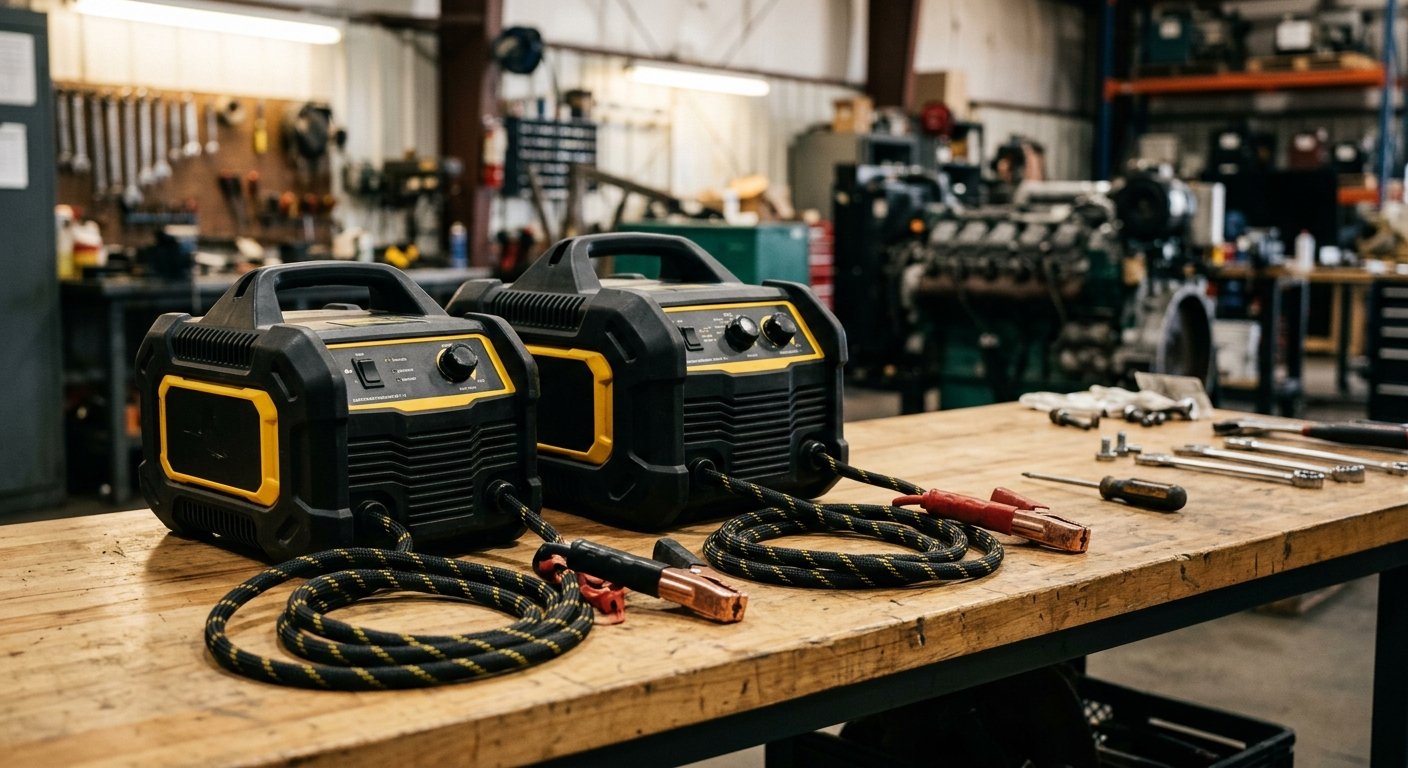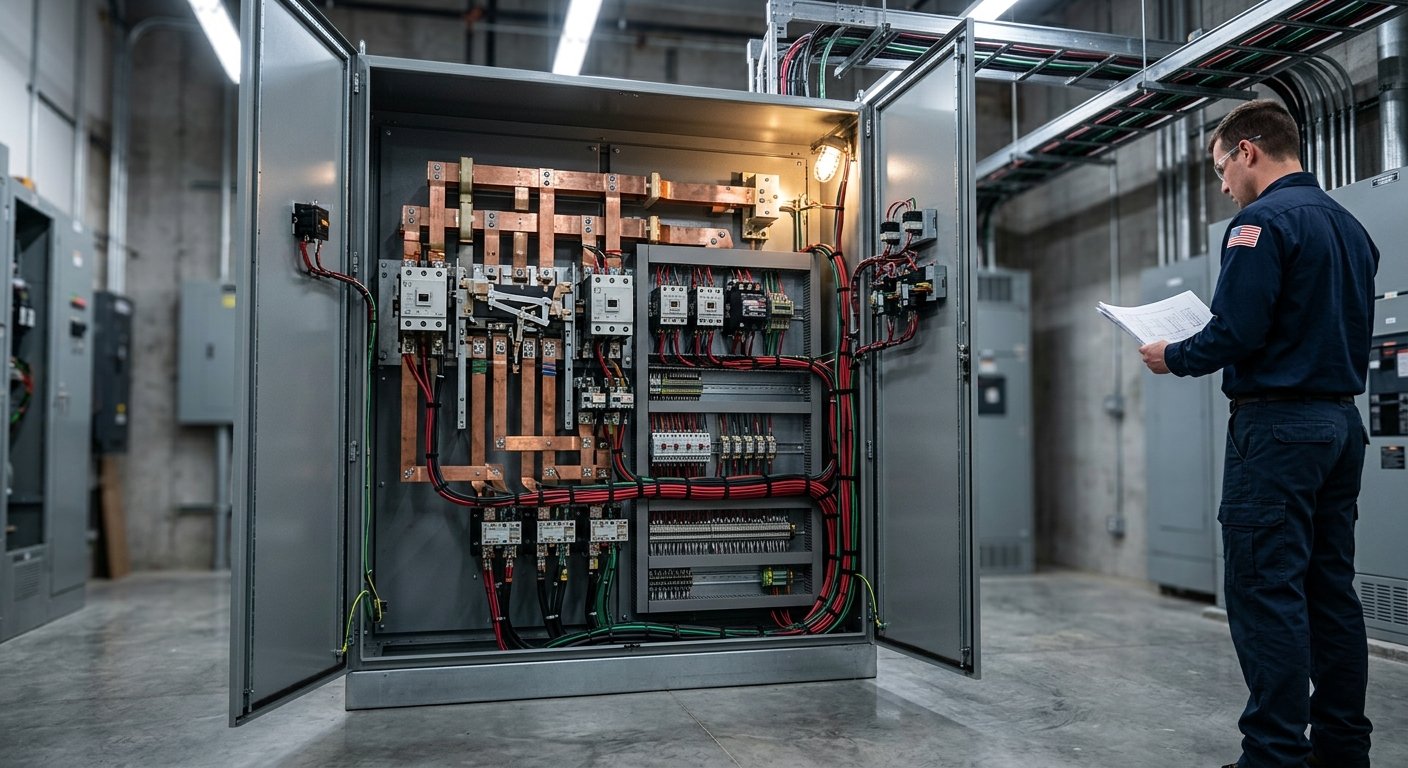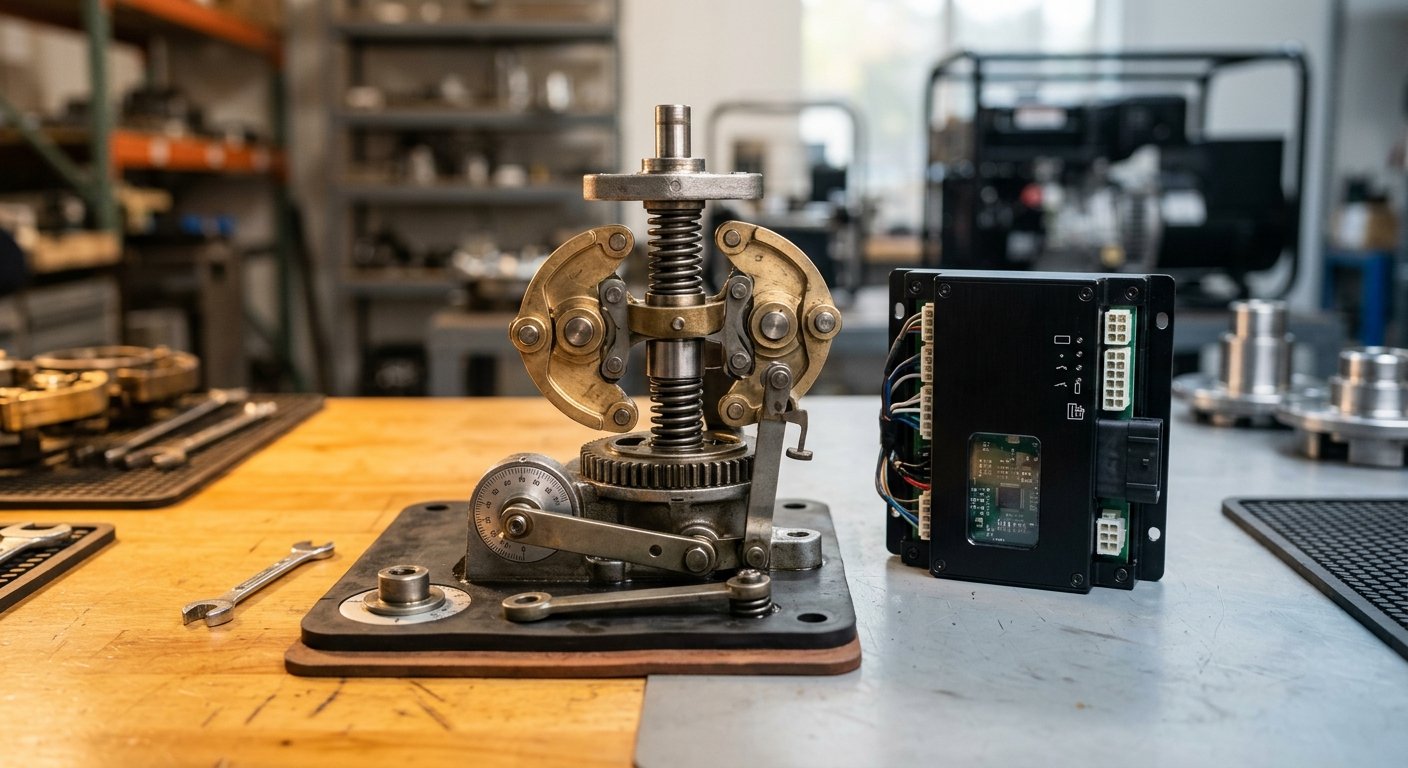



The right governor for your genset depends on how tightly you need to control frequency and how much load variation your application sees. Mechanical governors are durable, self-contained, and proven in simple applications. Electronic governors offer tighter frequency regulation — typically ±0.25% or better — making them the standard choice for sensitive loads, parallel operation, and modern commercial gensets.
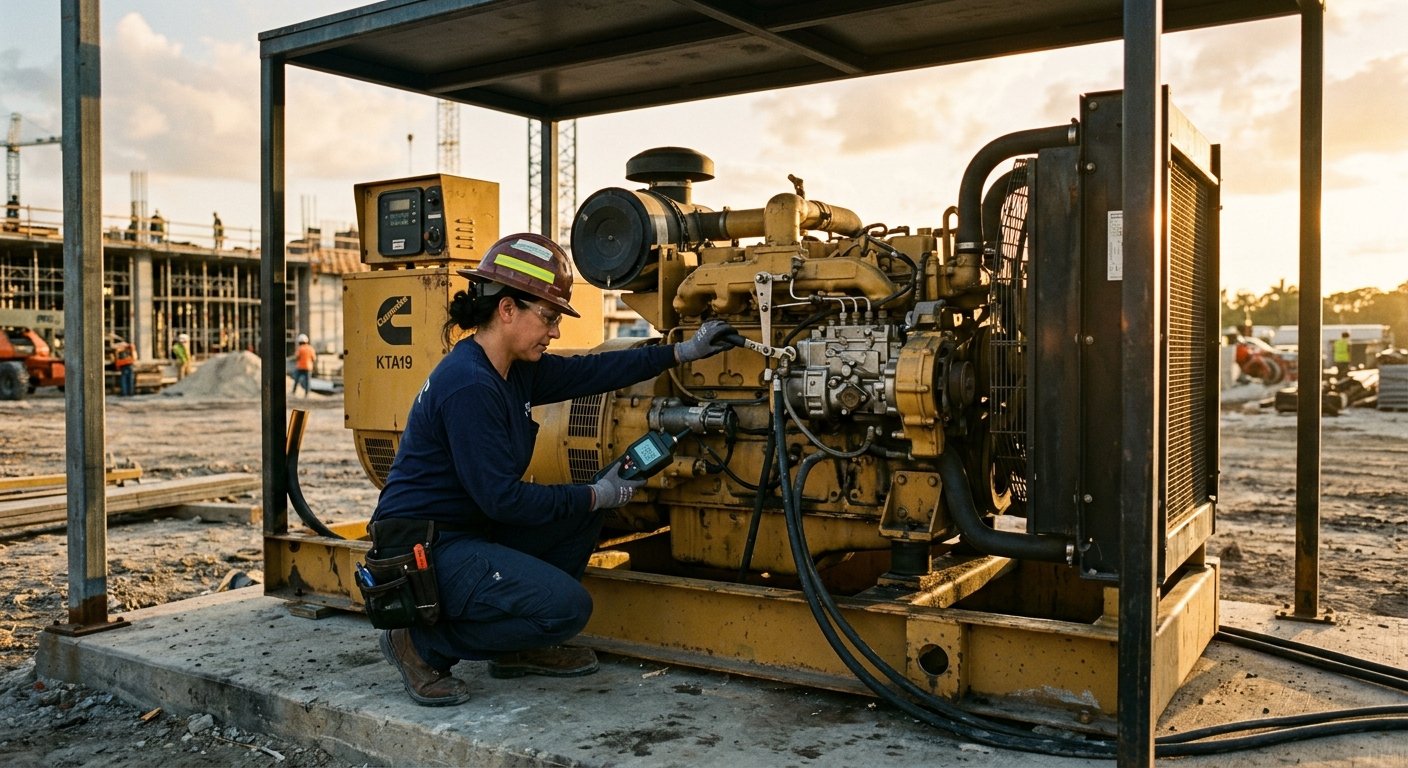
Every generator produces AC power at a frequency determined by engine speed. In the US, that target is 60 Hz — which means a 4-pole alternator must spin at exactly 1800 RPM. A governor’s job is to hold that speed steady as load comes on and falls off. Without one, voltage and frequency would swing with every load change, damaging connected equipment and failing automatic transfer conditions.
The governor monitors engine speed and adjusts fuel delivery — a mechanical linkage to the throttle or fuel rack — to compensate. The difference between a mechanical and electronic governor is how that monitoring and correction happens.
Frequency drift is often misdiagnosed as an AVR problem. Before you replace a voltage regulator, confirm your engine is holding speed under load. A governor fault will look like a voltage fault on most meters because frequency and output voltage move together.
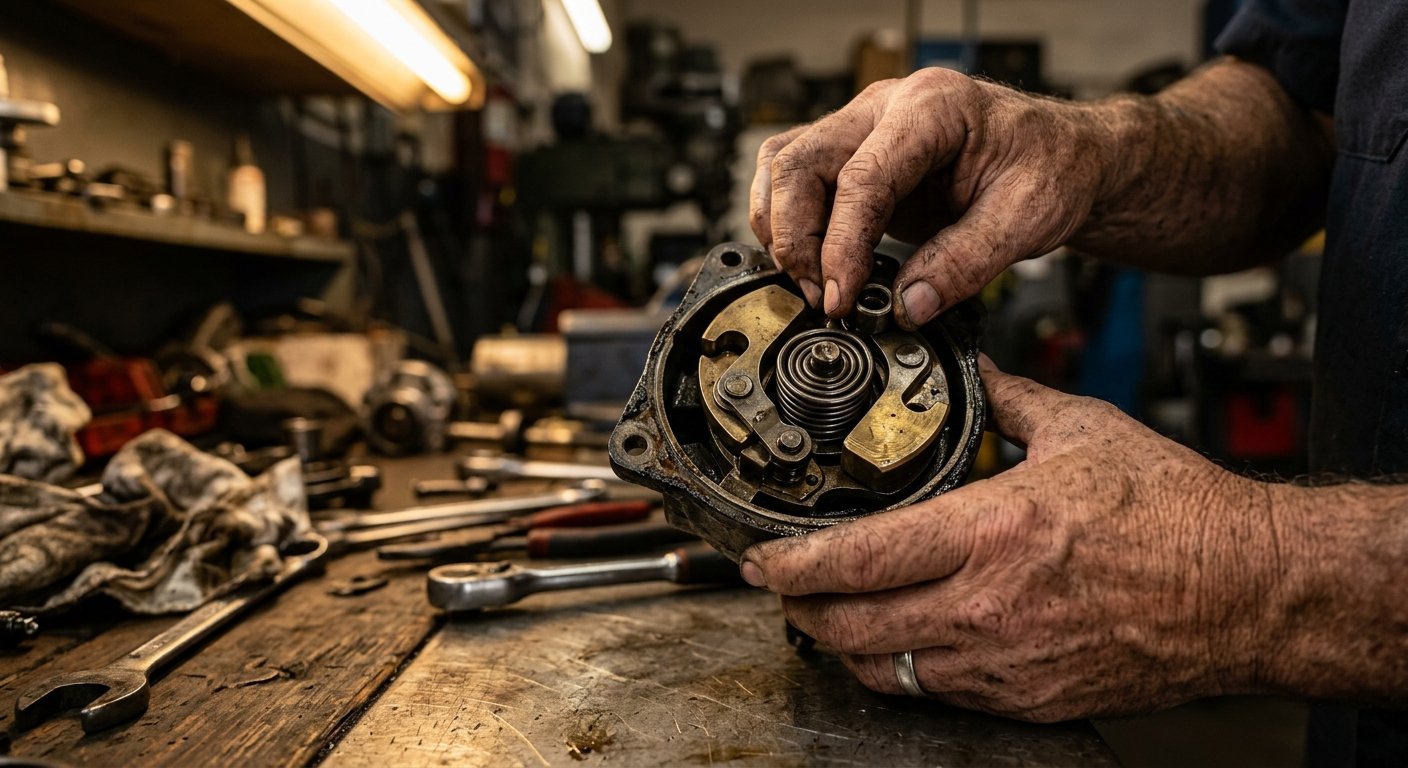
A mechanical governor is a purely hydraulic-mechanical system — no sensors, no electronics, no external power supply needed. It typically uses spinning flyweights mounted on the engine to sense RPM. As speed increases, centrifugal force pushes the flyweights outward, compressing a spring and reducing fuel delivery. When speed drops under load, the flyweights retract, spring tension opens the fuel rack, and the engine accelerates to compensate.
Mechanical governors typically regulate speed to within ±2–5% of the setpoint. On a 60 Hz system, that means frequency can swing between roughly 57 and 63 Hz during a step load change. For lighting or resistive heating loads, that’s manageable. For computers, variable-frequency drives, medical equipment, or UPS systems, it’s unacceptable. The U.S. Department of Energy’s power quality guidance identifies frequency deviation as a primary cause of sensitive equipment malfunction and data loss during generator operation.
| Criterion | Mechanical Governor | Electronic Governor |
|---|---|---|
| Frequency regulation | ±2–5% | ±0.25% or better |
| Response to step loads | Slower, noticeable droop | Fast, minimal droop |
| External power required | No | Yes (battery or DC supply) |
| Adjustment method | Spring tension, linkage | Control module parameters |
| Parallel operation | Difficult without droop calibration | Standard capability |
| Failure mode visibility | Usually gradual, mechanical wear | Can be sudden; sensor or module fault |
| Best fit | Older/simpler gensets, stable loads | Commercial, marine, sensitive loads |
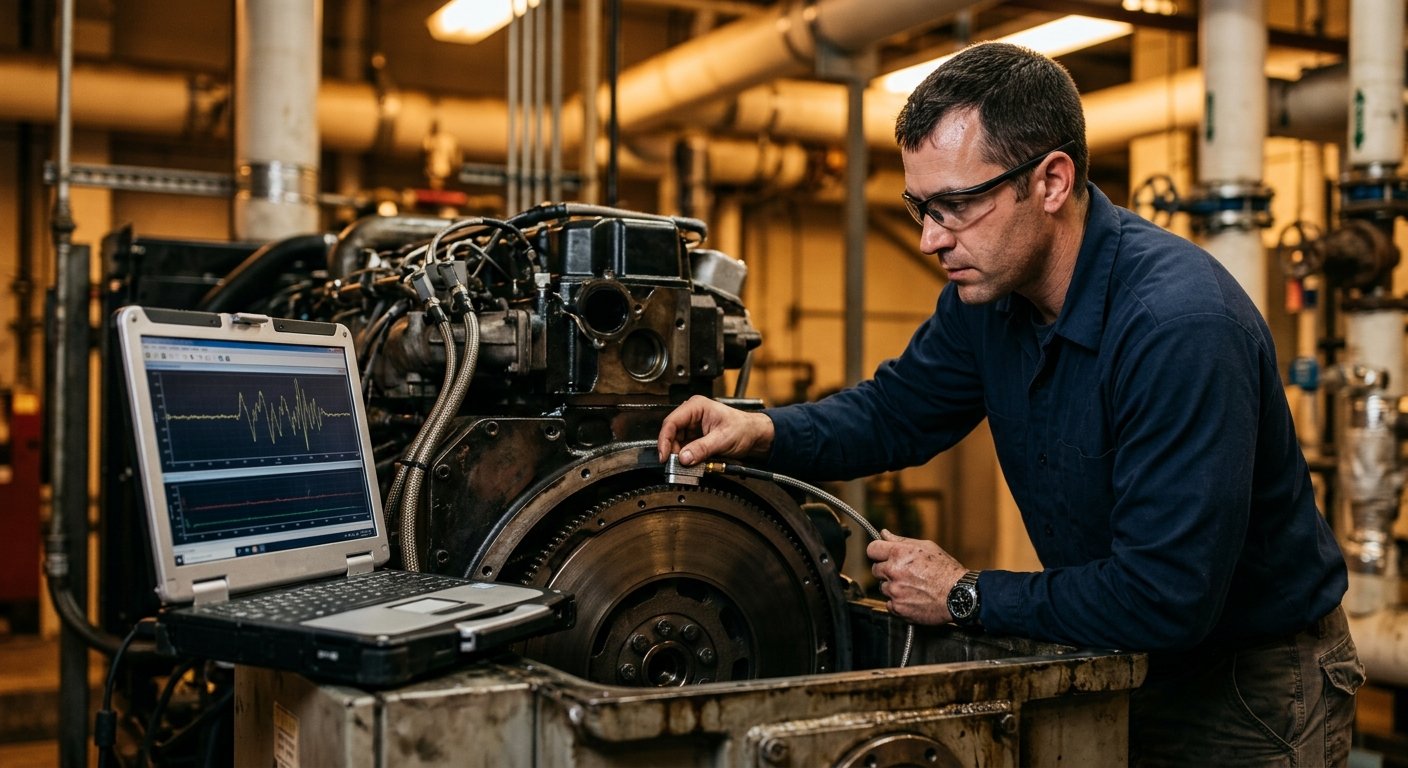
An electronic governor adds a magnetic pickup (MPU) sensor mounted near the engine flywheel ring gear. The MPU generates a pulse signal at a frequency proportional to engine RPM. A dedicated control module reads that signal, compares it to a programmed setpoint, and sends a corrective signal to an electronic actuator on the fuel system — all in milliseconds.
This closed-loop response is what allows electronic governors to hold frequency within ±0.25% under dynamic load changes. On a 60 Hz system, that’s a swing of just 0.15 Hz either side — imperceptible to sensitive equipment and well within NEMA MG-1 standards for motor-driven equipment.
If you’re replacing a mechanical governor with an electronic unit on an older engine, confirm the fuel injection system can accept an electronic actuator. Not every engine — particularly older inline pump diesels — is set up for a direct retrofit without additional hardware.
Whether mechanical or electronic, governors need periodic adjustment to maintain accurate speed setpoint and proper stability (the balance between response speed and hunting).
With the generator running at no load, measure output frequency with an accurate digital meter. Target is 60.0–61.0 Hz on most North American sets (slight high-side setpoint is normal to allow for load droop).
Step-load the generator to 75–100% of rated capacity. Record frequency at steady-state load. Droop should be within spec — typically 3–5% for isochronous mechanical, less than 1% for electronic isochronous.
For mechanical governors: turn the speed adjusting screw clockwise to increase RPM. For electronic governors: adjust the speed trim potentiometer or parameter on the control module per the manufacturer’s specification sheet.
If the engine hunts (oscillates RPM without stabilizing), reduce gain or increase stability setting. Over-correction is the most common mistake — make small adjustments and allow the engine to settle between changes.
Apply and remove load in steps to simulate real-world operation. A properly tuned governor recovers to setpoint within 1–3 seconds without oscillation.
A governor that hunts at no load will always hunt worse under load — tune for stability first, then set speed.
Governors fail gradually or suddenly depending on type. Mechanical units wear at the flyweight pivots and spring assemblies — the first sign is usually increased hunting or a setpoint that drifts over time. Electronic units can fail at the MPU sensor, the actuator, or the control module. A dead MPU produces no output signal and typically causes the engine to surge to overspeed or shut down on a fault code.
Before ordering replacement generator parts, isolate the faulty component. Swap the MPU first — it’s the lowest-cost item and the most common electronic governor failure point. If the actuator checks out and the MPU is good, the control module is the likely culprit. The governor fundamentals documented by industry technical resources are a useful reference for verifying actuator resistance and MPU output voltage specs before condemning a module.
At MTS Power Products, our technical team helps technicians and facility staff identify the right replacement governor components — whether that’s a complete electronic governor kit or individual parts like actuators, MPU sensors, or control modules. As a manufacturer-direct supplier with national US coverage, we stock governor parts across major engine platforms and can help you cross-reference your existing unit to a compatible replacement. Call our Miami team at 305-634-1511 when you’re not sure what you’re looking at — we’d rather spend five minutes helping you order the right part than send you the wrong one.
For gensets where governor issues are showing alongside voltage instability, it’s worth inspecting the automatic voltage regulator as well — the two systems interact closely under load changes. And if your genset is failing to transfer reliably to generator power, the problem may lie upstream at your transfer switch rather than the governor itself.
A governor controls engine speed to maintain a consistent output frequency — 60 Hz in North America. It does this by adjusting fuel delivery in response to load changes, preventing the engine from slowing down when load is applied or overspeeding when load is removed.
The clearest signs are engine hunting (rhythmic RPM oscillation), frequency that won’t stabilize under load, or an engine that surges to overspeed and shuts on a fault. Electronic governors may also show an error code pointing to the MPU or actuator circuit. Isolate each component before replacing the full assembly.
Often yes, but it depends on the engine. The fuel system must be compatible with an electronic actuator, and you’ll need to install a magnetic pickup sensor on the flywheel. Some older engines with mechanical injection pumps require an adapter kit. Verify compatibility with your engine’s service documentation or call a knowledgeable parts supplier before ordering.
Mechanical governors should be inspected annually — check for linkage wear, spring fatigue, and setpoint drift. Electronic governors require less mechanical maintenance but benefit from MPU air gap verification and a frequency check under load at least once a year. Any time a genset fails its monthly exercise or shows frequency instability, the governor is the first system to check.
Yes, significantly. Paralleling two generators requires matched droop characteristics and precise load-sharing control — capabilities that electronic isochronous governors handle reliably. Mechanical governors can be set for droop mode paralleling, but the calibration is more difficult to maintain and frequency regulation is less precise. For any multi-unit paralleled installation, electronic governors are the practical standard.
Our Miami-based team helps technicians and facility staff across the US identify compatible replacement governors, actuators, and MPU sensors — manufacturer-direct, with real technical support on every order.
MTS Power Products is a Miami-based, manufacturer-direct supplier of generator parts — including AVRs, transfer switches, battery chargers, and governors — serving commercial, marine, and residential backup power needs nationwide. They combine deep technical expertise with personalized service, helping generator technicians, electricians, facility managers, marine operators, and homeowners select the right parts and keep their backup power systems running reliably. Their direct-from-manufacturer model delivers fair pricing and knowledgeable support that big-box distributors cannot match. Visit mtspowerproducts.com →