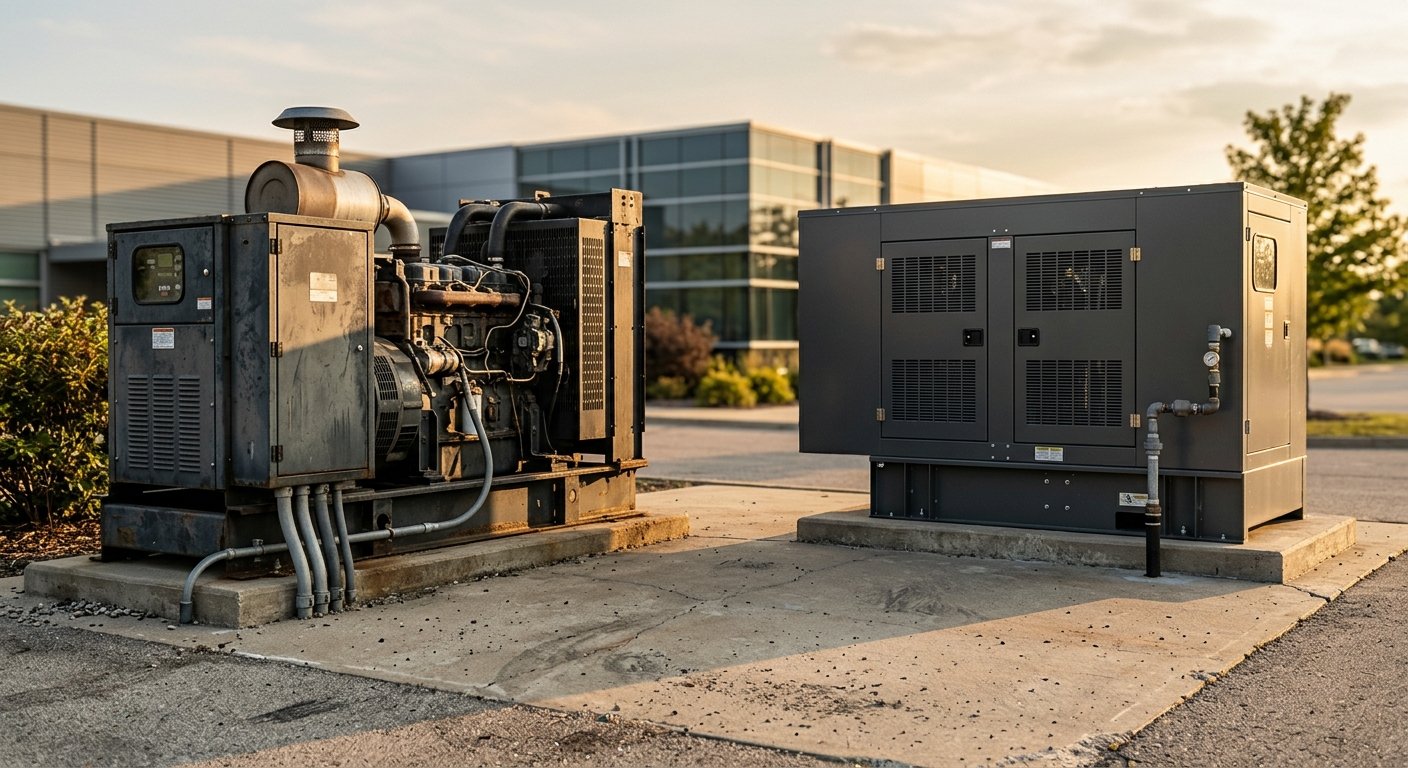



For most commercial and industrial facilities, diesel standby generators win on raw reliability and fuel storage independence. For residential and light commercial applications connected to a utility gas line, natural gas generators offer lower maintenance costs and continuous fuel supply without on-site tanks. The right choice depends on your load size, fuel access, runtime requirements, and local conditions — not a single universal answer.
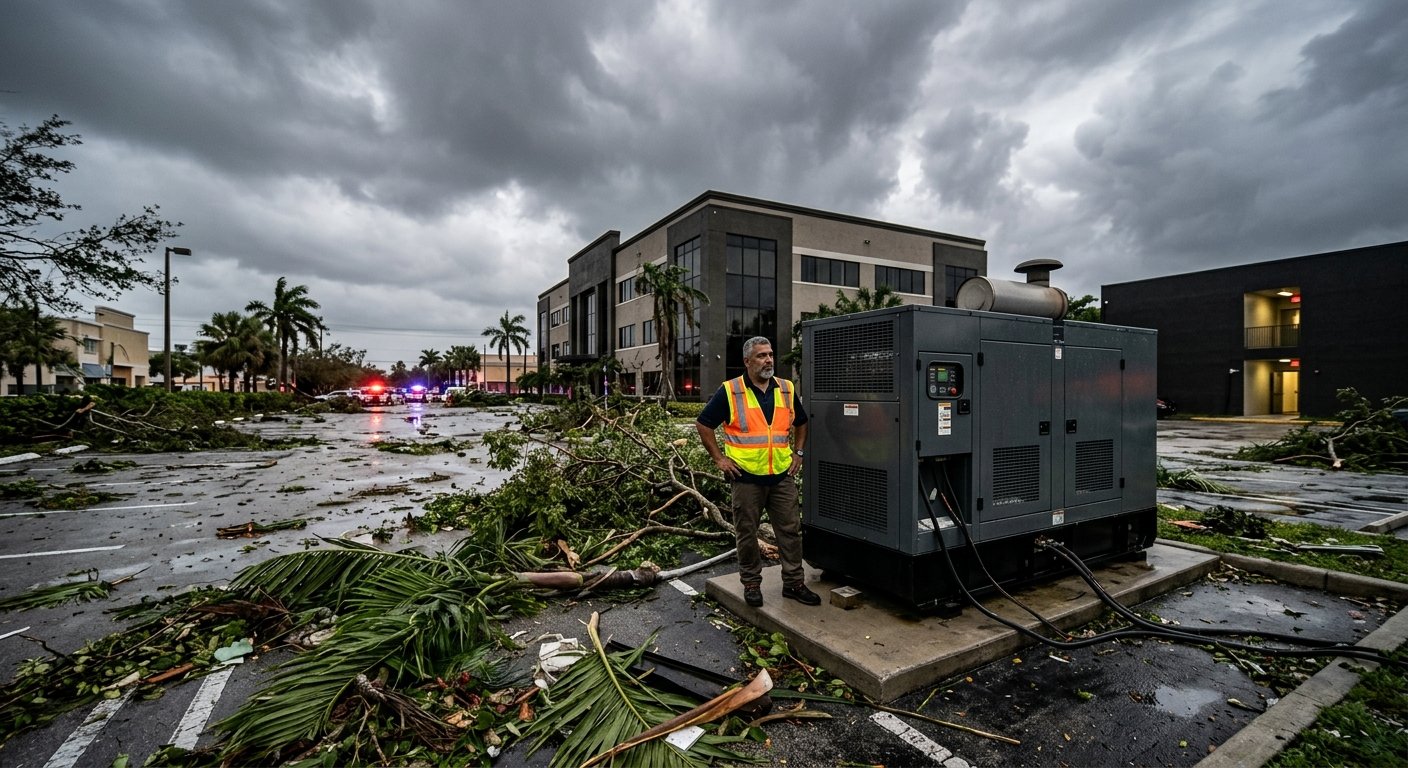
Every year, hurricane season reminds South Florida homeowners and facility managers that grid power is not a guarantee. When a storm knocks out utility power for days — sometimes weeks — your standby generator is the last line of defense. Choosing the wrong fuel type doesn’t just cause inconvenience; it can mean a generator that runs dry mid-storm or one that won’t start because the gas line lost pressure. This is a decision worth getting right before the wind picks up.
The same calculus applies to generator technicians and facility managers across the country evaluating prime or emergency power for data centers, hospitals, hotels, and industrial facilities. The stakes are different from residential, but the core trade-offs are identical.
The right fuel isn’t the one that costs less at the pump — it’s the one that’s still available on day three of an outage.
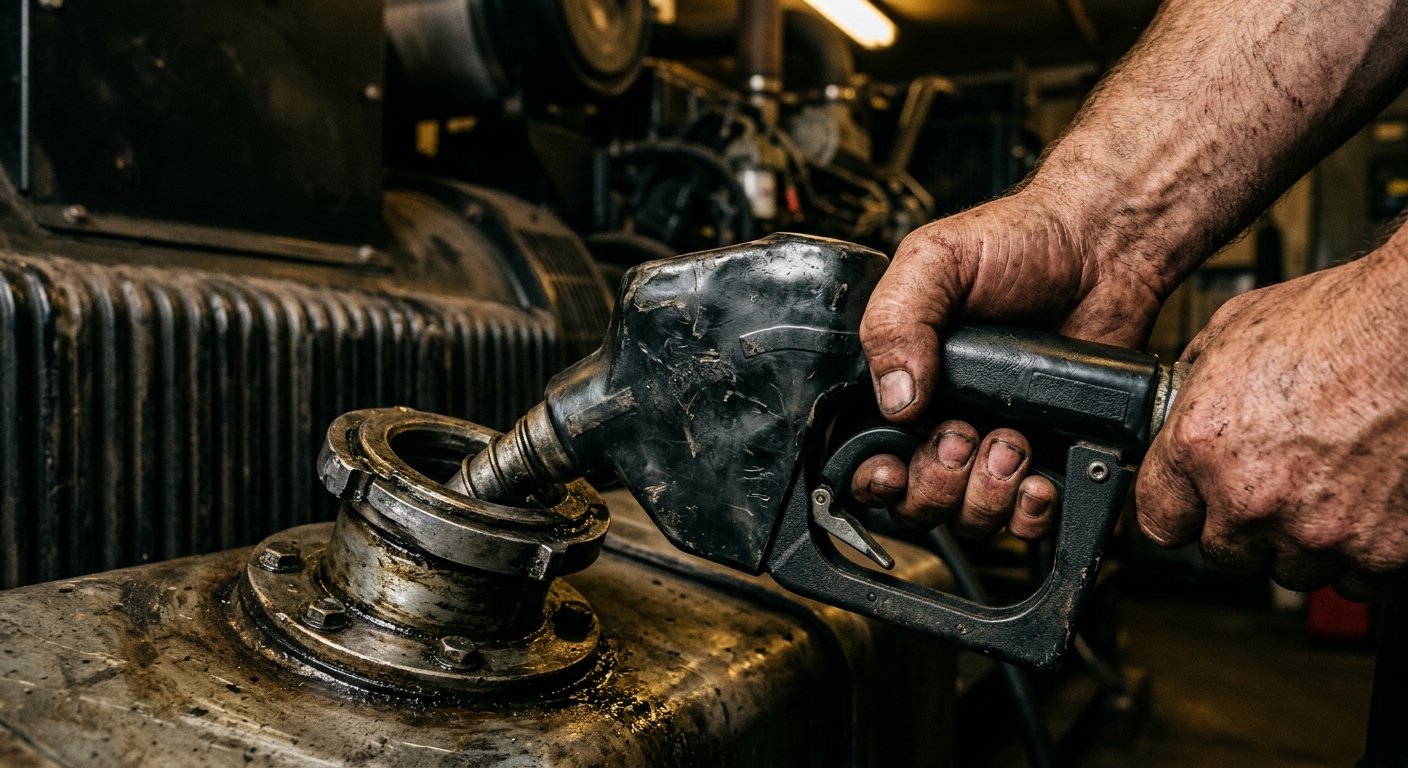
Diesel engines use compression ignition — no spark plug, high compression ratio, robust torque. The fuel is stored on-site in a tank (above-ground or sub-base), which means the generator is fuel-independent the moment it’s commissioned. Diesel engines respond quickly to sudden load changes, which is why hospitals, data centers, and emergency services have relied on them for decades. The NFPA 110 standard for emergency standby power systems is largely written around diesel performance characteristics, including the 10-second transfer requirement for Level 1 systems.
Natural gas generators use spark-ignited engines burning pipeline-delivered or propane gas. Because fuel arrives via utility line, there’s no on-site storage tank to permit, inspect, or refill. For a standby generator for home use, this is a significant operational advantage — the unit can run as long as gas pressure is maintained. Propane-fueled variants give some of the same advantage with on-site tank storage, bridging the gap between the two fuel types.
| Criterion | Natural Gas | Diesel |
|---|---|---|
| Fuel storage | None required (utility line) | On-site tank required |
| Runtime | Unlimited (while gas flows) | Limited to tank capacity |
| Power density | Lower — larger engine for same kW | Higher — compact for the kW output |
| Fuel shelf life | N/A (delivered continuously) | 12–18 months treated; degrades untreated |
| Cold-weather starting | Good | Requires block heaters below freezing |
| Maintenance interval | Longer (cleaner combustion) | Shorter (oil/filter changes more frequent) |
| Disaster vulnerability | Gas line pressure may drop | Fuel supply chain may be disrupted |
| Best application | Residential, light commercial | Large commercial, industrial, critical facilities |
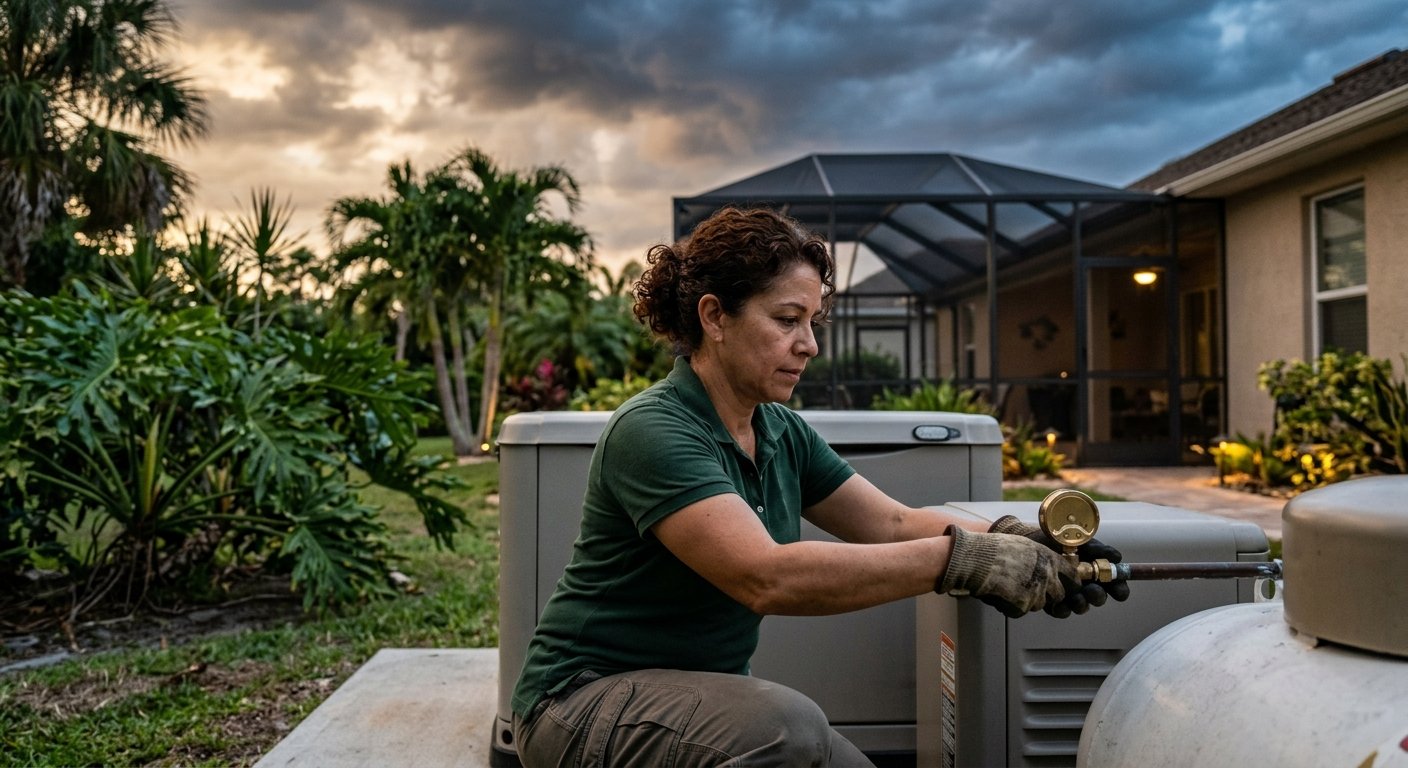
In Miami-Dade, Broward, and Palm Beach counties, backup generator South Florida planning isn’t theoretical — it’s annual preparation. During a major hurricane or its aftermath, natural gas distribution can lose pressure as damaged infrastructure is isolated for safety. After Hurricane Irma, utility restoration timelines stretched into weeks in many areas. If your natural gas generator loses gas pressure on day two, you have no backup.
Diesel, on the other hand, keeps running as long as your tank holds fuel. A 500-gallon sub-base tank on a 20 kW residential diesel unit can run for several days of continuous operation depending on load. The trade-off: fuel delivery trucks face the same road access problems post-storm that everyone else does. Pre-storm fuel fill is essential, and you may not get a resupply quickly.
Never let a diesel generator’s tank drop below 75% heading into storm season. Fuel delivery during and after a major storm is not guaranteed. For natural gas units, confirm with your utility whether your line is on a priority restoration circuit — most residential lines are not.
For many South Florida homeowners with existing gas service, a dual-fuel or propane-fueled standby unit is worth considering — it gives the convenience of gas operation while eliminating dependence on utility line pressure during an emergency. Discuss your specific address and lot constraints with a qualified installer before specifying fuel type.
Fuel type and engine size are linked. Natural gas engines at the same kW rating are physically larger and slightly less efficient than diesel equivalents. For a 22–26 kW whole-home standby unit, this difference is marginal and rarely matters. At 100 kW and above — the territory of commercial generator Miami applications, hotels, or multi-tenant buildings — diesel’s power density becomes a real engineering advantage.
Single-phase residential loads typically run 10–30 kW. Three-phase commercial loads start at 40 kW and scale to several hundred kW or more. Diesel dominates the upper tier not by preference, but because the engine physics support it more efficiently.
Both fuel types demand regular generator maintenance — skipping it is the most common reason standby generators fail when called upon. Diesel units require more frequent oil and filter changes because diesel combustion produces more particulates and the engine works harder per liter of displacement. The U.S. Department of Energy advises regular load-bank testing and exercise cycles for all standby generator types to prevent wet-stacking in diesel engines and ensure automatic transfer systems function correctly.
Natural gas engines run cleaner, which means longer intervals between oil changes and fewer injector issues. But they still need spark plug inspection, air filter service, valve adjustments, and coolant checks on schedule. Neither fuel type is maintenance-free.
Diesel generators that run regular exercise cycles at too low a load (under roughly 30% rated capacity) accumulate unburned fuel in the exhaust system — called wet-stacking. Run periodic load-bank tests at 75–100% rated load to burn it out. Natural gas units don’t wet-stack, but they can develop carbon deposits at low-load operation over time.
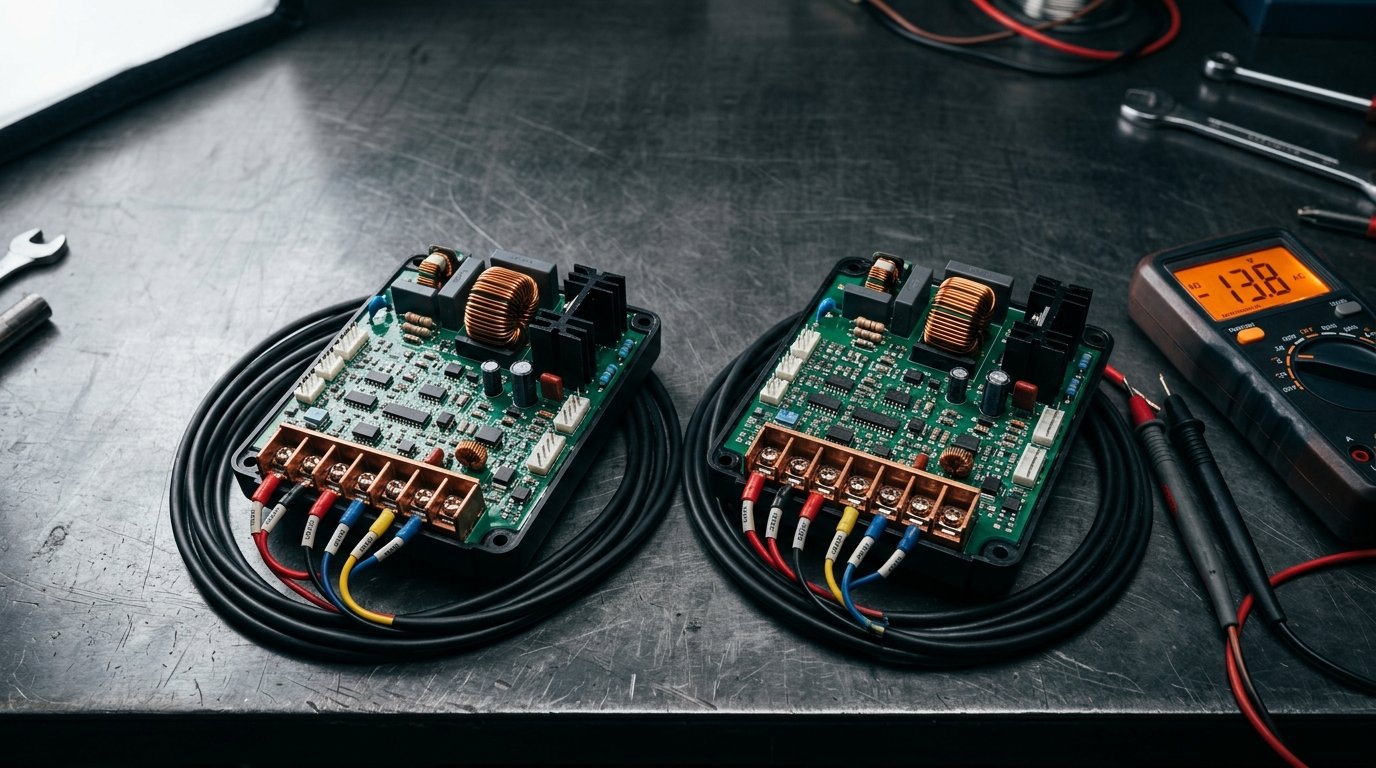
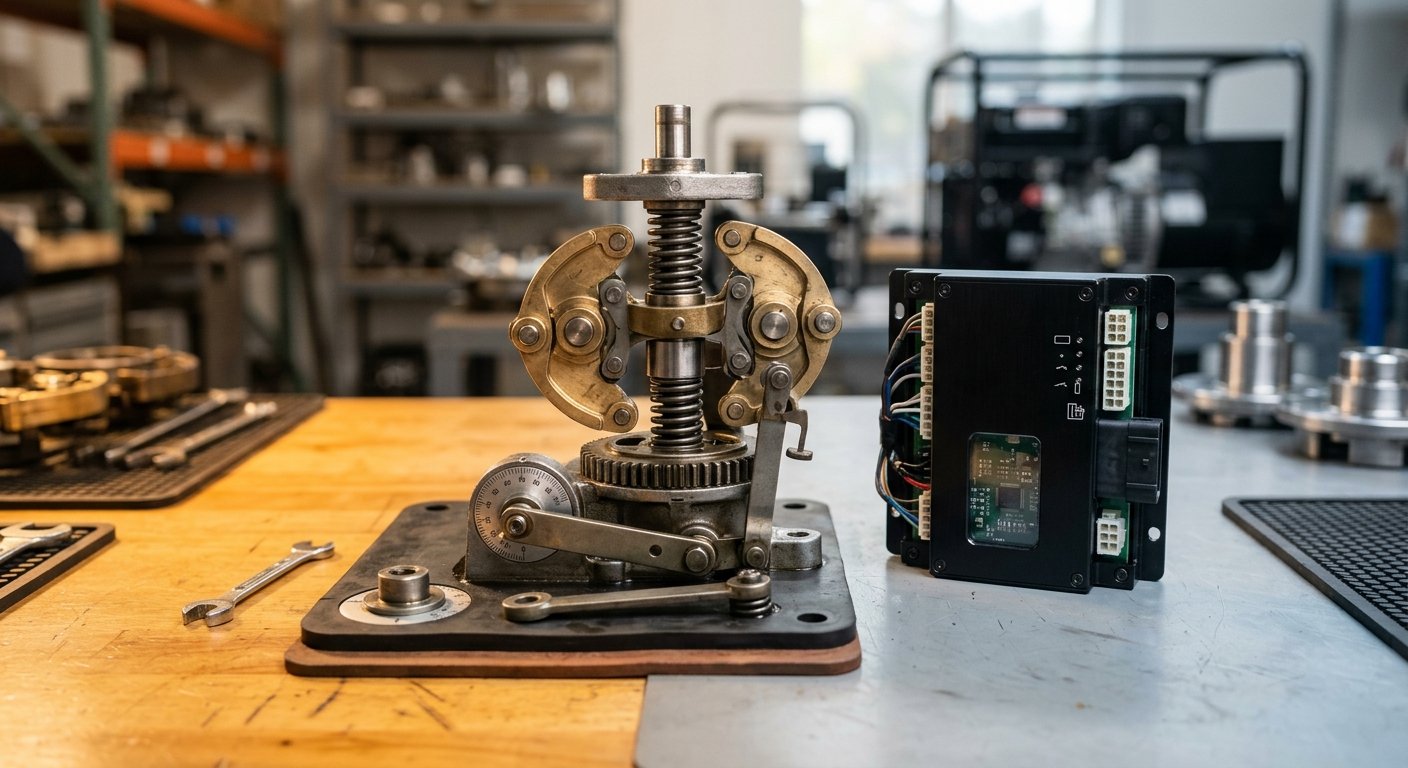
For technicians sourcing replacement components — whether it’s an AVR hunting under load, a transfer switch that won’t close, or a battery charger failing to hold float voltage — the fuel type of the generator doesn’t change the part category. Generator parts like automatic voltage regulators and transfer switches function across both fuel types, though specific compatibility depends on the make, model, and control system. Always confirm part numbers against your generator’s nameplate and wiring diagram before ordering.
Run through this decision checklist before specifying fuel type:
A natural gas generator is reliable under normal grid-outage conditions, but natural gas distribution lines can lose pressure during a major hurricane event when the utility isolates damaged sections. If you’re in a high-risk storm zone, confirm your line’s priority restoration status with your utility, or consider a propane or diesel unit for storm-specific resilience.
Runtime depends entirely on tank size and load. A sub-base or external tank sized to the generator and load can provide anywhere from 24 hours to several days of continuous operation. Consult your generator’s fuel consumption curve at rated load to size the tank appropriately for your expected outage scenario.
No — the AVR, transfer switch, and battery charger are selected based on generator make, model, output voltage, and control system, not the fuel type. A diesel and a natural gas unit from the same manufacturer at the same kW rating often share identical electrical components. Always match parts to the specific generator nameplate and wiring diagram.
Natural gas generators generally have lower per-hour maintenance costs because cleaner combustion means longer oil change intervals and less injector wear. Diesel units require more frequent service but are well-supported by a mature parts ecosystem. Total cost of ownership depends on usage hours, load profile, and local service labor rates.
Conversion kits exist for some engine families, but fuel conversion is a significant engineering undertaking — it affects the fuel system, ignition system, compression ratio, and emissions compliance. In most cases, purchasing a purpose-built natural gas unit is more reliable and cost-effective than converting an existing diesel engine.
Whether your genset runs diesel or natural gas, MTS Power Products supplies manufacturer-direct AVRs, transfer switches, battery chargers, and governors — with the technical knowledge to help you get the right part the first time.
MTS Power Products is a Miami-based, manufacturer-direct supplier of generator parts — including AVRs, transfer switches, battery chargers, and governors — serving commercial, marine, and residential backup power needs nationwide. They combine deep technical expertise with personalized service, helping generator technicians, electricians, facility managers, marine operators, and homeowners select the right parts and keep their backup power systems running reliably. Their direct-from-manufacturer model delivers fair pricing and knowledgeable support that big-box distributors cannot match. Visit mtspowerproducts.com →