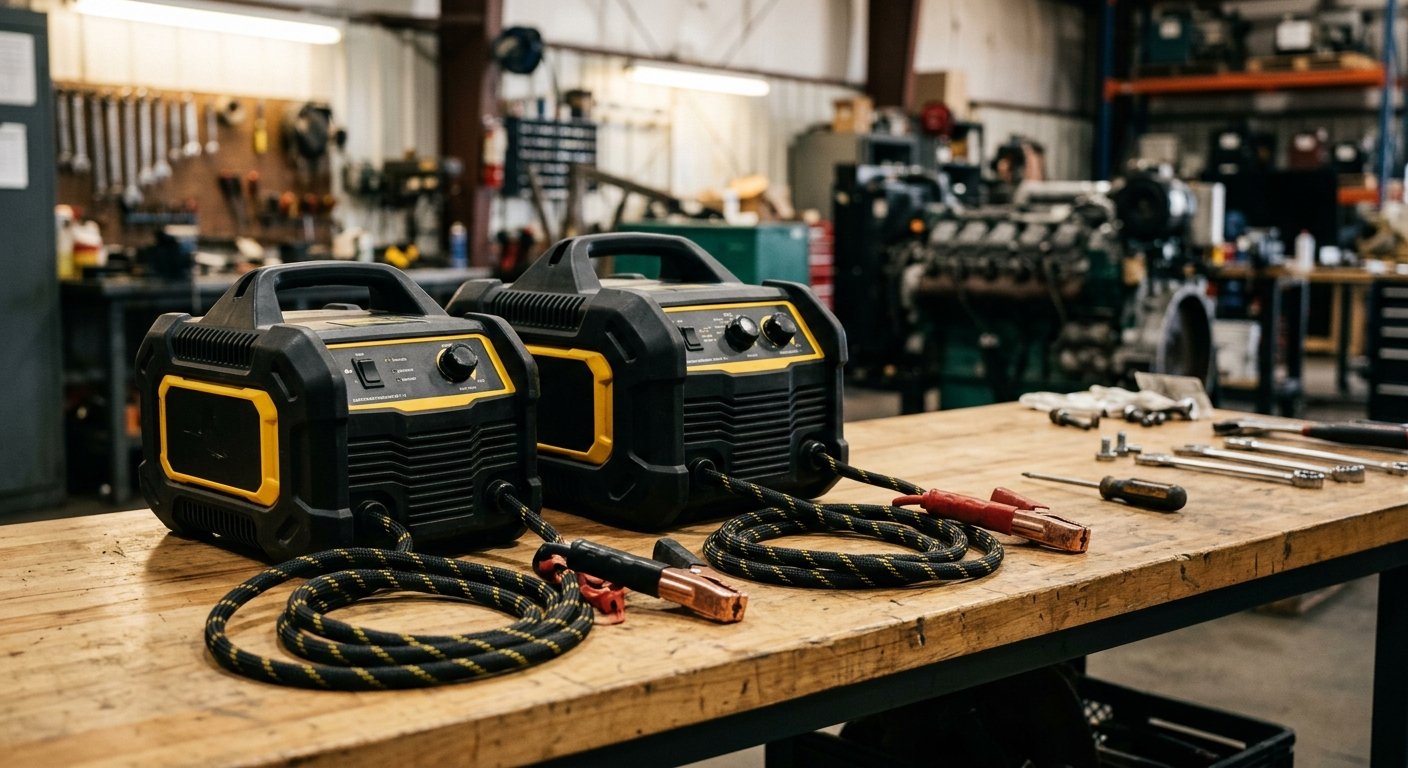



A transfer switch that fails during a power outage is worse than having no generator at all — because you thought you were covered. Whether you’re a technician doing a quarterly inspection on a commercial standby system, a facility manager responsible for a hospital or data center, or a South Florida homeowner who knows hurricane season doesn’t wait, testing your transfer switch regularly is non-negotiable. Here’s how to do it right.
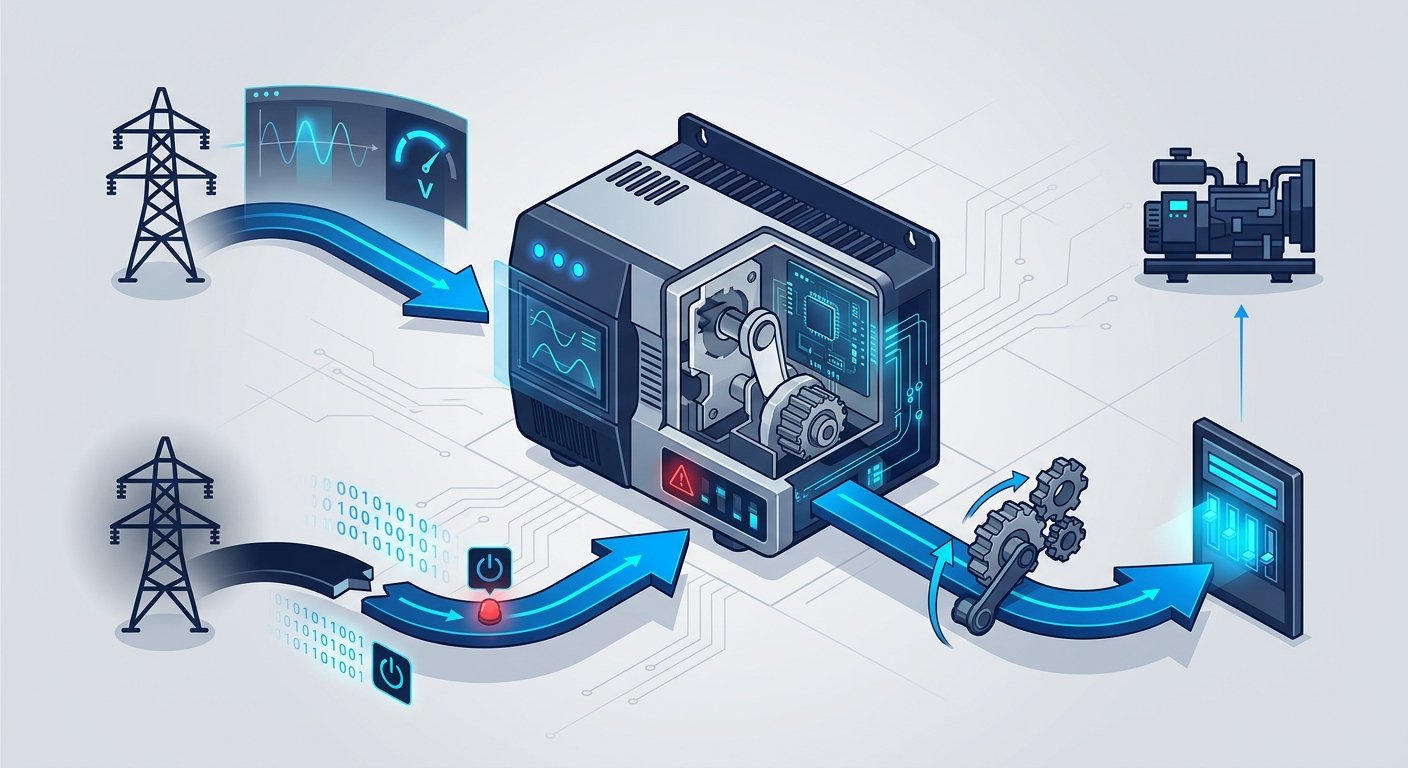
The automatic transfer switch (ATS) is the brain of your standby power system. It monitors utility voltage, senses an outage, signals the generator to start, and switches the load — all without you touching a thing. According to the NFPA 110 standard for emergency and standby power systems, ATS units should be exercised under load at least monthly and fully inspected annually. Most failures don’t happen because the switch is broken from day one — they happen because deferred maintenance let a small problem grow into a complete failure.
Common transfer switch failure signs include delayed switching, failure to transfer at all, welded contacts, control board faults, and utility sensing errors. Catching these early with a structured test saves you from discovering the problem when the lights go out.
This is not an area where you improvise. High-voltage switching equipment demands respect.
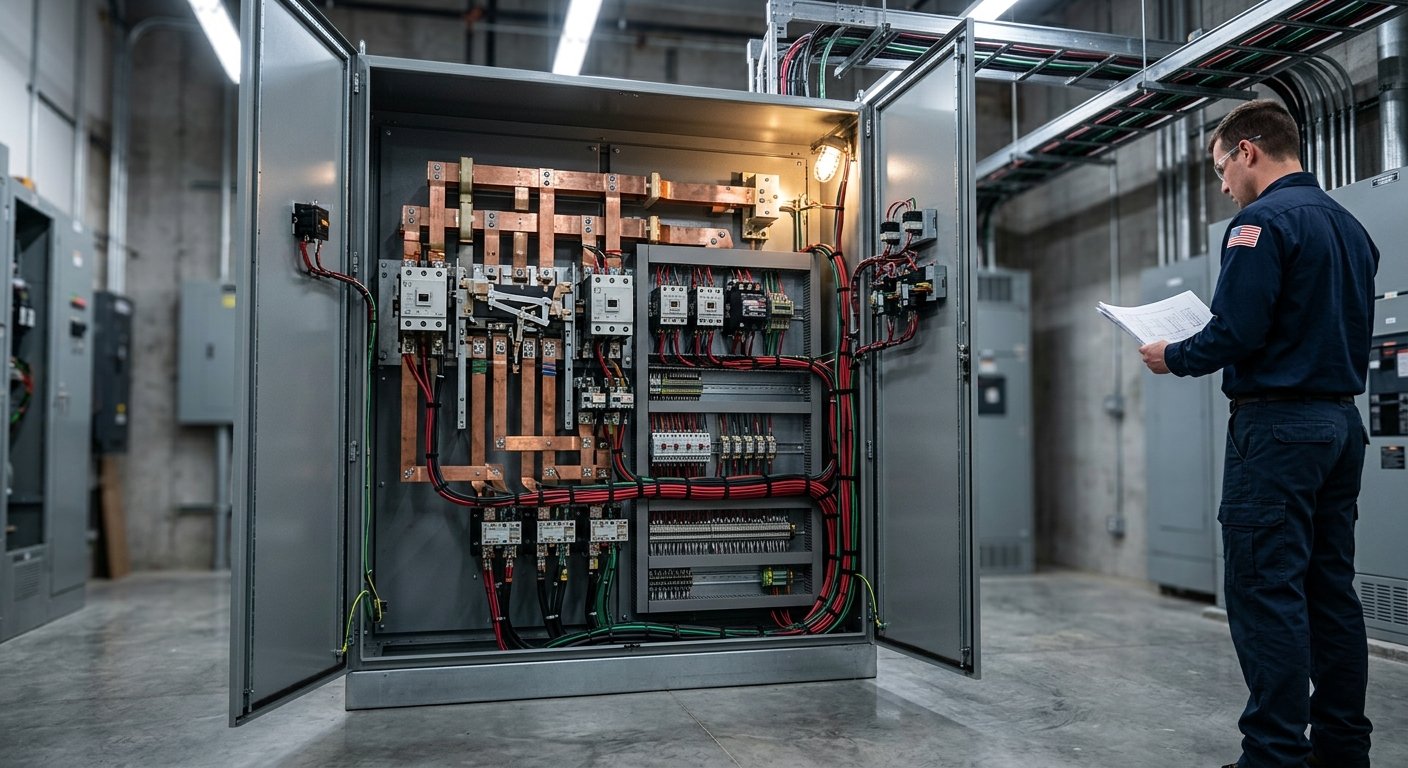
Open the ATS enclosure and look before you touch anything. You’re looking for:
If you see burned contacts or significant arcing damage, stop. The switch needs repair or replacement before any load testing. A visually compromised ATS can fail catastrophically under load.
Use a calibrated multimeter or clamp meter to verify the ATS is reading accurate voltage on both the utility and generator terminals. On a residential 200A, 240V single-phase system, you should read approximately 120V leg-to-neutral and 240V leg-to-leg on the utility side when power is present.
On commercial three-phase systems (208V, 480V, or 600V depending on your configuration), verify all three phases are present and balanced within ±5% of nominal voltage. Voltage sensing errors — where the ATS thinks utility is present when it isn’t, or vice versa — are one of the most common causes of transfer switch troubleshooting calls.
This is the basic functional test most homeowners and technicians can perform safely:
Document the transfer time both directions. If transfer takes longer than your programmed time delay, or if the switch fails to transfer at all, you have confirmed a malfunction that needs further diagnosis.
A no-load test tells you if the switch transfers. A load test tells you if the system handles real power demand. NFPA 110 recommends testing at 30% of rated load minimum. For a 20kW residential standby generator, that means at least 6kW of connected load during the test.
For a practical home test, this might mean running the HVAC system, water heater, refrigerator, and several lights simultaneously during the test period. For commercial systems, coordinate with facilities management to bring appropriate load online — or use a portable load bank if the facility cannot tolerate operational disruption.
Monitor generator output voltage and frequency during the load test. Voltage should hold within ±5% of rated output, and frequency should stay at 60Hz ±0.5Hz under steady load. If voltage sags or hunts during loading, the issue may be with the automatic voltage regulator (AVR) rather than the transfer switch itself.
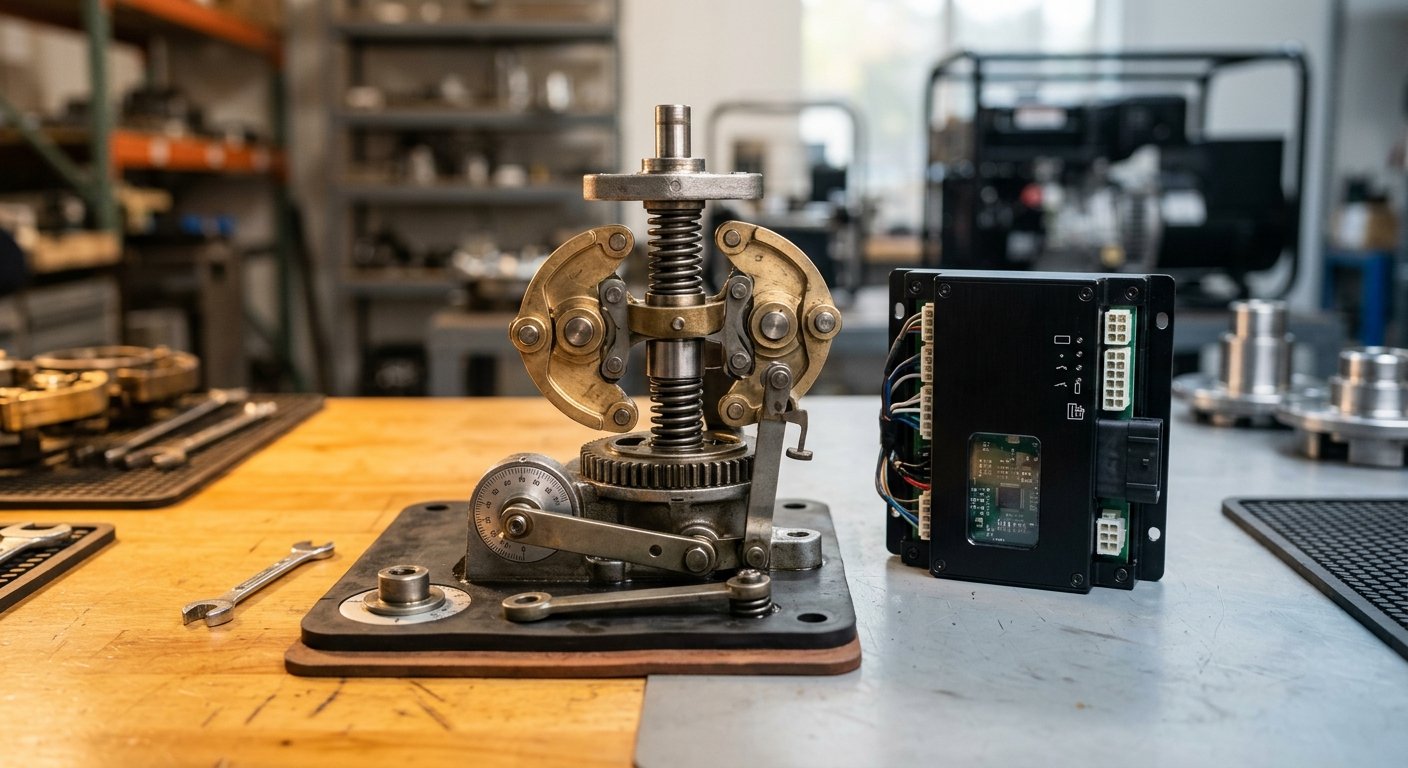
Every ATS should have a manual override or bypass mechanism for use during maintenance or when the automatic function fails. Test this as part of your annual inspection:
A manual transfer mechanism that’s stiff, corroded, or inoperable must be repaired. If automatic control fails during an outage, manual transfer is your fallback.
Check the control board for fault codes first. Then verify voltage sensing wiring is intact and that the generator start signal is reaching the genset. A failed time-delay relay or a blown control fuse are frequent culprits on older units.
The problem is likely upstream of the ATS — check the generator’s auto-start circuit, battery condition, and governor/control settings. The transfer switch itself may be functioning correctly.
This is a serious mechanical failure. If utility and generator are simultaneously connected through welded contacts, you risk backfeeding utility lines — a safety emergency. Take the system offline immediately. The ATS needs replacement, not repair.
If your ATS transfers to generator power during brief utility voltage dips, check the voltage sensing sensitivity and time-delay settings. A dropout voltage set too close to nominal will cause nuisance starts on minor grid fluctuations.
Transfer switches have a finite mechanical life — typically rated for a set number of switching operations. If your unit is showing welded contacts, a failed control board, or persistent sensing errors after adjustment, replacement is often more cost-effective than chasing individual component failures on an aged unit.
MTS Power Products supplies transfer switches for residential, commercial, and marine applications direct from the manufacturer, with knowledgeable support to help you match the right ATS to your generator’s output rating, load type, and application. Our Miami-based team can walk through compatibility with your existing system — call us at 305-634-1511 or use the contact form on our site. We serve customers nationwide and understand the specific demands of standby systems in hurricane-prone coastal environments.
If you’re also troubleshooting voltage instability or output issues, browse our generator parts catalog for AVRs, governors, battery chargers, and other critical components.
NFPA 110 recommends monthly exercising of standby systems under load, with a full inspection and functional test annually. In hurricane-prone areas like South Florida, many professionals recommend testing at the start of each hurricane season — typically June — and again at midseason.
A basic no-load functional test — opening the utility breaker and confirming the generator starts and transfers — is something a capable homeowner can perform safely if the system is properly installed and they don’t open the ATS enclosure. Any internal inspection, wiring check, or repair work on the ATS itself should be performed by a licensed electrician.
Key transfer switch failure signs include failure to start the generator during an outage, delayed or incomplete transfer, the switch transferring to generator but not back to utility, burning smell or visible arcing inside the enclosure, and error codes on the ATS control panel.
Match the ATS amperage rating to your generator’s maximum output current, verify single-phase or three-phase compatibility, and confirm the control voltage (12V or 24V DC) matches your generator’s start circuit. When in doubt, contact a manufacturer-direct supplier like MTS Power Products at 305-634-1511 with your generator’s make, model, and output specs before ordering.
An automatic transfer switch (ATS) monitors utility voltage continuously and transfers to generator power without operator intervention, typically within seconds of an outage. A manual transfer switch requires someone to physically operate the switch. For standby power applications where reliability during unattended outages matters — homes, facilities, data centers — an automatic transfer switch is the appropriate choice.