


Your standby generator is ready for anything — until the battery isn’t. A dead or undercharged battery is the number one reason a generator fails to start when it matters most. Whether you’re maintaining a commercial standby unit at a data center, a residential backup generator in Miami ahead of hurricane season, or a fleet of prime power gensets across multiple sites, keeping that battery properly charged isn’t optional. It’s the foundation of reliable backup power.
The question most technicians and facility managers eventually ask: should I use a float charger or a trickle charger for my generator battery? These terms get used interchangeably, but they’re not the same thing — and choosing the wrong one can shorten battery life or leave you with a generator that won’t crank when the lights go out.
Let’s define the terms clearly, because the industry isn’t always consistent.
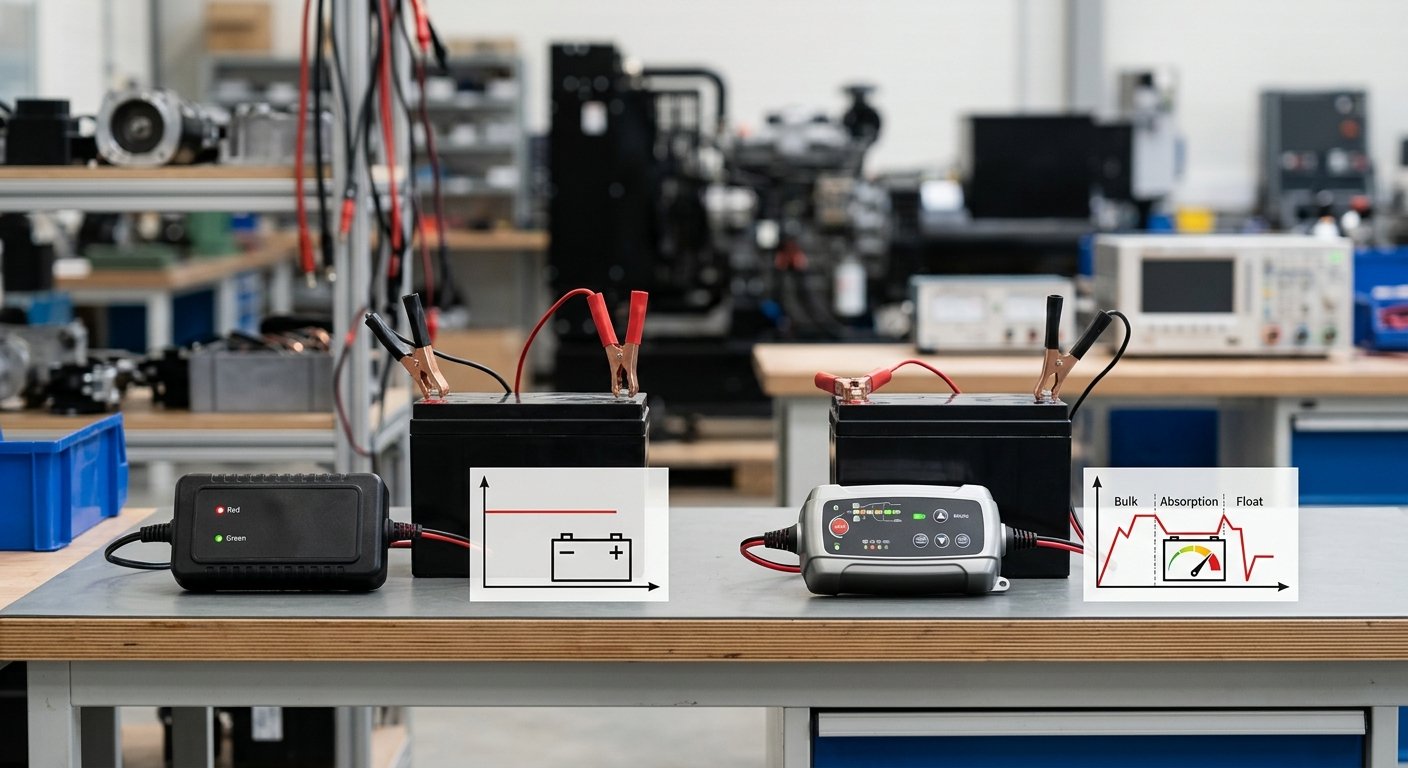
A trickle charger delivers a small, constant current to a battery regardless of the battery’s state of charge. Classic trickle chargers don’t monitor voltage or adjust output — they just push current continuously. At low rates (0.5A to 2A), this can maintain a battery over time, but without automatic shutoff or regulation, they can overcharge a fully charged battery. Left unattended for weeks or months, a dumb trickle charger can gas out a battery, buckle plates, and destroy it.
A float charger — also called a maintenance charger or automatic battery charger for generators — monitors battery voltage and adjusts its output intelligently. Once the battery reaches full charge, the charger drops to a low “float voltage” (typically 13.2V to 13.8V for a 12V lead-acid battery) to offset self-discharge without overcharging. It keeps the battery at 100% without cooking it.
Modern float chargers are almost always multi-stage: bulk charge, absorption, then float. Some include desulfation stages that can revive mildly sulfated batteries — a real advantage in standby applications where the battery may sit unused for extended periods.
A generator battery doesn’t behave like a car battery. In a vehicle, the alternator charges the battery constantly during normal operation. A standby generator, by contrast, may sit unused for weeks or months between test cycles. Self-discharge happens naturally — lead-acid batteries lose roughly 1–3% of their charge per day at room temperature, and faster in South Florida’s heat.
When the generator does run, it charges the battery briefly, but a 10–30 minute weekly exercise cycle often isn’t enough to fully replenish what’s been lost, especially as a battery ages. The result: generator won’t start battery problems that catch owners completely off-guard during an actual power outage.
According to the U.S. Department of Energy, standby generator maintenance — including battery health — is a critical component of emergency preparedness for homes and commercial facilities alike. Battery failure is preventable. It just requires the right charger and a consistent maintenance routine.
For virtually every standby generator application — residential, commercial, marine — a float charger is the correct choice. Here’s why:
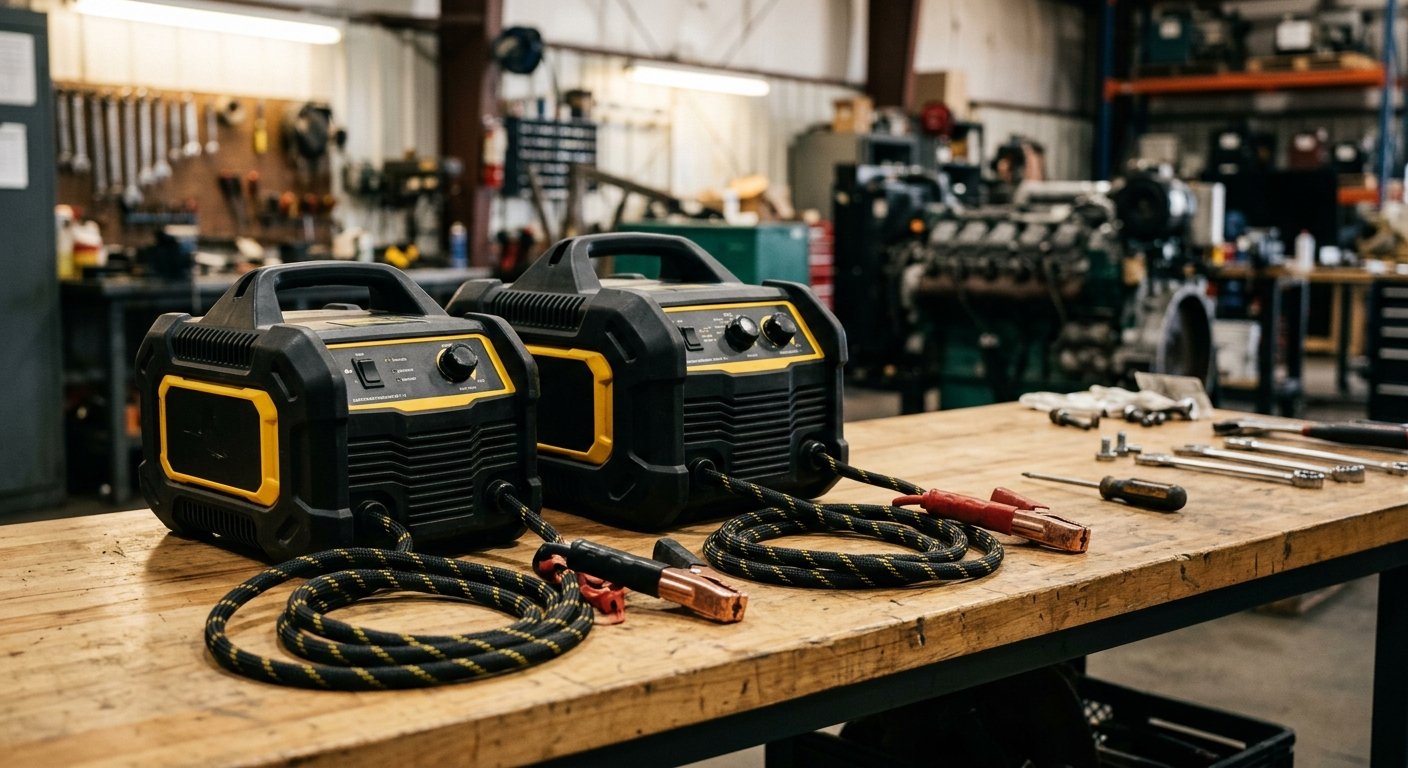
If your generator came with a built-in battery charger, it’s almost certainly a float-type charger. When that charger fails — and they do fail — replacing it with the correct automatic battery charger for your generator is a direct-to-operation fix. MTS Power Products carries generator battery chargers suited for standby and prime power applications. If you’re unsure what spec to match, call the team at 305-634-1511 for guidance.
Traditional trickle chargers have a narrow use case in modern generator maintenance. If you’re storing a generator seasonally and you have a simple, regulated low-output charger (under 0.5A) with a manual shutoff, it can work short-term as long as you’re monitoring it regularly. But this approach requires attention and oversight that most facility managers and homeowners simply don’t have time for.
A modern “smart trickle charger” that automatically regulates output is, functionally, a float charger — the naming overlap is why the confusion persists. If a product advertises automatic shutoff, multi-stage charging, and voltage monitoring, call it what it is: a float charger. That’s the spec you want.
Not all float chargers are created equal. Matching the charger to your battery and application matters. Here’s a practical checklist:
Most residential and small commercial generator batteries are 12V. Larger commercial generators may use 24V battery systems. Confirm your system voltage before ordering a replacement charger.
Lead-acid (flooded), AGM (absorbent glass mat), and gel batteries have different charge voltage requirements. A charger not calibrated for AGM, for example, may overcharge and damage the battery. Check your generator’s spec sheet or battery label.
Float chargers for generator applications typically range from 1A to 10A. Higher current allows faster initial recharge after a discharge event. For large commercial or industrial gensets with bigger battery banks, you may need higher-output units.
For outdoor enclosures or marine applications, look for chargers with appropriate IP ratings for moisture and dust resistance. This is especially relevant for generators installed in South Florida, where humidity is a constant factor.
The NFPA 110 standard for emergency and standby power systems requires that battery systems in life-safety backup power applications be maintained at full charge readiness — a requirement that float charging directly supports.
Don’t wait for a failed start to discover a bad charger. Watch for these indicators:
When a battery charger fails on a standby generator, it’s a parts replacement — not a reason to replace the generator. Sourcing the correct replacement charger quickly is where a manufacturer-direct supplier like MTS Power Products adds real value. There’s no middleman guessing at compatibility; you’re working with people who understand generator systems at the component level.
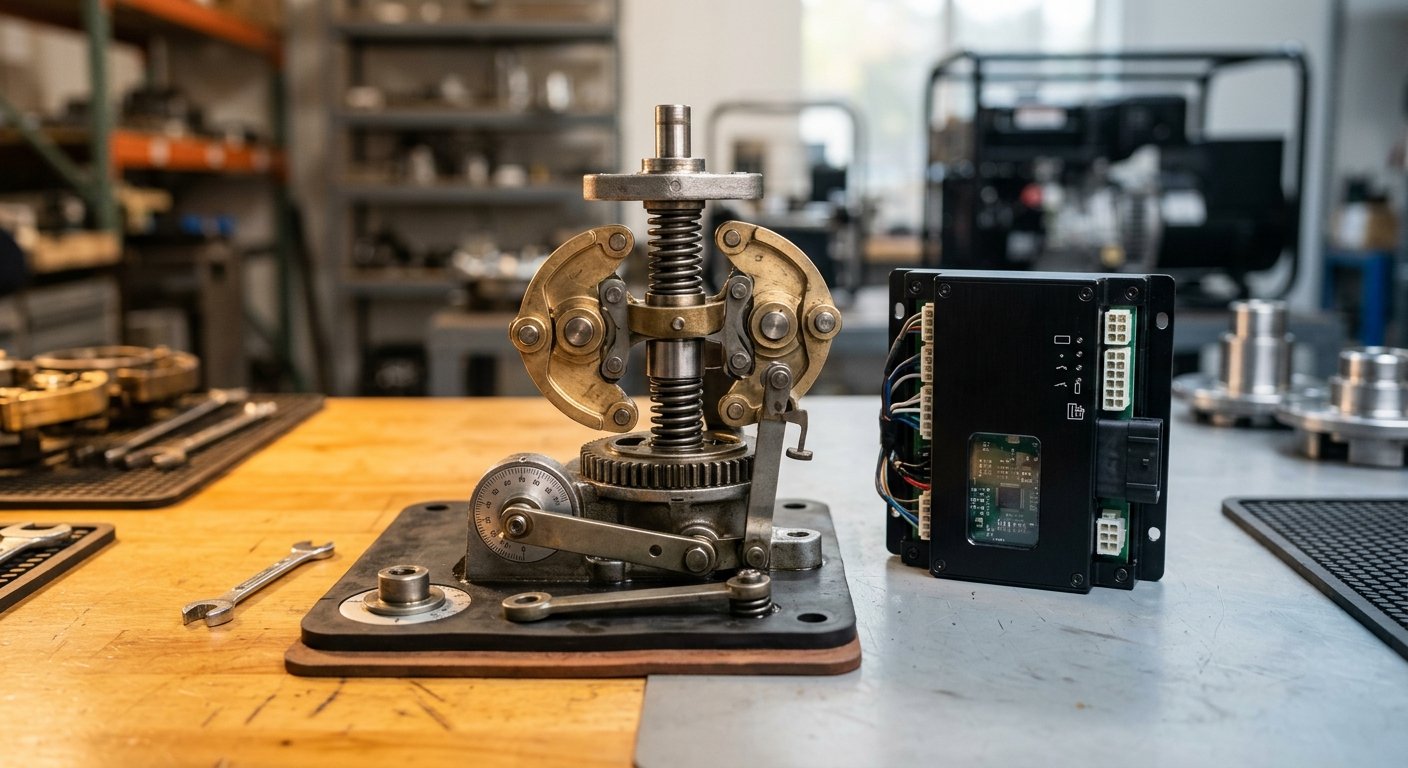
For more on maintaining your complete generator system, review the full range of generator parts available from MTS, including AVRs, governors, and transfer switch components.
For homeowners and property managers in Miami-Dade, Broward, and Palm Beach counties, generator battery maintenance takes on real urgency before and during hurricane season (June through November). An automatic battery charger running year-round means you’re never scrambling to verify battery condition when a storm is 48 hours out.
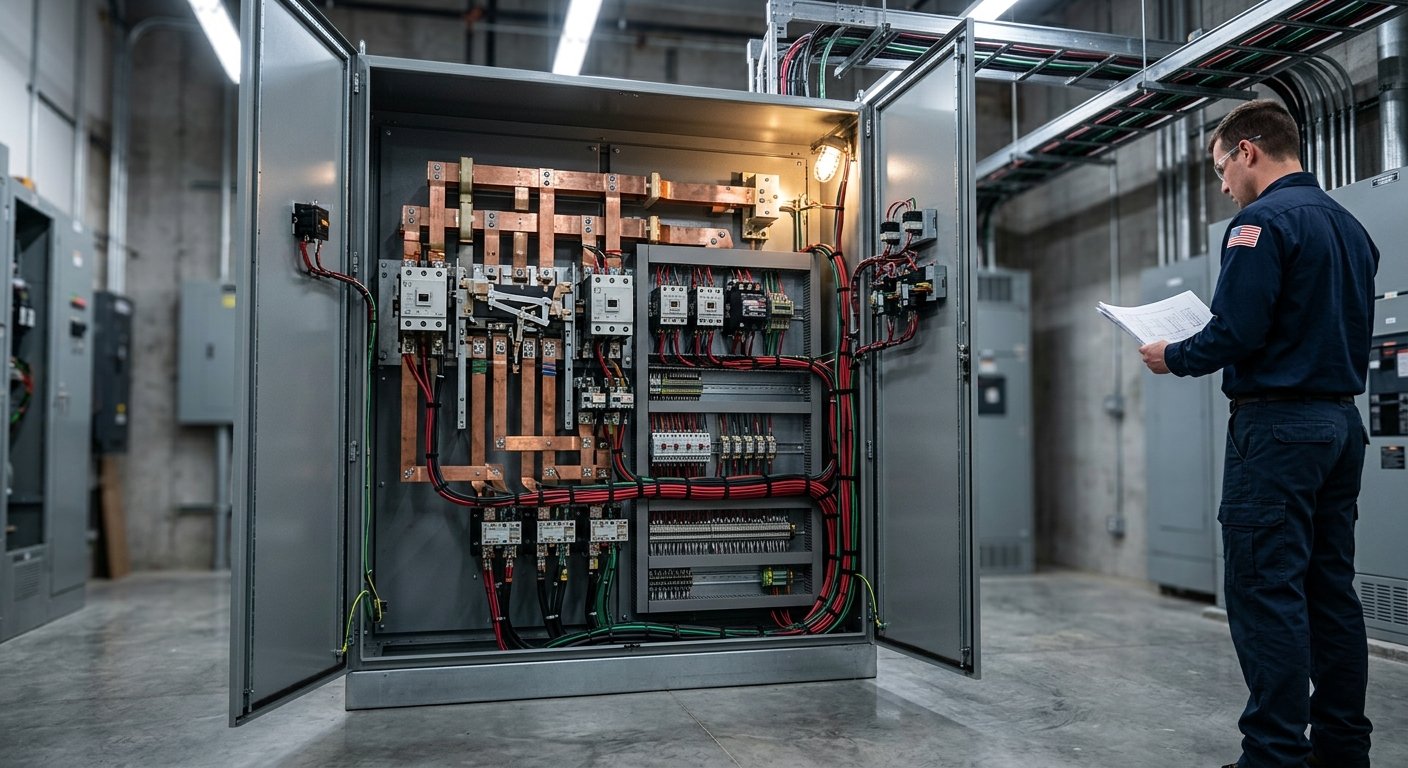
If your generator’s built-in charger has been unreliable, replacing it before hurricane season is a straightforward fix. It’s also worth verifying that your transfer switch and automatic voltage regulator are in sound condition — battery, transfer switch, and AVR failures are the most common causes of standby generator failure during extended outages.
Yes. Float chargers are specifically designed for permanent connection. Once the battery reaches full charge, the charger automatically reduces to a maintenance voltage that compensates for self-discharge without overcharging. This is the correct approach for standby generators that sit between infrequent run cycles.
The most common causes are a discharged battery (from self-discharge with no charger connected), a failed battery charger, a sulfated or aged battery that can no longer hold a charge, or corroded battery terminals interrupting the circuit. Always start diagnostics at the battery and charger before assuming a deeper electrical fault.
You need to know: battery voltage (12V or 24V), battery chemistry (flooded lead-acid, AGM, or gel), and the generator manufacturer’s recommended charger output (typically listed in the service manual or on the existing charger’s label). If you’re uncertain, contact MTS Power Products at 305-634-1511 with your generator’s make and model for specific guidance.
Most generator batteries last 3–5 years under normal standby conditions with proper float charging. In hot climates like South Florida, heat accelerates battery degradation, so the lower end of that range is more realistic. Annual voltage and load tests can tell you when replacement is approaching.
Generally, yes — when generator manufacturers specify an “automatic battery charger,” they mean a regulated, multi-stage charger that includes a float maintenance stage. This is the standard for modern standby generator battery maintenance and is distinct from a simple, unregulated trickle charger.
The difference between a generator that starts in the first five seconds of a power outage and one that doesn’t often comes down to a single component: the battery charger. Float chargers are the industry-standard solution for standby generator battery maintenance — automatic, safe for permanent connection, and genuinely effective at extending battery service life.
MTS Power Products supplies automatic battery chargers and the full range of generator parts direct from the manufacturer, with knowledgeable support from our Miami-based team. Whether you’re a technician ordering parts for a fleet, a facility manager replacing a failed charger on a critical standby unit, or a homeowner getting ready for hurricane season, we can help you get the right part the first time.
Call us at 305-634-1511 or visit our generator parts store to find the battery charger your system needs.