


A commercial generator is a power system that provides reliable electricity during utility outages or serves as a primary power source for your business. These units range from small 10kW models to massive industrial systems, running on diesel, natural gas, or propane to keep your operations online.
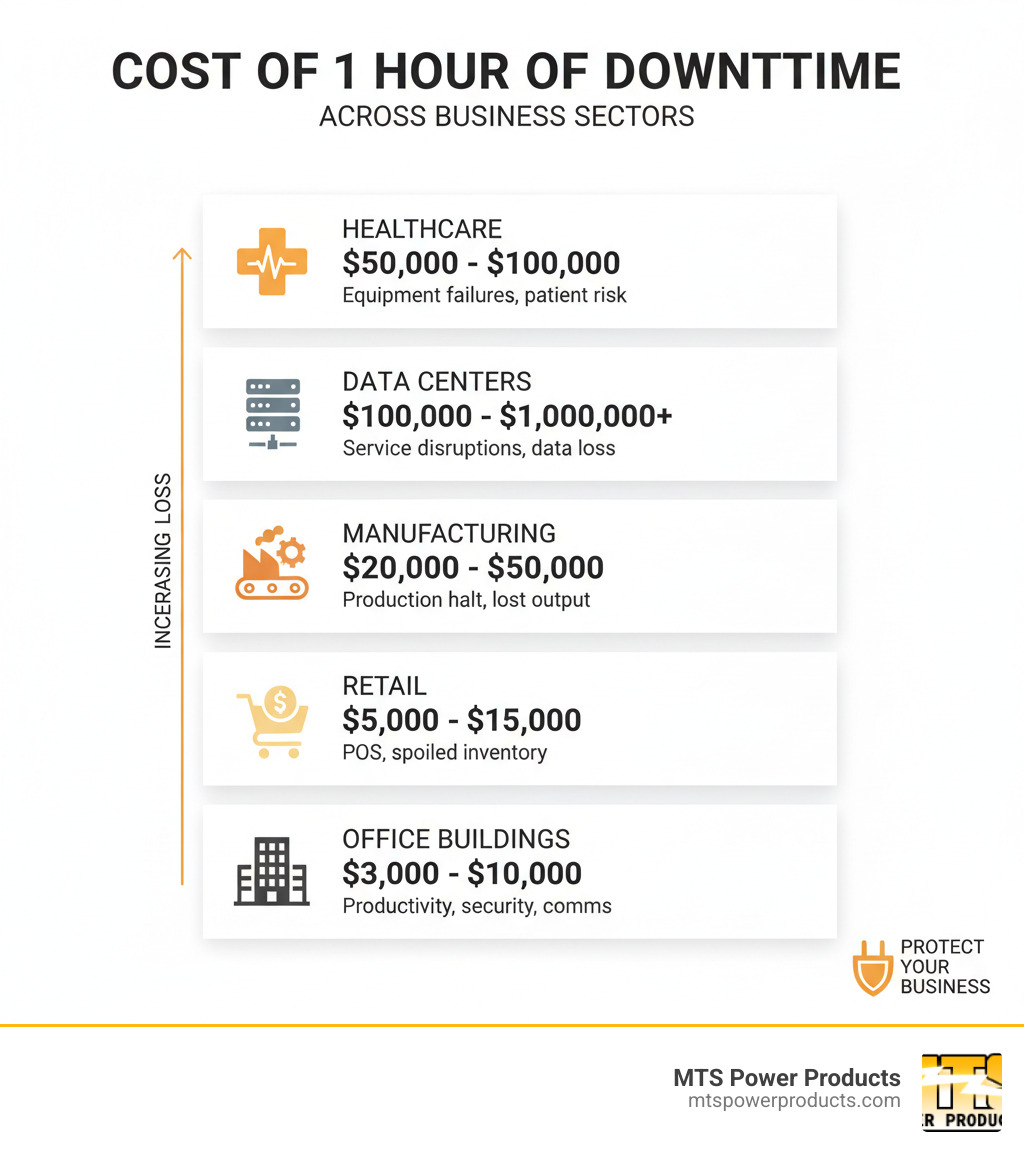
The stakes are higher than ever. A power failure can be devastating, leading to lost customers, spoiled inventory, and critical data loss. Downtime costs can quickly run into thousands of dollars per hour.
With the global commercial generator market projected to reach $16.8 billion by 2030, it’s clear that businesses are taking action. Power outages are becoming more frequent, and being unprepared is a risk you can’t afford.
This guide will walk you through everything you need to know to select, install, and maintain the right commercial generator for your facility, ensuring you’re protected.
Commercial generator glossary:
When the power goes out, your business doesn’t just go dark—it can grind to a halt. A power resilience strategy is your practical plan for keeping operations running when the grid fails. At its core, this strategy usually means investing in a commercial generator that automatically kicks in the moment utility power drops. While your competitors are scrambling in the dark, you’re still serving customers and processing orders.
A commercial generator is essential for protecting your business from operational failure and financial loss.
Critical Operations Protected by Backup Power:
Every hour without power costs you money. The financial impact goes beyond the obvious loss of sales.
Financial Risks of Downtime:
A reliable generator prevents these losses by maintaining steady operations. It’s not just a defensive measure; it’s one of the smartest financial decisions you can make. Advanced systems like Combined Heat and Power (CHP) can even generate electricity while capturing waste heat, reducing your overall energy costs and actively contributing to your bottom line.
Choosing the right commercial generator involves selecting a fuel type that fits your needs. The fuel affects operating costs, maintenance, emissions, and runtime. The three main options are diesel, natural gas, and propane, each offering a unique balance of features.
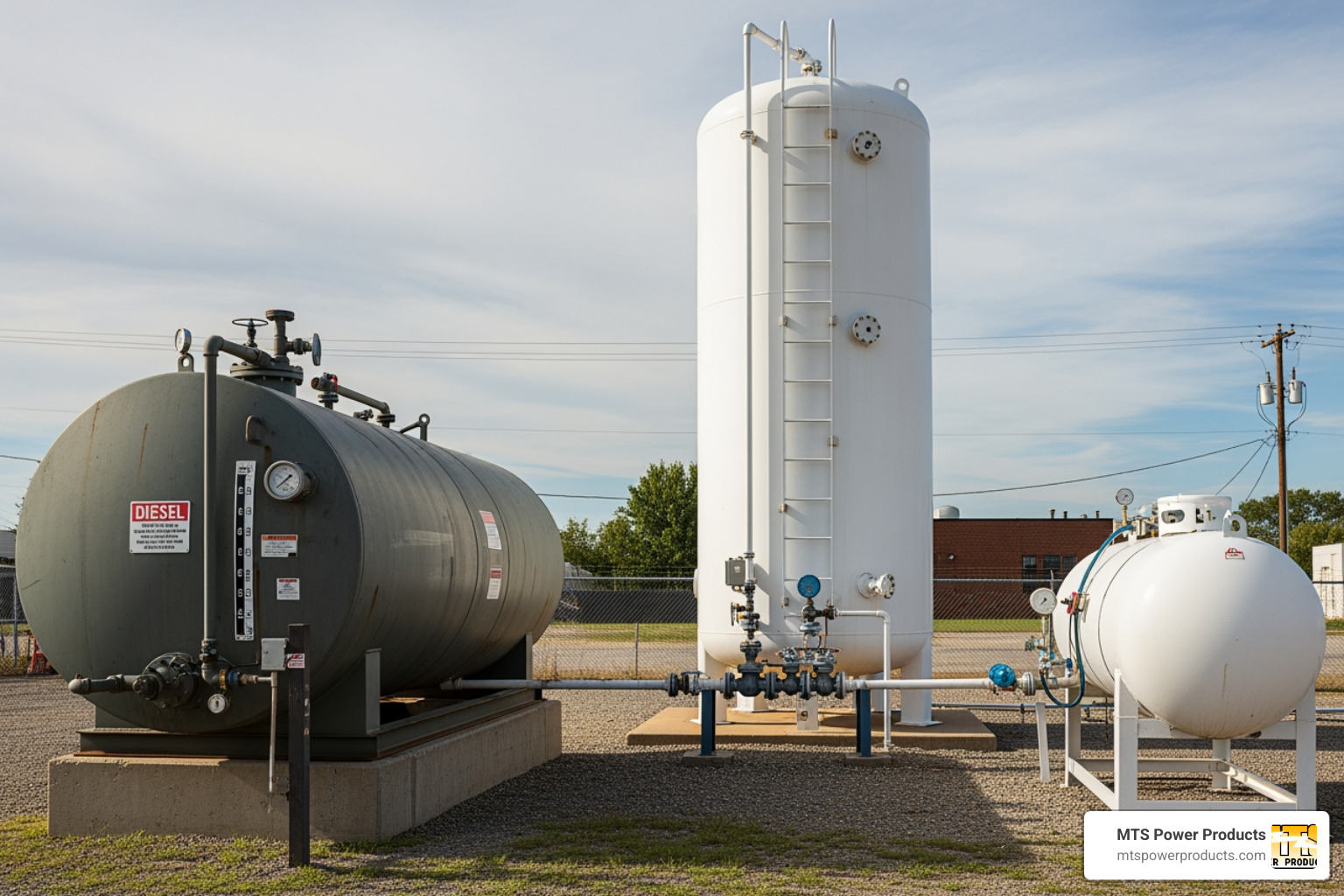
Diesel generators are the workhorses of the commercial world, known for their power and reliability. They deliver high power output, are fuel-efficient under heavy loads, and are built to last. A key advantage is on-site fuel storage, allowing for days or weeks of runtime independent of utility lines. This makes them ideal for critical facilities like hospitals and data centers. Our Diesel Power Generator options and Diesel Generator Sets offer robust solutions for any application.
Natural gas generators offer best convenience by connecting directly to your utility gas line, providing a continuous fuel supply. This eliminates refueling and worries about running out of fuel during an extended outage. They also produce lower emissions and are quieter than diesel models, making them a great choice for businesses in urban areas. The fuel is often more cost-effective, and the cleaner burn can lead to reduced maintenance. We specialize in Natural Gas Generator Installation.
Propane generators combine the on-site storage of diesel with cleaner emissions. Propane’s standout feature is its long fuel shelf-life; it never degrades, making it perfect for standby units that are used infrequently. As a clean-burning fuel, it produces fewer emissions and is gentler on the engine. Propane also performs reliably in cold weather, where diesel can gel.
| Feature | Diesel Generators | Natural Gas Generators | Propane (LP) Generators |
|---|---|---|---|
| Fuel Cost | Moderate, fluctuates with oil markets | Often lower, stable supply | Moderate, can fluctuate seasonally |
| Maintenance | Moderate to high | Lower, cleaner burn | Lower, cleaner burn |
| Emissions | Higher (requires after-treatment) | Lower, less soot | Lower, less soot |
| Fuel Storage | On-site tanks; fuel can degrade | Direct utility line (no storage) | On-site tanks; excellent shelf life |
| Reliability | Excellent, high power density | Excellent, continuous supply | Good, reliable in cold weather |
| Initial Cost | Moderate to high | Moderate | Moderate |
The right choice depends on your specific needs. At MTS Power Products, we can help you evaluate which fuel type makes the most sense for your business.
Selecting the right commercial generator is a critical decision. Matching the system to your needs is the key to a smart investment.
When comparing generators, focus on these essential features:
For heavy-duty needs, our Industrial Generators offer robust performance.
Proper sizing is crucial. An undersized generator won’t work, and an oversized one wastes money.
While this guide provides a framework, consulting a professional is the smartest move. Our team at MTS Power Products performs detailed load analyses to ensure your generator is perfectly matched to your needs, saving you from costly mistakes.
Your commercial generator is more than just an engine; it’s a complete system. Supporting components are what make it work seamlessly, safely, and reliably.
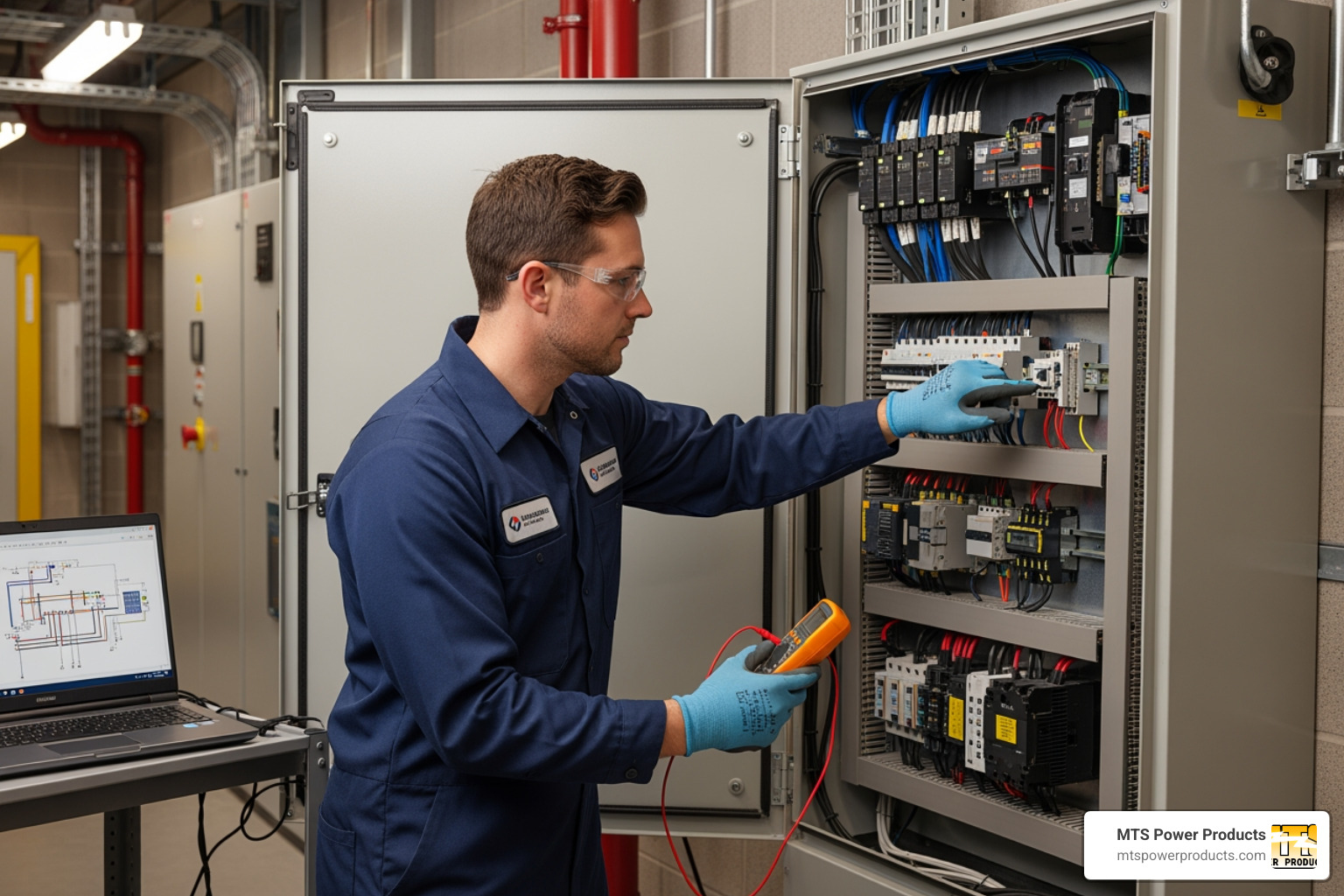
The Automatic Transfer Switch (ATS) is the brain of your standby generator system. It constantly monitors utility power. The instant an outage is detected, it signals the generator to start. Once the generator is ready, the ATS safely disconnects your facility from the grid and transfers the load to the generator. This automatic process prevents dangerous back-feeding and ensures a smooth transition. When grid power is restored and stable, the ATS transfers the load back and signals the generator to cool down and shut off.
We provide top-tier Automatic Transfer Switches and ATS Controllers that integrate flawlessly with any generator system.
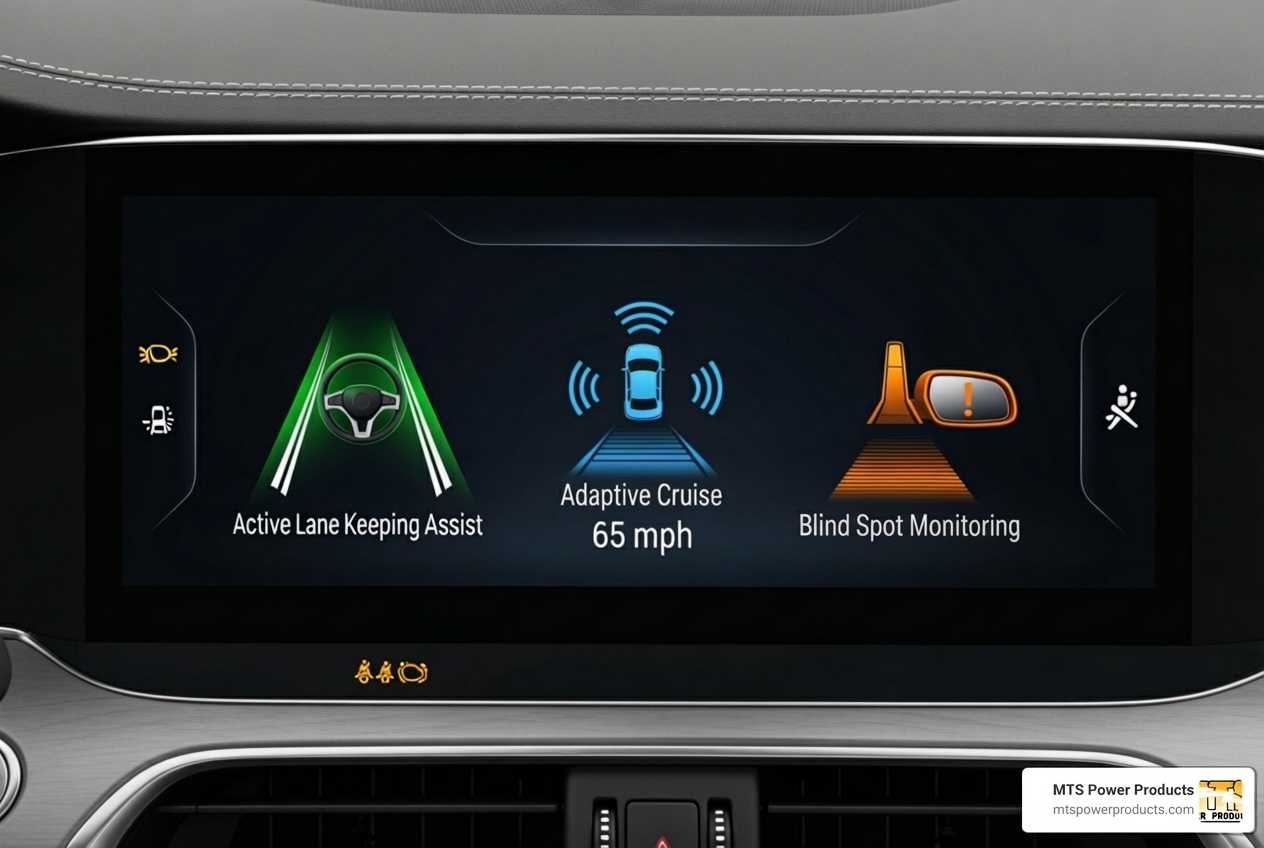
Today’s generators incorporate smart features that improve efficiency and control.
At MTS Power Products, we are at the forefront of these technologies, offering custom solutions with our McPherson Controls line that turn a simple generator into a comprehensive energy management system.
The manufacturer behind your commercial generator is a long-term partner in your business’s power resilience. At MTS Power Products, we work with top-tier brands and also manufacture our own custom generator sets and components in Miami, giving us unique insight into the industry.
Generac is a well-known brand with a strong reputation in residential and small business markets. They focus heavily on natural gas and propane models, offering reliable, automatic standby generators designed for ease of use. You can Learn about Generac’s offerings on their website.
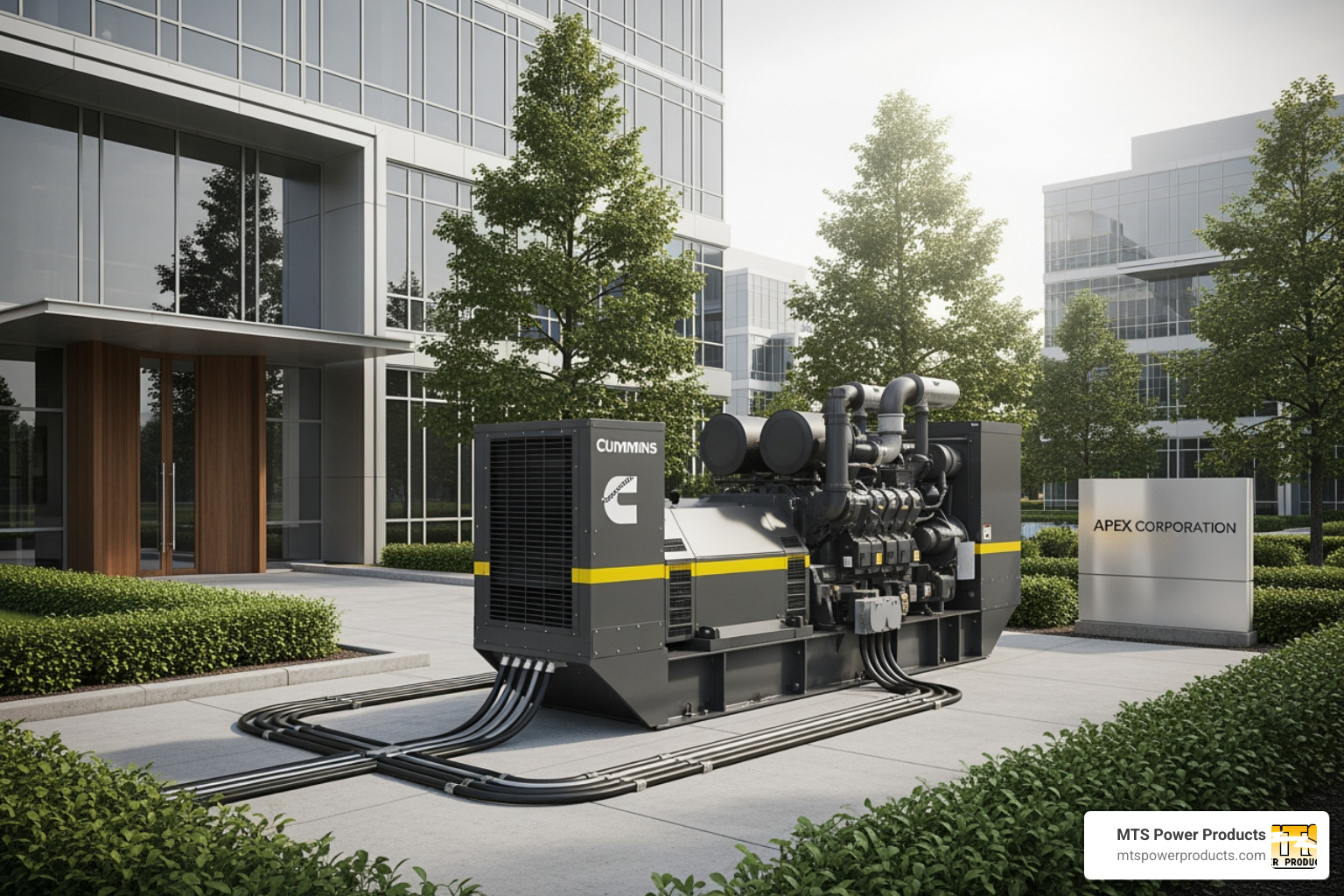
Cummins is a global power leader specializing in high-range, exceptionally reliable generator sets for critical applications like data centers, hospitals, and large commercial buildings. They offer both diesel and gas engines, with their Centum series representing the cutting edge in efficiency and performance.
At MTS Power Products, we offer a unique advantage with our custom generator set manufacturing. We can build the perfect system for your specific needs, not just off-the-shelf solutions. Located near Miami’s airport and port, we serve businesses locally and ship worldwide.
Investing in a commercial generator is one of the smartest decisions you can make for your business’s continuity. But here’s the thing: the purchase price is just the beginning of the story. To truly maximize your investment and ensure your generator is ready to perform when you need it most—whether that’s during a hurricane or an unexpected grid failure—you need to think about professional installation, ongoing maintenance, and the total cost of ownership over its lifetime.
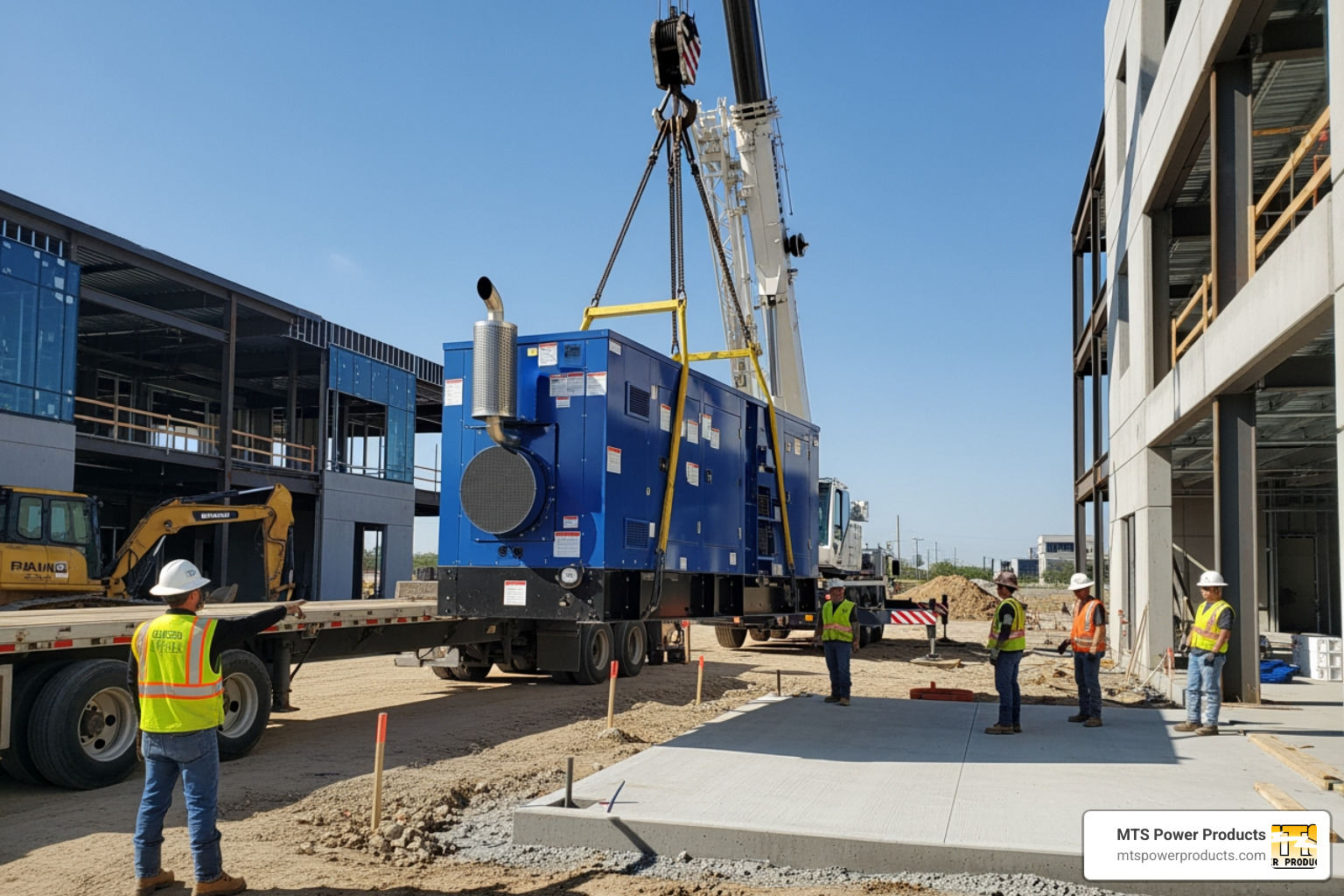
Commercial generators can range from $5,000 for small units to over $500,000 for large industrial systems. The final cost depends on size, fuel type, brand, and features. Installation fees—which include site prep, electrical work, and fuel line connections—are a significant part of the total investment. Always ask for a comprehensive quote that includes all costs. At MTS Power Products, we provide transparent, all-inclusive pricing. For budget-conscious projects, a quality used generator can be a great option, and we sometimes feature them in our Commercial Generators Sale.
A well-maintained generator can last for decades. Neglect leads to failure.
Installing a generator involves navigating a web of regulations.
Working with experienced installers like MTS Power Products ensures your project meets all local, state, and federal requirements, avoiding fines and delays.
Here are answers to the most common questions we hear from business owners about commercial generators.
Proper sizing is critical. You must calculate the total power needs of all essential equipment, including the higher “starting wattage” that motors draw when they first turn on. You also need to account for future growth. Because of the complexity, we strongly advise against DIY calculations. The best approach is to consult with a qualified electrician or a trusted commercial generator supplier like us. We perform a detailed load analysis to recommend the perfect size for your needs.
While the terms are often used interchangeably, the main difference is the intended duty cycle. Industrial generators are heavy-duty units built for continuous or prime power in demanding environments like manufacturing plants or remote mining operations. Commercial generators are typically designed for standby use in offices, retail stores, and data centers, running only during emergencies. High-end commercial models can overlap with smaller industrial units, but the distinction is based on application scale and expected run hours.
Regular maintenance is key to reliability. For a typical standby generator, we recommend a weekly visual inspection, a monthly run under load, and a full professional service annually or after a set number of run hours. This service includes changing oil and filters, and checking the battery and cooling system. Prime power generators that run continuously require much more frequent service intervals. We stock all necessary Generator Replacement Parts and offer expert service through our team and partners like Expert generator services.
A commercial generator is a strategic investment in your business’s continuity and success. In a world of increasing grid instability, reliable backup power is essential. By selecting the right system, you protect your operations, safeguard your assets, and ensure uninterrupted service for your customers.
For businesses in Miami and beyond, MTS Power Products offers more than just equipment—we offer partnership. As a manufacturer and direct source, we provide expert guidance and a full range of custom generator sets. Our McPherson Controls line offers advanced features like remote monitoring for complete control over your power system.
Don’t let the next outage dictate your business’s fate. Explore our selection of commercial backup generators today, and let us help you build the power resilience your business deserves.