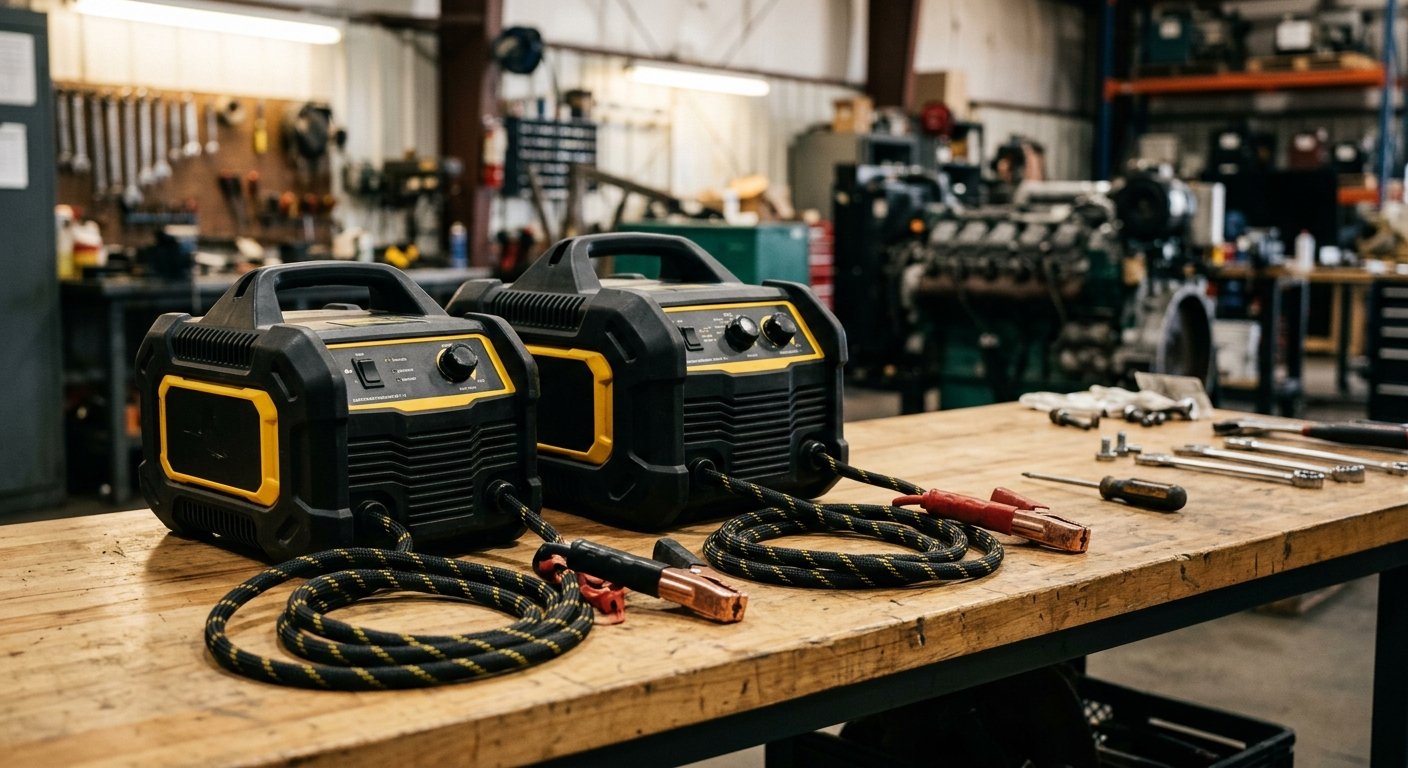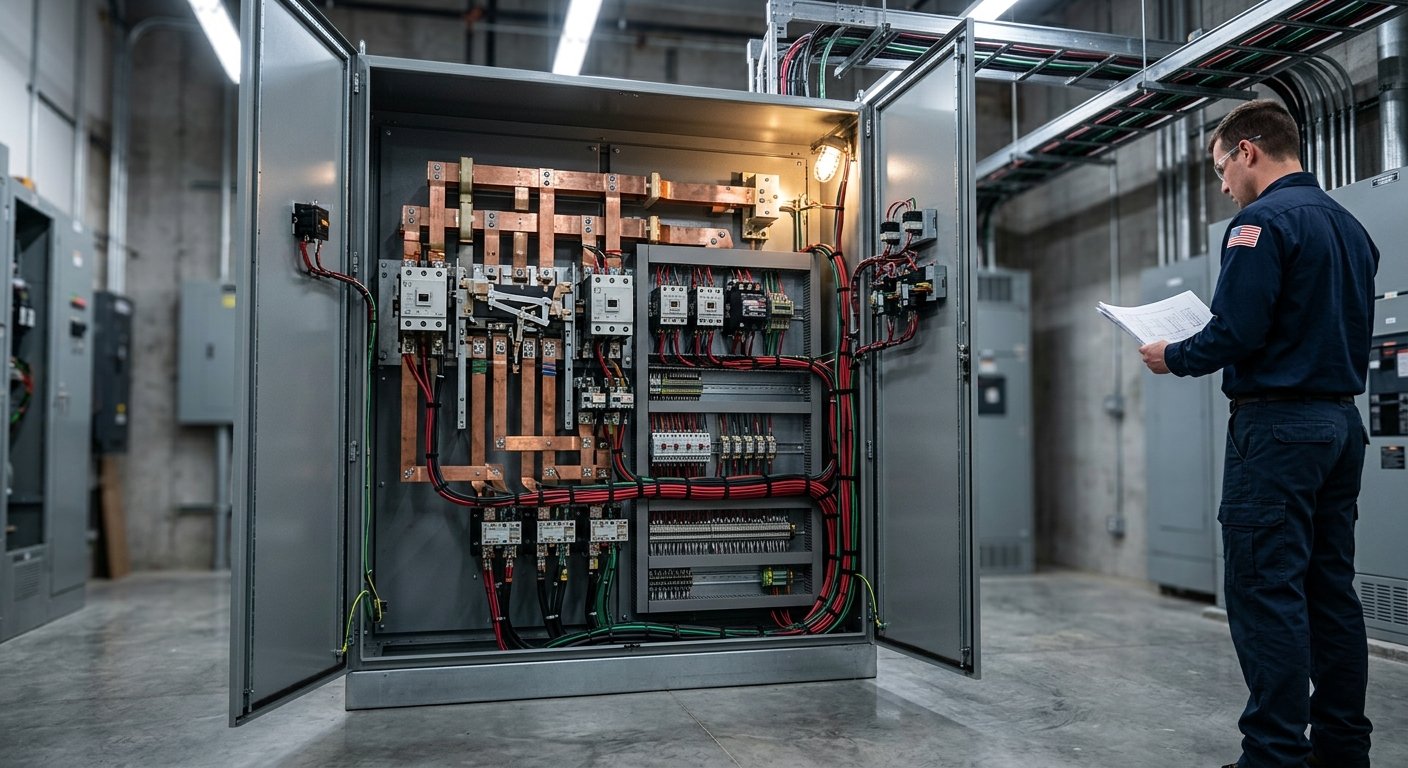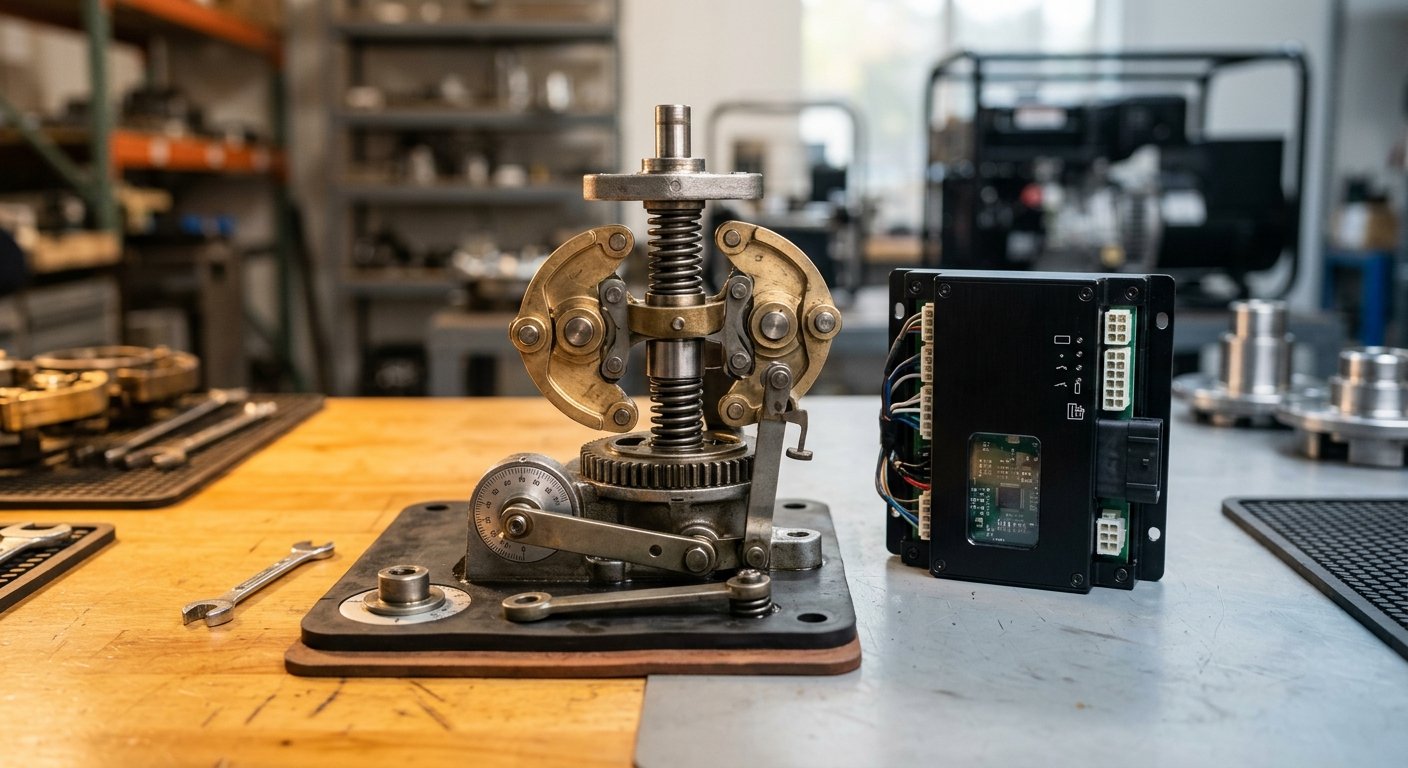



The transfer switch gets most of the attention, but the controller sitting on top of it is what actually runs the show. Pick the wrong ATS controller for your application and you’ll deal with failed transfer sequences, nuisance alarms, and generators that crank when they shouldn’t — or refuse to start when they should. Here’s a practical breakdown of ATS controller types, what separates them, and how to match the right one to your genset and load profile.
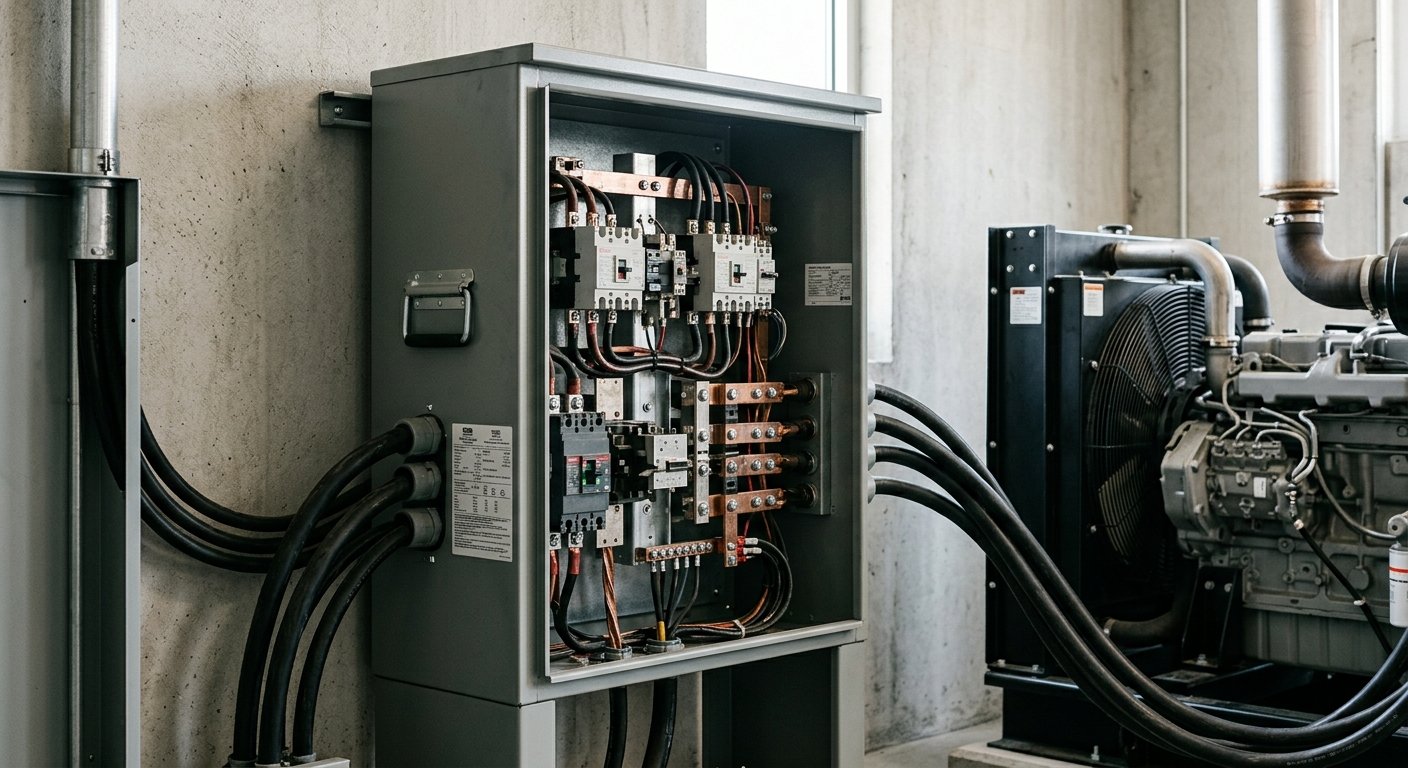
An automatic transfer switch controller monitors both the utility source and the generator source in real time. The moment utility voltage drops outside acceptable thresholds — typically ±10–15% of nominal — the controller sends a start signal to the generator, monitors genset output until it stabilizes, then commands the transfer mechanism to switch the load. When utility power returns and passes a time-delay confirmation window, the controller reverses the sequence and shuts the generator down.
That core logic sounds simple. The complexity is in the adjustability, the communication capability, the load management functions, and whether the controller can handle single-phase residential loads or three-phase automatic transfer switch applications in commercial and industrial settings. According to NFPA 110, emergency power supply systems serving life-safety loads must meet specific transfer time and exerciser requirements — the controller is the component that either satisfies those requirements or fails them.
These handle single-phase, 120/240V residential applications. They offer fixed or lightly adjustable time delays (typically 10–30 seconds on the utility-loss delay, 5–10 minutes on return-to-utility delay), and a built-in exerciser clock for weekly exercise runs. Most residential controllers are integrated directly into the transfer switch housing for standby generator installations in the 7–22 kW range.
What they don’t offer: load shedding, digital communication ports, generator control panel integration, or any ability to manage the generator’s speed and voltage independently. For a Miami-Dade homeowner running a whole-house standby unit off natural gas, that’s fine. For anything more complex, it’s not.
The step up from residential, these controllers manage open-transition transfers — meaning there’s a brief (typically 1/6 to 1/4 cycle) interruption during switching. They’re rated for 100A to 4,000A service in single or three-phase configurations and introduce real adjustability:
These are the workhorses of commercial standby power. A property manager overseeing a mid-rise building in Broward County, or a data center facilities director ordering a replacement ATS unit, will almost always be working with this controller class. The EPA’s combined heat and power documentation reinforces that reliable transfer and load management is foundational to backup power system performance in commercial settings.
Closed-transition controllers allow a momentary (100ms or less) parallel condition between utility and generator before disconnecting one source. This eliminates the transfer transient entirely — no lights flickering, no motor resets, no data hiccups. Hospitals, data centers, hotels, and any facility with sensitive electronics or motorized equipment should be evaluating closed-transition logic.
These controllers require synchronizing capability — they measure frequency, phase angle, and voltage on both sources before commanding the transfer. The genset has to be capable of accepting the sync signal, which means the generator control panel and governor must be compatible. If you’re ordering a replacement ATS controller for a closed-transition application, verify synchronization compatibility before you order.
Used in critical facilities — hospitals, water treatment plants, telecom infrastructure — where the transfer switch itself cannot be taken offline for maintenance. Bypass-isolation ATS controllers allow the load to be manually bypassed around the transfer switch while it’s serviced, all without interrupting power to the facility. These are typically 3-phase automatic transfer switch configurations with Modbus or BACnet communication, remote monitoring, and full NFPA 110 compliance logging built in.
The controller complexity is significant, and so is the price point. Don’t specify bypass-isolation when a standard open-transition unit will serve the application — but don’t try to save money by downgrading in a true critical-facility setting.
This is the fastest-growing category. Smart ATS controllers integrate directly with building management systems (BMS), generator control panels via Modbus RTU/TCP, CANbus, or Ethernet, and remote monitoring platforms. They offer:
For fleet maintenance staff managing 20 generators across multiple facilities, or for Caribbean buyers running prime-power gensets in remote locations with satellite monitoring, smart controller integration isn’t a luxury — it’s the only way to manage that kind of operational footprint.
Use a basic residential integrated controller. Prioritize models with a programmable exercise clock, voltage/frequency sensing on both legs, and a weatherproof enclosure appropriate for South Florida’s humidity. If the home runs a well pump, sump, or large HVAC system, confirm the controller’s start current handling.
Open-transition commercial controller. Prioritize adjustable time delays, generator control panel compatibility, and NFPA 110 exerciser compliance. Most transfer switches for generators in this range ship with a controller pre-matched to the switch rating — confirm before ordering a standalone replacement.
Evaluate whether the facility requires open or closed transition based on load sensitivity. Add bypass-isolation if the switch cannot be taken offline. Specify a smart controller if BMS integration or remote monitoring is required. This is the application class where genset controller and ATS controller compatibility becomes critical — mismatched communication protocols will cost hours of commissioning time.
Bypass-isolation with closed-transition logic and full NFPA 110 compliance. No exceptions. Document controller settings and test results — NFPA 110 requires monthly functional tests and documented annual full-load tests.
The most expensive mistake in ATS controller replacement is ordering by amperage alone. A 400A, 480V, 3-phase ATS controller slot can accept controllers with wildly different feature sets, communication protocols, and start-signal voltage requirements. Check:
If you’re not certain, call before you order. The team at MTS Power Products — reachable at 305-634-1511 — can help you cross-reference controller models against your existing switch and genset specs. Getting it right the first time is worth the five-minute call.
The ATS controller doesn’t operate in isolation. It’s downstream of the generator’s automatic voltage regulator (AVR), which must stabilize output before the controller will command a transfer. It relies on the battery charger maintaining starting battery health so the start signal actually fires. And on smart controllers, it communicates directly with the generator control panel — which, on MTS-built gensets, means McPherson Controls panels engineered in-house and matched to the specific engine platform.
Treating the ATS controller as an isolated component is how technicians end up chasing phantom faults. Treat it as one node in an interconnected system, and troubleshooting becomes logical rather than frustrating.
The generator control panel monitors and controls the genset itself — governing engine speed, voltage regulation, fault shutdown, and run/stop logic. The ATS controller monitors both power sources and commands the transfer mechanism. They communicate with each other but perform different functions. On smart systems, a single interface may display both, but they remain distinct control layers.
Usually not without significant hardware changes. Closed-transition switching requires mechanically different contactor timing and synchronizing relay hardware, not just a different controller board. Verify with the switch manufacturer before attempting an upgrade.
Look for documentation of the ATS’s transfer time (Level 1 requires transfer within 10 seconds for life-safety loads), a programmable exerciser, and fault logging capability. NFPA 110 specifies the system requirements; the controller must support whatever test and documentation protocol your authority having jurisdiction (AHJ) enforces.
If your utility service and generator are both three-phase — which is standard for most commercial facilities above roughly 25 kW — yes. Single-phase ATS units cannot handle three-phase loads. Mismatching phases will damage equipment and void transfer switch ratings.
The most common causes are voltage transients from utility switching events, corroded control wiring connections (especially in coastal environments like South Florida), control board exposure to moisture, and repeated nuisance cycling caused by poorly adjusted time delays. Annual inspection of controller connections and enclosure seals will significantly extend service life.
Need help identifying the right ATS controller for your genset or replacement application? MTS Power Products supplies transfer switches and ATS components direct from manufacturers to technicians, electricians, and facility teams nationwide. Our Miami-based team knows generator systems from the ground up — call us at 305-634-1511 or visit our transfer switch product page to find the right fit for your application.
MTS Power Products is a Miami-based, manufacturer-direct supplier of generator parts — including AVRs, transfer switches, battery chargers, and governors — serving commercial, marine, and residential backup power needs nationwide. They combine deep technical expertise with personalized service, helping generator technicians, electricians, facility managers, marine operators, and homeowners select the right parts and keep their backup power systems running reliably. Their direct-from-manufacturer model delivers fair pricing and knowledgeable support that big-box distributors cannot match. Visit mtspowerproducts.com →