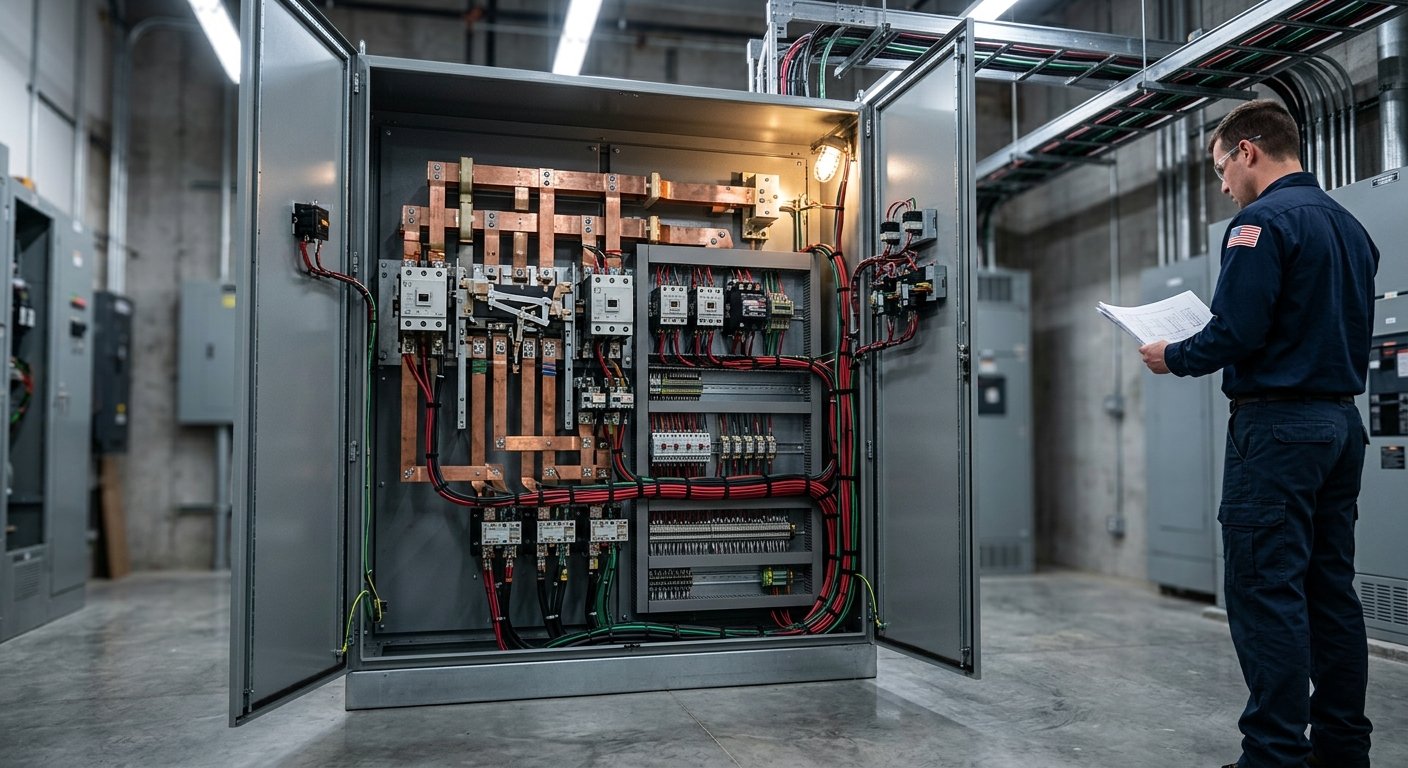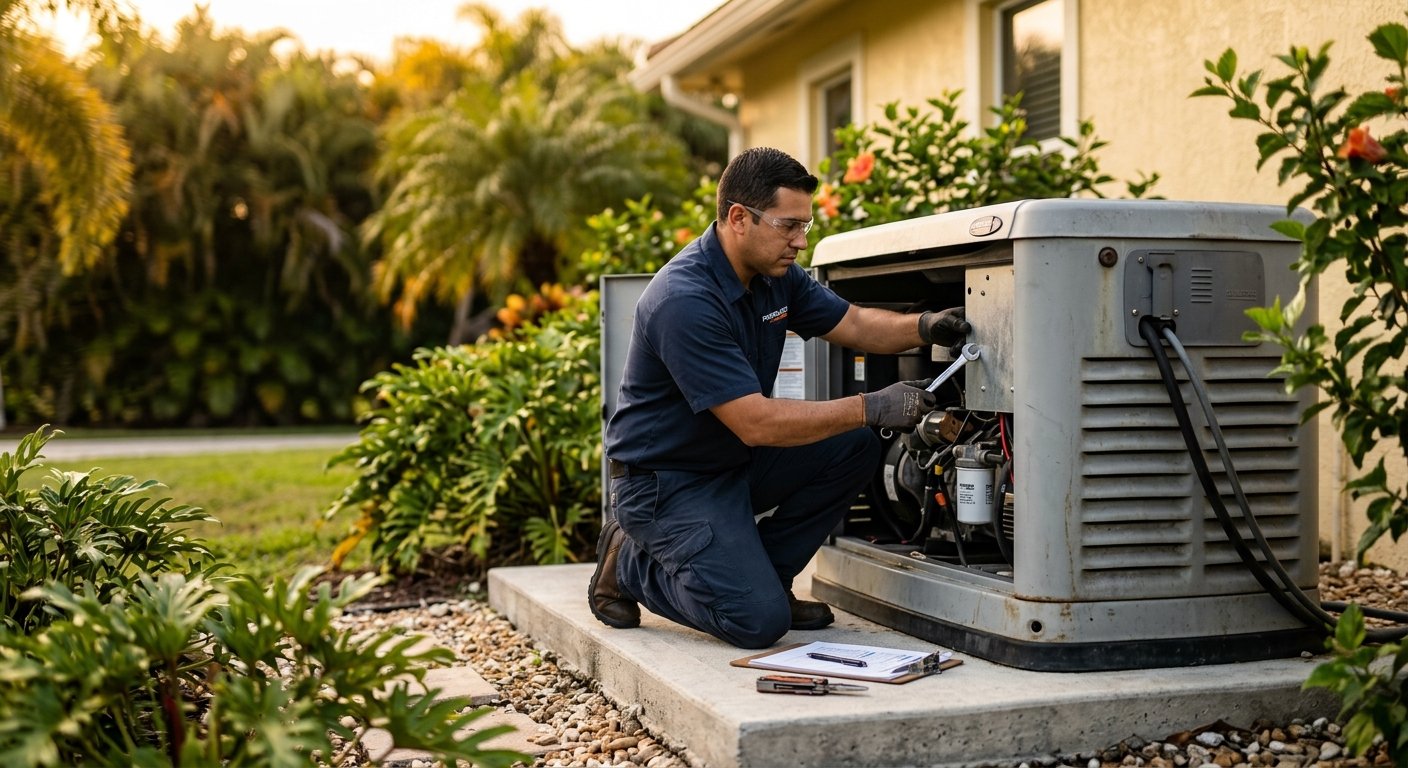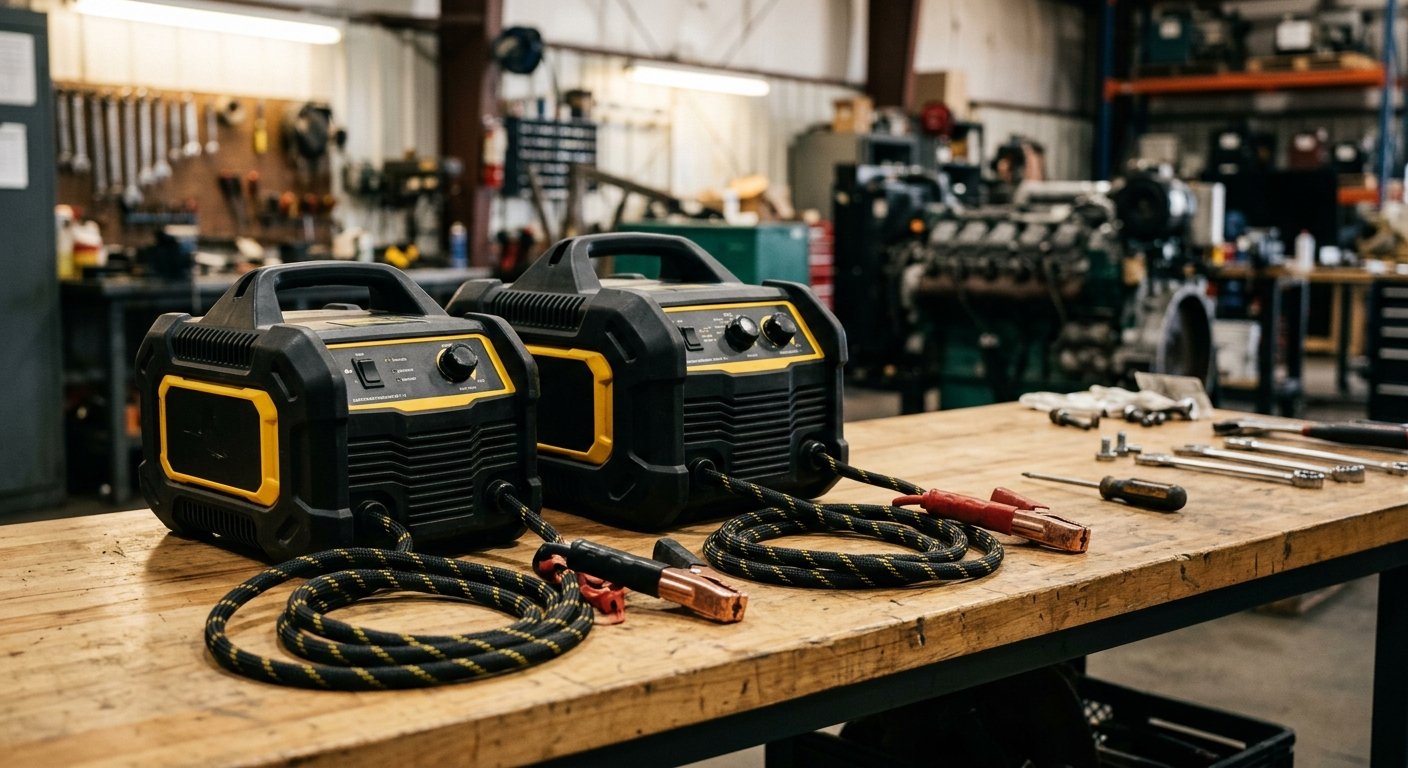



Choose a generator battery charger that matches your battery bank voltage exactly — 12V for most residential and small commercial standby generators, 24V for larger commercial or industrial units with 24-volt start batteries. Mismatching charger voltage to battery voltage will either undercharge the battery or damage it. Get the voltage right first, then match the charger’s amperage to your battery’s capacity.
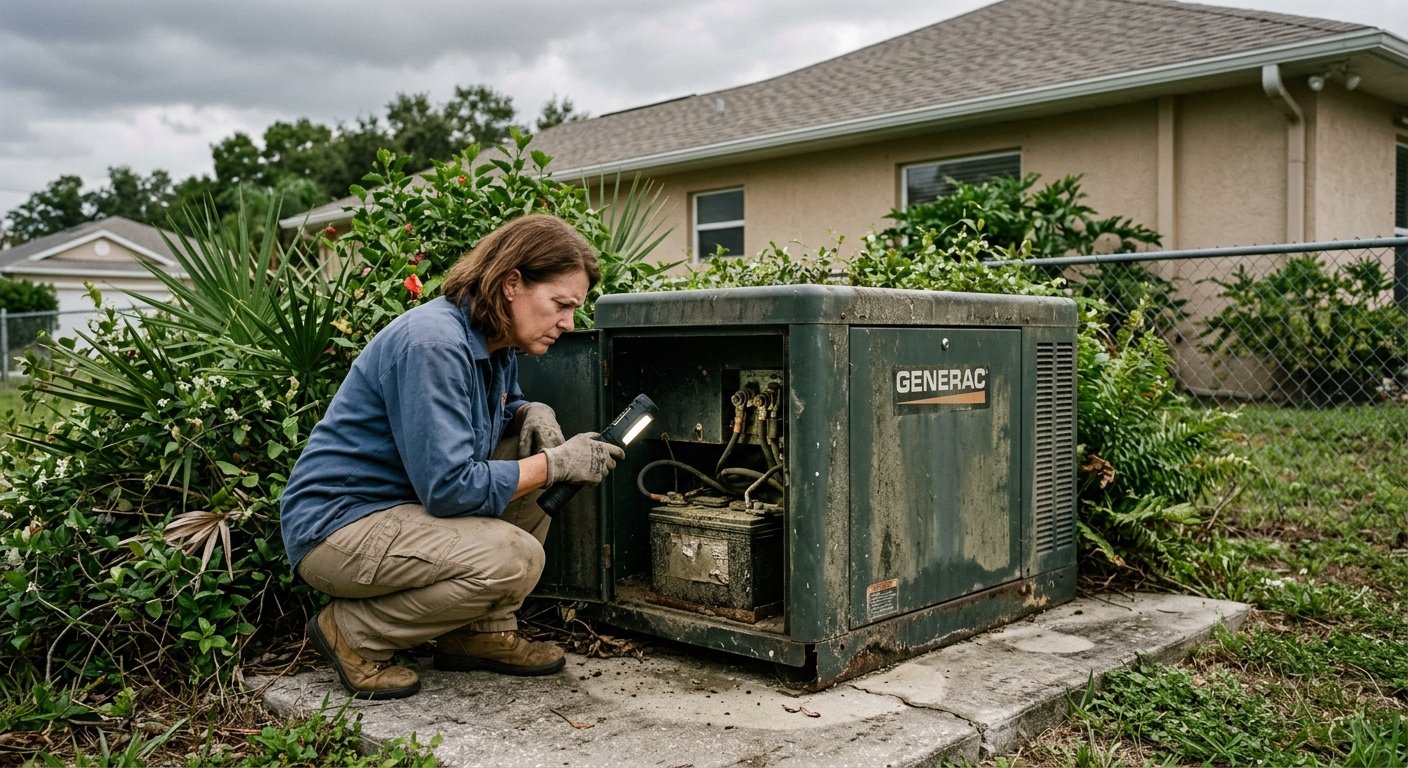
Generator batteries fail silently. A standby generator can sit untested for weeks, then face a Category 1 hurricane making landfall near Miami — and the battery that looked fine last month can’t deliver enough cold cranking amps to start the engine. According to the U.S. Department of Energy, battery failure is one of the leading causes of standby generator startup failures during actual power outages.
The fix isn’t complicated. A properly matched, continuously connected automatic battery charger keeps the battery at full capacity through months of standby without overcharging it. But “properly matched” starts with getting the voltage right — and that’s where many technicians and homeowners make their first mistake.
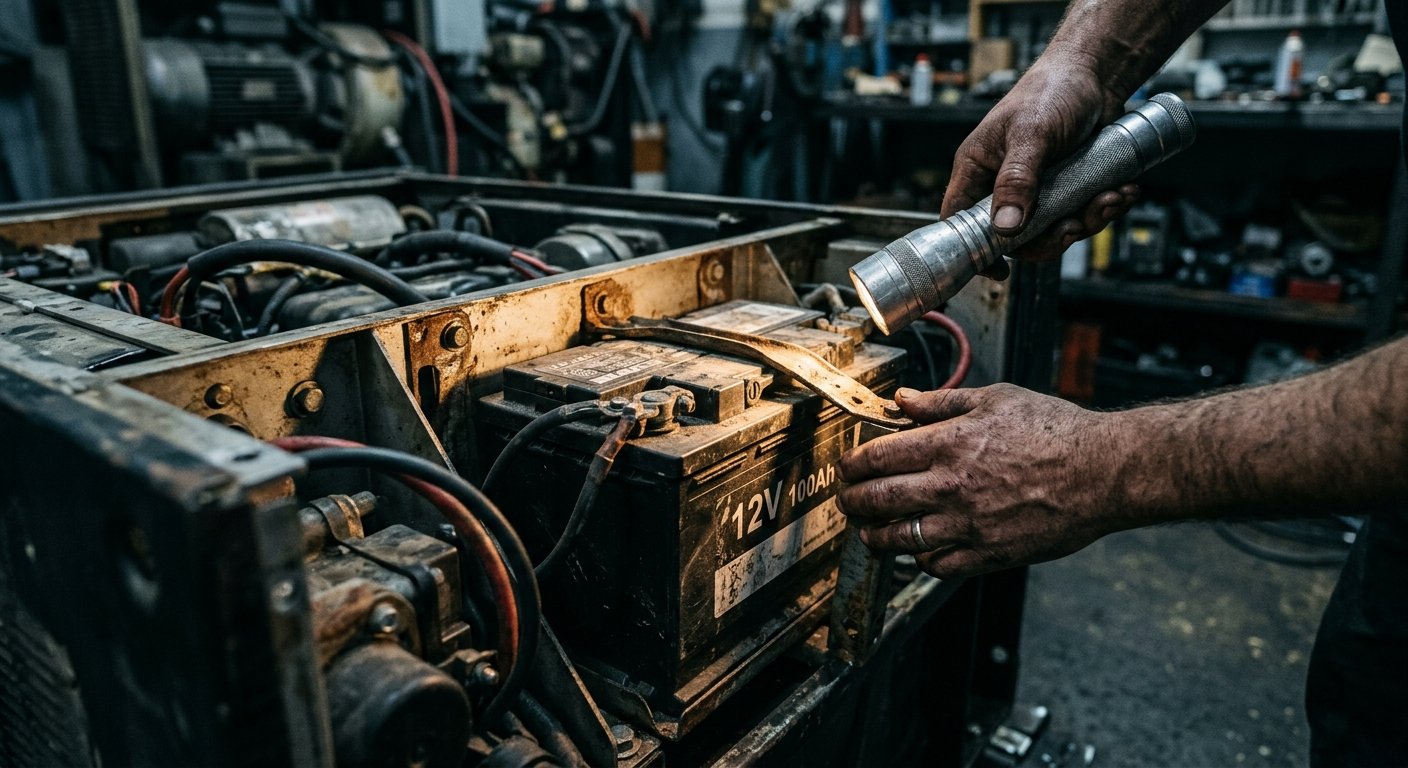
Before buying anything, confirm what’s actually installed in your generator. Open the battery compartment and look at the label on the battery itself — it will state either 12V or 24V. If you see two 12V batteries wired in series, that’s a 24V system. Two batteries wired in parallel is still a 12V system.
Your generator’s service manual or spec sheet will also list the starting battery voltage. If you’ve lost the manual, the engine manufacturer — Cummins, John Deere, Kohler, Generac — typically publishes this data in their service documentation. For commercial gensets MTS builds on John Deere or Cummins platforms, the correct battery voltage is always specified in the unit’s documentation.
Never assume based on generator size alone. Some compact 20kW commercial units use 24V start systems, while some larger residential units use 12V. Always read the battery label or spec sheet before ordering a charger.
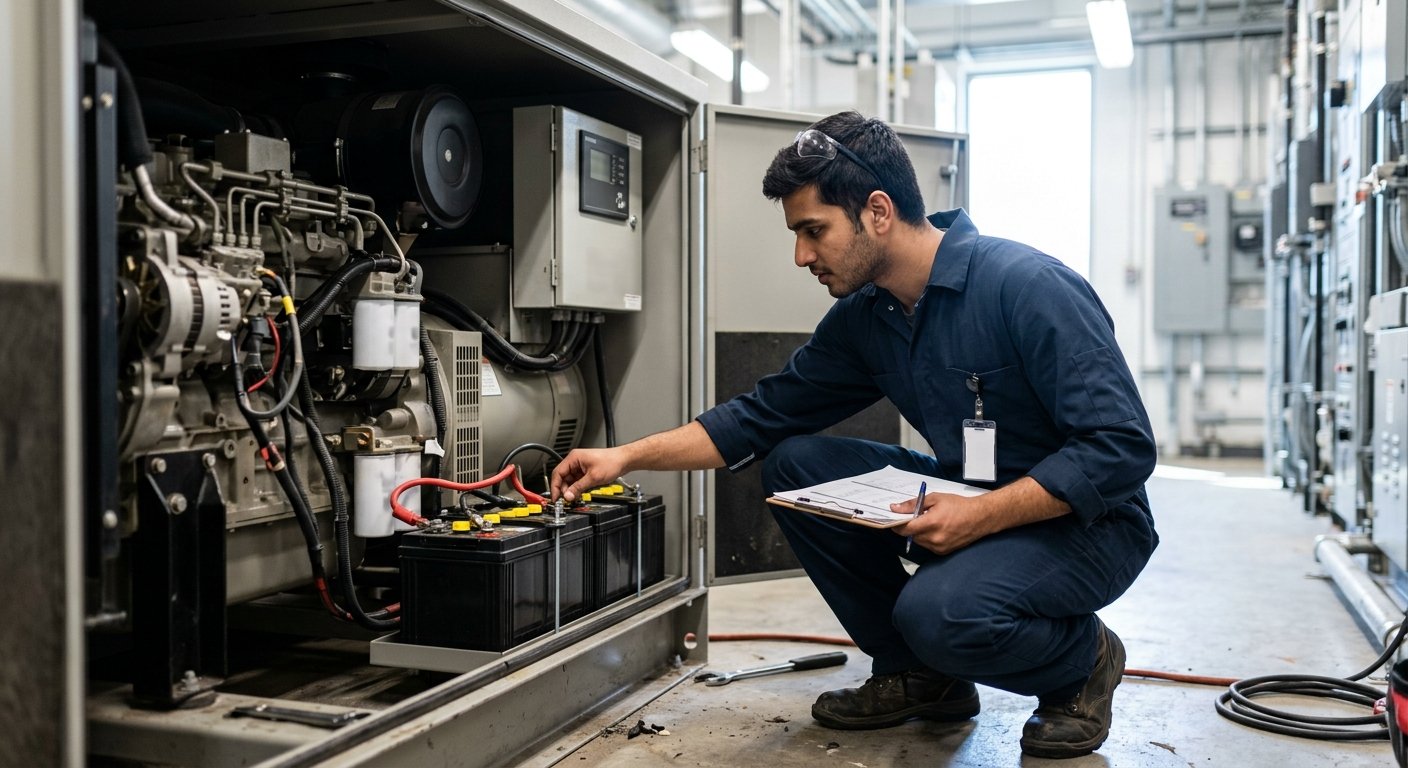
Understanding the practical differences between these two systems helps you select not just the right charger, but also troubleshoot start problems and plan for battery replacement correctly.
| Characteristic | 12V System | 24V System |
|---|---|---|
| Typical application | Residential standby, small commercial (8–30kW) | Large commercial, industrial, marine (30kW+) |
| Battery configuration | Single 12V battery or two in parallel | Two 12V batteries in series |
| Charger availability | Widely available, more options | More specialized; verify compatibility |
| Charger voltage output | ~13.6–13.8V float | ~27.2–27.6V float |
| Risk if wrong charger used | Undercharge (too low) or damage (too high) | Same; 12V charger will fail to fully charge a 24V bank |
A standard manual charger applies a constant current until you unplug it. Leave it connected too long and you boil the electrolyte out of a flooded lead-acid battery. That’s unacceptable for a generator that’s supposed to be ready 24/7.
An automatic battery charger for generator standby applications uses multi-stage charging: bulk charge to replenish the battery, absorption phase to bring it to full capacity, then float mode to maintain charge without overcharging. Some units add a desulfation stage that can recover mildly sulfated batteries that would otherwise need replacement.
This matters especially in South Florida, where high ambient temperatures accelerate self-discharge and can shorten battery life if a charger isn’t dialed in correctly. A quality float charger for generator battery maintenance compensates for temperature, adjusting voltage output to prevent heat-related overcharge damage.
If your generator is located in an unconditioned space in Miami-Dade or Broward County, look for a charger with temperature compensation. Battery chemistry changes with heat, and a charger that doesn’t adjust its float voltage will slowly degrade the battery through overcharge.
Once voltage is confirmed, match amperage to your battery’s capacity. The general industry guideline — supported by Battery University’s charging documentation — is to charge at a rate of 10–20% of the battery’s amp-hour (Ah) rating. A 100Ah battery should be charged at 10–20 amps.
For most residential standby generators with a single group 27 or group 31 battery (typically 85–105Ah), a 10-amp charger is sufficient and common. For 24V industrial systems with larger battery banks, you may need 15–25 amps to achieve reasonable charge times without stressing the battery.
Check the battery label. Note if two batteries are wired in series (24V) or parallel (12V). Cross-reference with the generator’s spec sheet.
It’s printed on the battery label. If the battery is original equipment, the generator manual will list it. This determines the charger’s required amperage output.
Confirm the charger outputs the correct voltage (12V or 24V) and provides bulk, absorption, and float stages. Temperature compensation is a bonus in hot climates.
Connect the charger permanently to AC power. Use a multimeter to verify it’s producing the correct float voltage after the battery reaches full charge.
Generator battery maintenance failures follow predictable patterns. Recognizing them saves money and prevents failures at the worst possible time.
A generator that won’t start during a hurricane isn’t a backup power system — it’s an expensive piece of yard equipment.
MTS Power Products supplies automatic battery chargers designed specifically for generator standby applications — both 12V and 24V configurations. As a manufacturer-direct parts supplier, MTS sources chargers built to the tolerances generator applications demand, not rebranded automotive parts. The product selection covers residential units through commercial and marine applications, and the Miami-based team can help you confirm the right charger for your specific generator model before you order.
If you’re also dealing with voltage regulation issues on the generator’s output side, the AVR automatic voltage regulators category covers that separately — don’t confuse the starting battery charger with the AVR, which regulates AC output voltage, not the DC start circuit. For a full overview of available replacement components, the generator parts store is organized by component type. You can also browse the full battery charger selection to compare available models by voltage and amperage rating.
For marine operators and Caribbean buyers running 24V systems on larger commercial gensets, MTS ships nationwide and to international destinations — confirm specifics with the team directly before ordering.
A 12V charger connected to a 24V battery bank will attempt to charge but can only bring the bank to roughly half its rated voltage. The battery will remain in a partially discharged state, accelerating sulfation and reducing battery life. Eventually the generator will fail to start. Always match charger voltage to battery system voltage.
Check the battery label inside the generator’s battery compartment. If you see one battery marked 12V, you need a 12V charger. If you see two 12V batteries connected in series (positive of one to negative of the other), that’s a 24V system requiring a 24V charger. Your generator’s service manual will also specify this.
Yes — that’s exactly how automatic float chargers are designed to be used. Once the battery reaches full charge, the charger drops to float mode and maintains the battery without overcharging it. This is the correct approach for standby generators that may sit unused for weeks or months between exercise cycles.
Most generator manufacturers recommend replacing the starting battery every three years regardless of apparent condition. In hot climates like South Florida, high ambient temperatures accelerate battery degradation and may warrant replacement closer to two years. A continuously connected automatic charger helps maximize service life within that window.
No. A battery charger maintains the DC starting battery that cranks the engine. An automatic voltage regulator (AVR) controls the generator’s AC output voltage during operation. They serve completely different functions and are separate components. A generator with a failing battery charger may not start; one with a failing AVR starts but produces unstable output voltage.
Confirm your battery voltage, tell us your generator model, and the MTS team will point you to the right charger — manufacturer-direct, no guesswork.
MTS Power Products is a Miami-based, manufacturer-direct supplier of generator parts — including AVRs, transfer switches, battery chargers, and governors — serving commercial, marine, and residential backup power needs nationwide. They combine deep technical expertise with personalized service, helping generator technicians, electricians, facility managers, marine operators, and homeowners select the right parts and keep their backup power systems running reliably. Their direct-from-manufacturer model delivers fair pricing and knowledgeable support that big-box distributors cannot match. Visit mtspowerproducts.com →