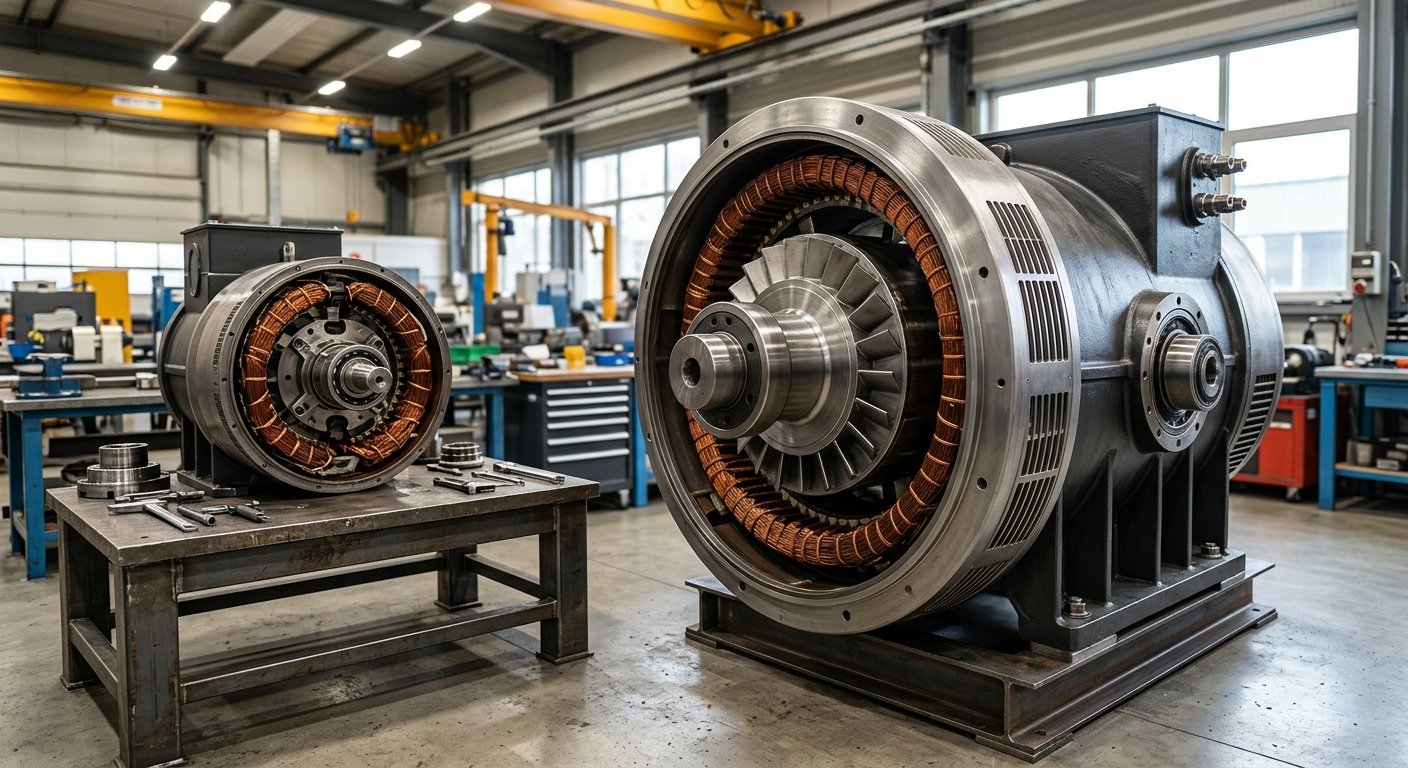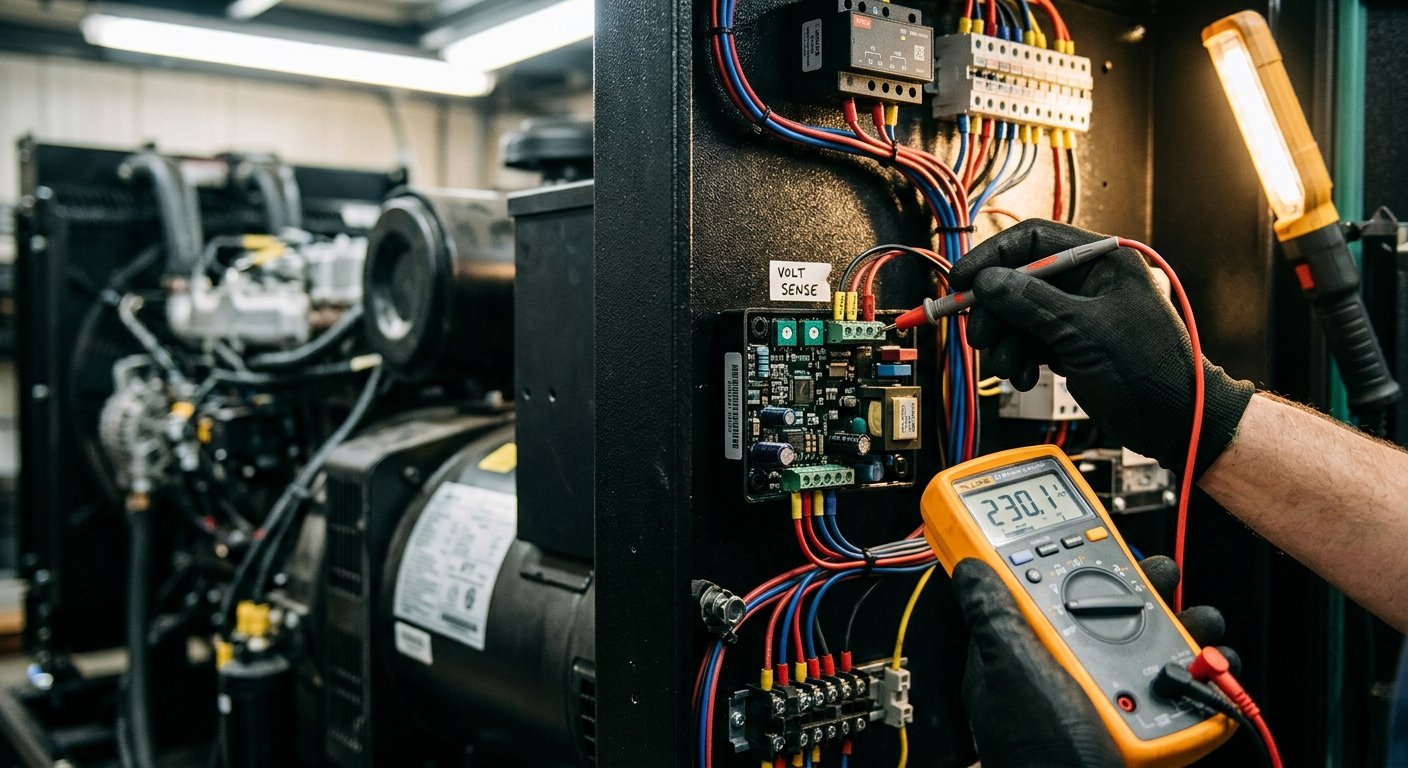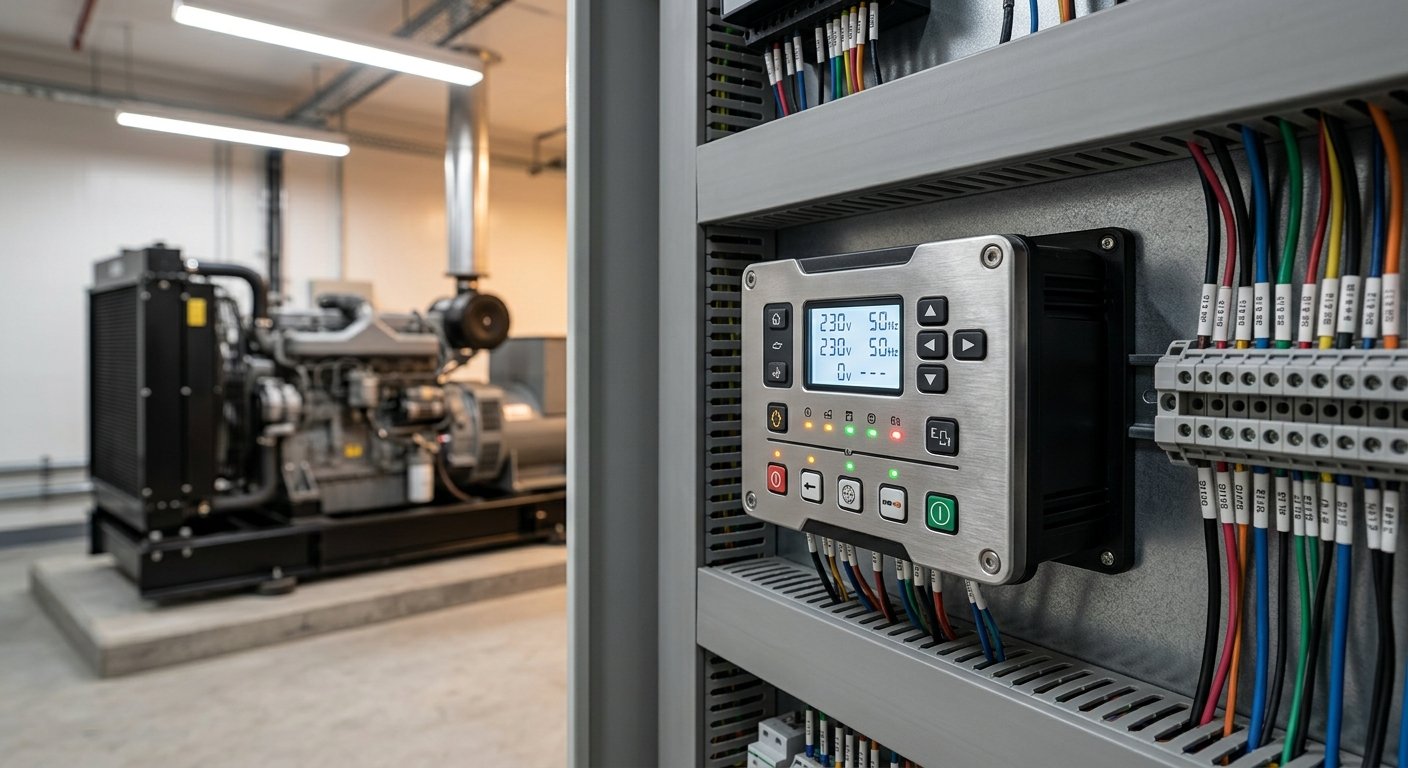



An auto start generator controller monitors utility power, detects an outage, and automatically cranks the engine, confirms voltage and frequency, then signals a transfer switch to shift the load — all within 10 to 30 seconds, without any human input. It also handles safe cooldown and retransfer when utility power returns. Any standby genset intended for unattended operation needs one.
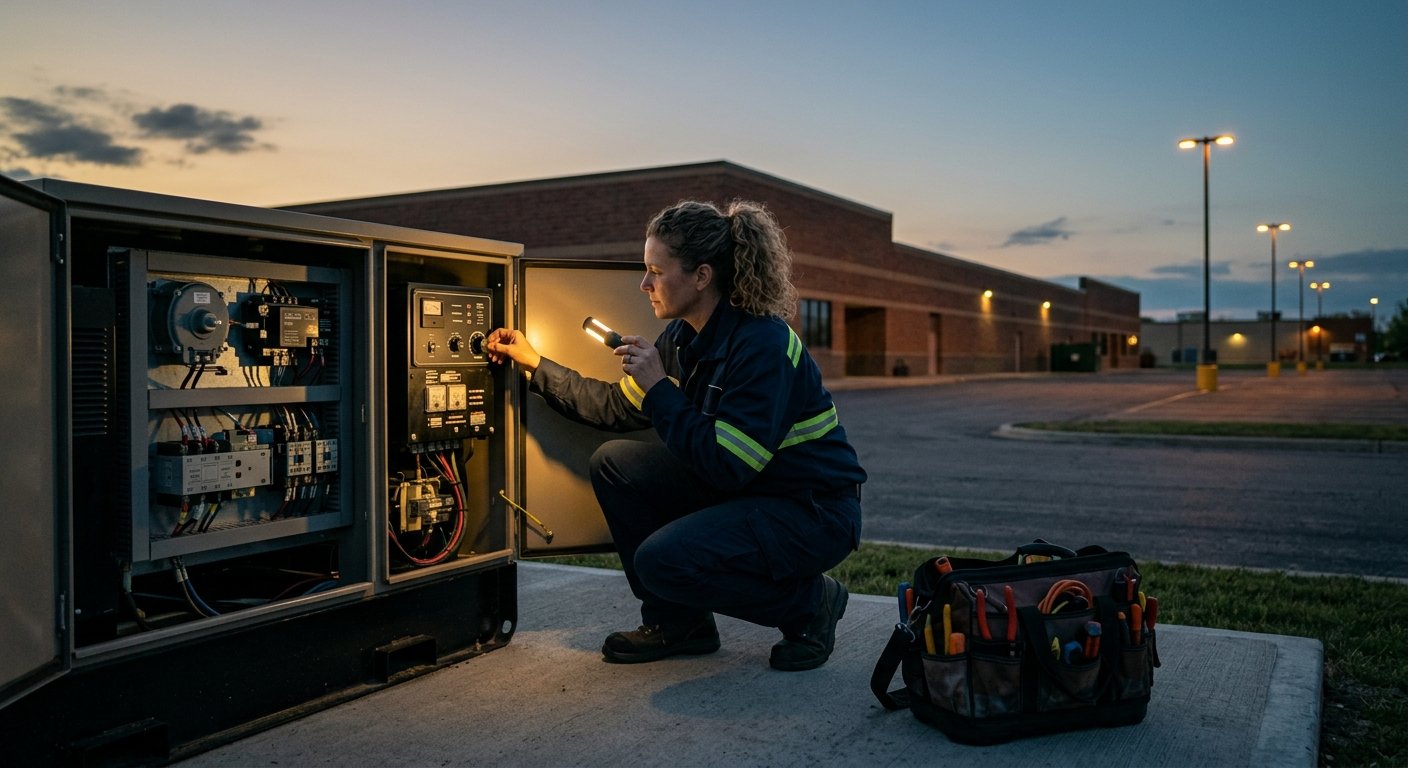
Strip away the jargon and a generator controller is a supervisory relay — a smart one. It sits between the engine, the alternator, and the transfer switch, reading sensor inputs and executing a preprogrammed start sequence the moment grid voltage drops outside acceptable limits (typically ±10% of nominal, though this is adjustable on most units).
Here’s the chain of events in plain terms: utility power drops. The controller’s voltage-sensing circuit detects the sag within milliseconds. A configurable time delay — usually 3 to 10 seconds — prevents the controller from reacting to momentary blinks. If the outage persists past that delay, the controller energizes the starter motor. Most units allow up to three crank attempts with rest periods between them. Once the alternator reaches target voltage and frequency (typically 57–63 Hz on a 60 Hz system), the controller sends a “generator ready” signal to the ATS, which transfers the load. The whole sequence, from first crank to load transfer, commonly runs 10 to 30 seconds on a well-maintained system.
That 10-to-30-second window is why hospitals, data centers, and other critical facilities pair their standby generators with UPS systems. The ATS and genset controller handle the sustained outage; the UPS bridges the gap. Designing for both is standard practice under NFPA 110, which governs emergency and standby power systems.
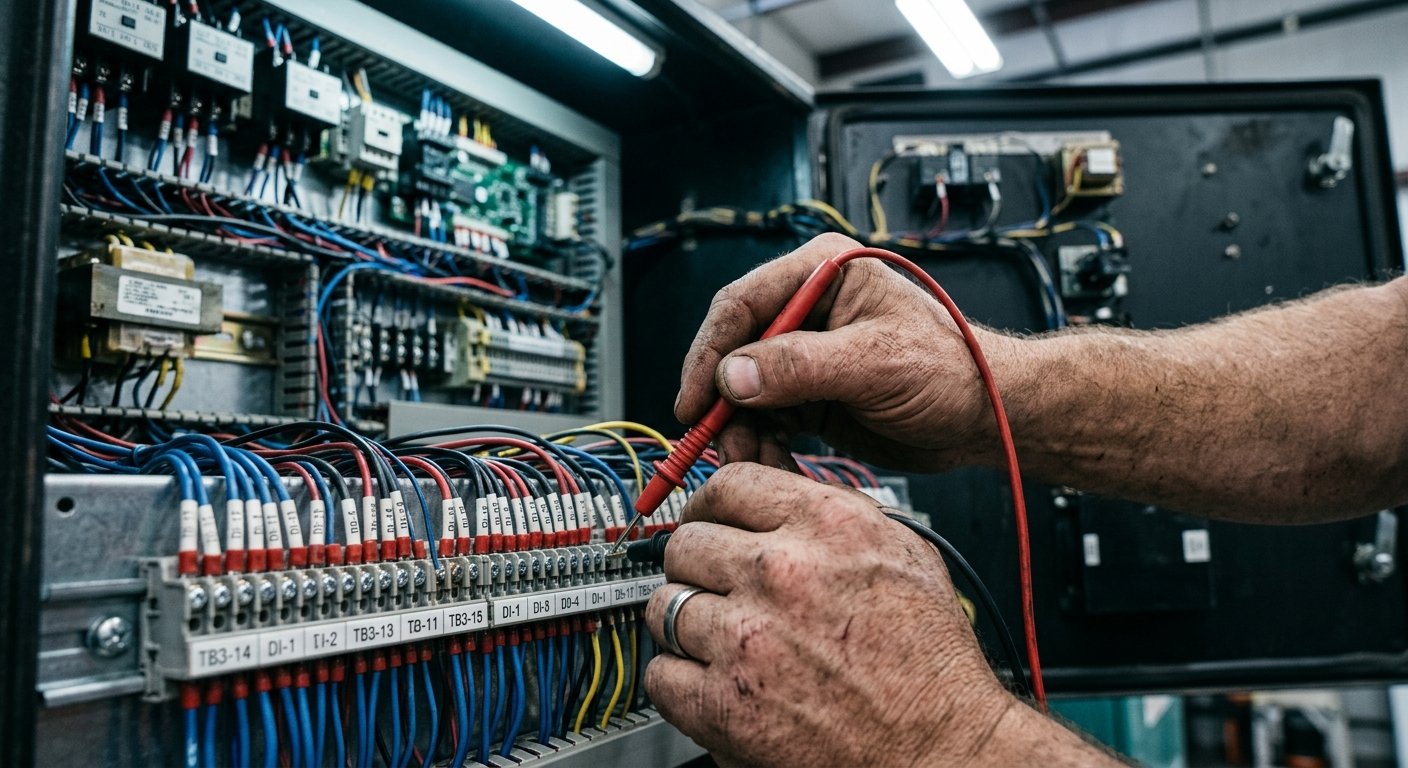
A genset controller is only as good as the data it receives. Understanding its I/O helps you diagnose faults faster.
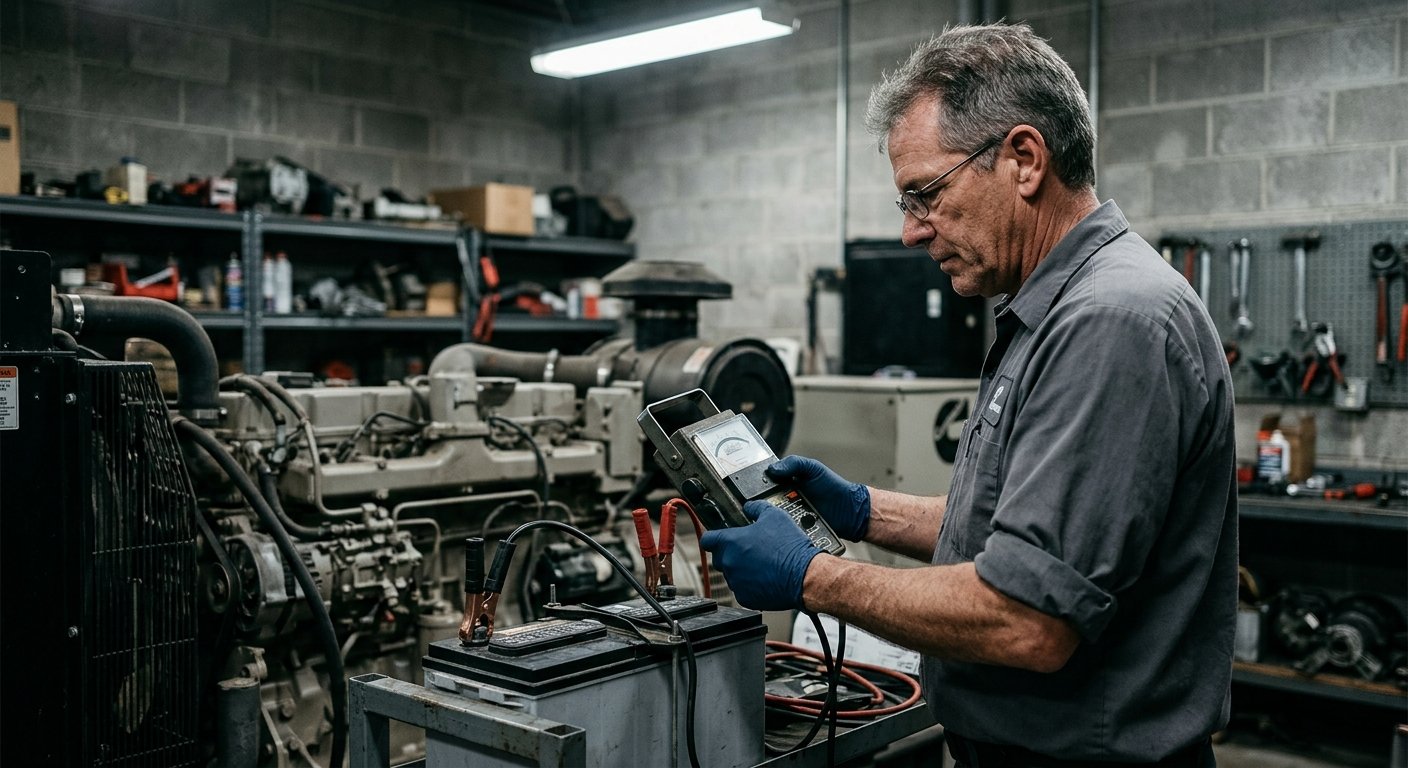
If a generator won’t start during a battery problem, the controller gets blamed — but the controller is usually fine. The battery is the weak link. An auto-start controller sends the crank command correctly; if the battery can’t deliver enough cold-cranking amps to spin the starter, the sequence fails. On many residential and light-commercial units, this failure is silent: the controller logs a “failed to start” fault, sets a lockout, and stops trying. The owner discovers the generator never ran during the outage.
A generator that won’t start during battery problems isn’t a controller failure — it’s a maintenance failure the controller was designed to warn you about.
Modern controllers help you catch this before it matters. They monitor float voltage continuously and can trigger a low-battery alarm well before the battery can’t crank. If you’re seeing battery-related fault codes, check the battery charger first — a failed trickle charger is often the root cause. MTS Power Products carries generator battery chargers designed specifically for standby applications, where the charger runs continuously in float mode for months at a time.
Never assume a generator is ready just because it started during last month’s exercise. Lead-acid batteries can test acceptable under light load and still fail under the high-current demand of a cold engine start. Load-test your starting battery annually, or more often in South Florida’s heat, which accelerates battery degradation significantly.
A common source of confusion — especially when buying replacement parts — is treating the generator controller and the automatic transfer switch as interchangeable. They are not.
| Function | Auto Start Controller | Automatic Transfer Switch (ATS) |
|---|---|---|
| Detects utility outage | Yes (primary sensing) | Sometimes (in integrated ATS units) |
| Cranks the engine | Yes | No |
| Switches load to generator | No | Yes |
| Monitors engine parameters | Yes | No |
| Handles retransfer to utility | Sends signal | Executes the switch |
| Location | Generator control panel | Main electrical panel or dedicated enclosure |
When you’re sourcing replacement components, matching the control signal interface between these two devices matters. An ATS expecting a dry contact closure from the controller won’t respond correctly to a voltage signal, and vice versa. If you’re unsure about compatibility, the team at MTS Power Products — a manufacturer-direct supplier with deep application knowledge — can help you match parts before you order. You can also browse the transfer switch catalog and compare control input specs directly.
Controller senses voltage dropout on the utility sensing input. The configurable time-delay timer starts — typically 3 to 10 seconds to filter blinks and momentary sags.
Controller verifies the emergency stop is not active and battery voltage is above the minimum threshold. On diesel units, it may energize glow plugs for a preheat cycle.
Starter relay closes. Fuel solenoid opens. Controller allows a crank window (typically 10–15 seconds), then rests if the engine doesn’t fire. Up to three attempts before fault lockout.
Once the engine fires, the controller monitors alternator output. When voltage and frequency stabilize within setpoints, a configurable warm-up timer runs (typically 5–15 seconds) before sending the transfer signal.
Controller sends a “ready” signal to the ATS. The ATS opens the utility contactor and closes the generator contactor, shifting the building load to standby power.
When utility power returns and stabilizes, the ATS retransfers. The controller keeps the engine running unloaded for a cooldown period — typically 3 to 5 minutes — before shutting down to protect the turbocharger and exhaust components.
The auto start controller manages the engine side of the equation. The automatic voltage regulator (AVR) manages the alternator output. These two components work in parallel: the controller brings the engine to operating speed, and the AVR stabilizes output voltage under varying loads. If your generator starts but output voltage fluctuates or “hunts” — rising and falling rhythmically under load — the AVR is the likely culprit, not the controller. Understanding which component owns which function saves significant diagnostic time.
According to the U.S. Department of Energy’s distributed generation guidance, voltage regulation quality directly affects sensitive loads like motors, variable-frequency drives, and electronic equipment — making a properly matched AVR as important as the controller itself in commercial and industrial installations.
The most common causes are low battery voltage (below the controller’s minimum threshold), an active emergency stop signal, or a fault from a previous failed-start sequence that wasn’t reset. Check battery voltage first — if it reads below 11V on a 12V system or below 22V on a 24V system under no load, the battery or charger is the problem, not the controller.
Yes, in most cases — but you must verify that the replacement controller’s ATS output signal matches what your existing transfer switch expects. Mismatched signal types (dry contact vs. voltage output) are a common installation error. Confirm the ATS input specifications before ordering a replacement controller.
Start by reading the fault code on the controller display — most modern units store fault history. Verify that battery voltage, oil pressure, and emergency stop inputs are all within normal range. If all inputs are good and the controller still won’t initiate a crank sequence, the controller module itself may need replacement. A qualified technician can test output relay function with a multimeter before condemning the unit.
AMF stands for Automatic Mains Failure — it’s a term used internationally for what the US market typically calls an auto start controller. Both do the same job: detect utility failure, start the generator, and signal a transfer switch. The terminology differs by region, but the function is identical.
Most manufacturers and NFPA 110 recommend a minimum monthly exercise run under load for at least 30 minutes. Regular exercise keeps the battery charged via the alternator’s charging output, prevents fuel gelling, and confirms the full auto-start sequence works correctly before you actually need it.
MTS Power Products ships generator controllers, AVRs, ATS units, and battery chargers direct from manufacturer — call our Miami team for application support before you order.
MTS Power Products is a Miami-based, manufacturer-direct supplier of generator parts — including AVRs, transfer switches, battery chargers, and governors — serving commercial, marine, and residential backup power needs nationwide. They combine deep technical expertise with personalized service, helping generator technicians, electricians, facility managers, marine operators, and homeowners select the right parts and keep their backup power systems running reliably. Their direct-from-manufacturer model delivers fair pricing and knowledgeable support that big-box distributors cannot match. Visit mtspowerproducts.com →