


Ask five generator technicians what they call the rotating machine that converts mechanical energy into electricity, and you’ll hear at least three different terms — generator end, generator head, alternator end. They’re not all wrong, but the distinctions matter when you’re ordering replacement parts.
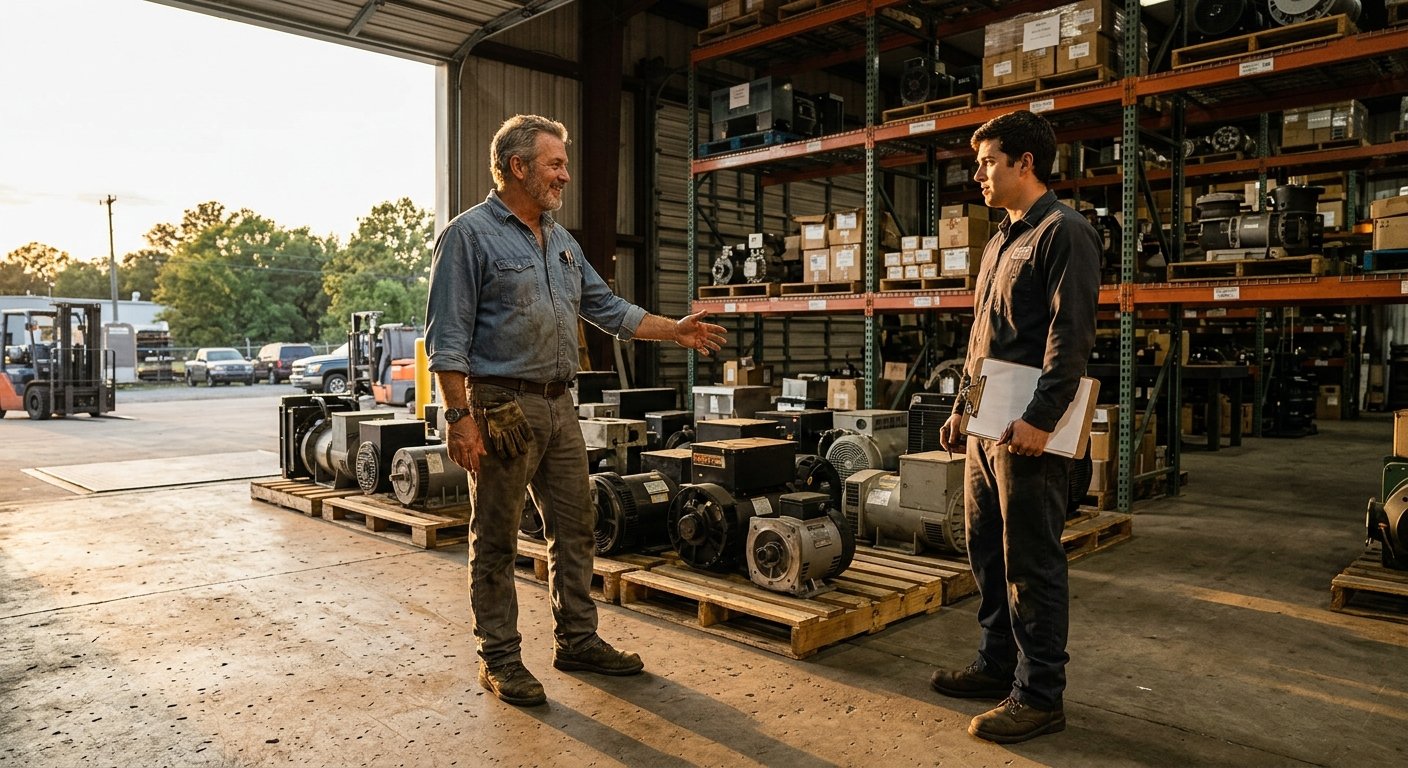
The power generation industry never standardized its vocabulary the way, say, the electrical code did. Manufacturers like Stamford, Leroy-Somer, and Mecc Alte use “alternator” in their datasheets. Field technicians in the American South often say “generator head.” Equipment dealers frequently say “generator end.” And when someone tacks a tractor-driven unit onto a hay wagon, they call it a “PTO generator head.” Same family of machines, four different names.
This is more than a vocabulary quiz. If you call a supplier and ask for a “generator head” without clarifying the application, voltage class, frame size, and coupling type, you are very likely to receive the wrong unit — or at minimum trigger a long diagnostic back-and-forth that wastes everyone’s time.
The right part number starts with the right name — and the right name starts with knowing exactly what you’re replacing.
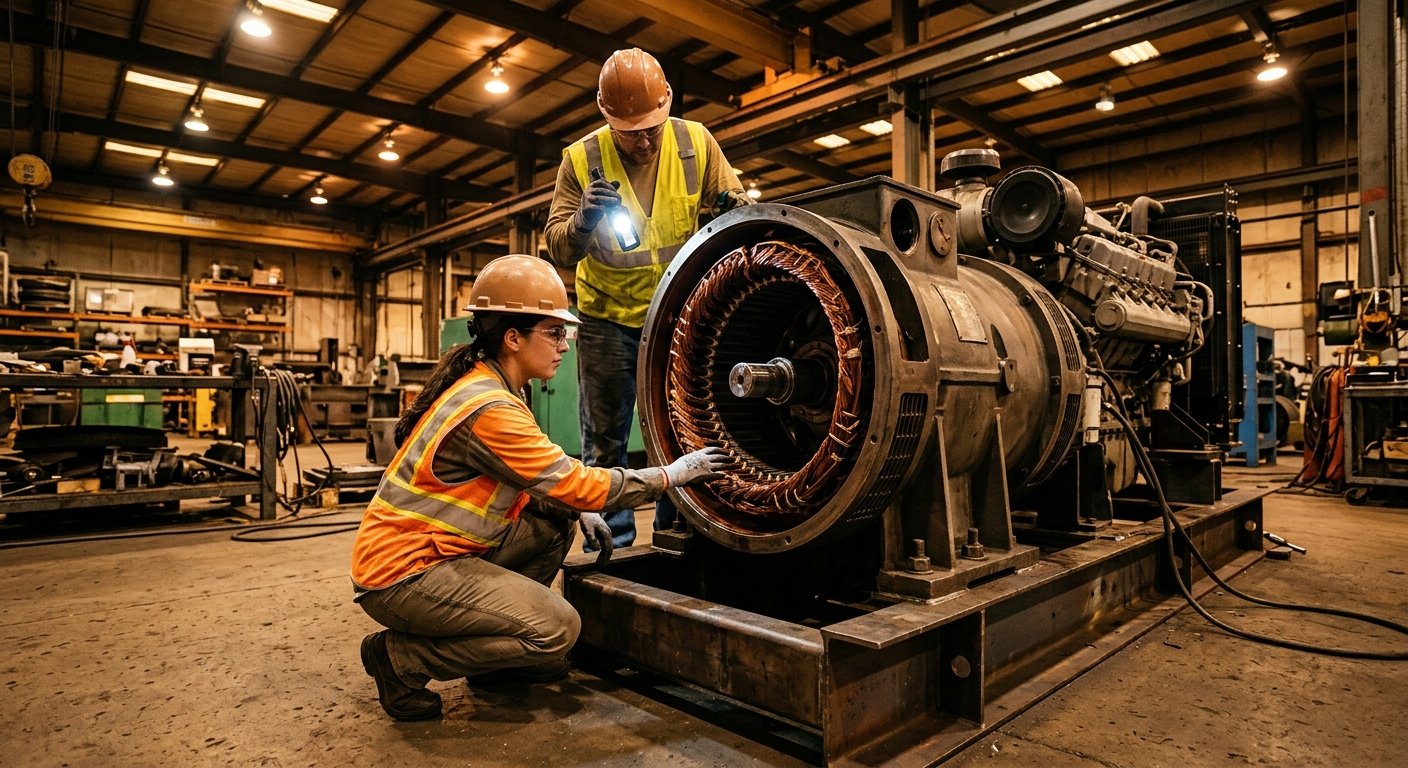
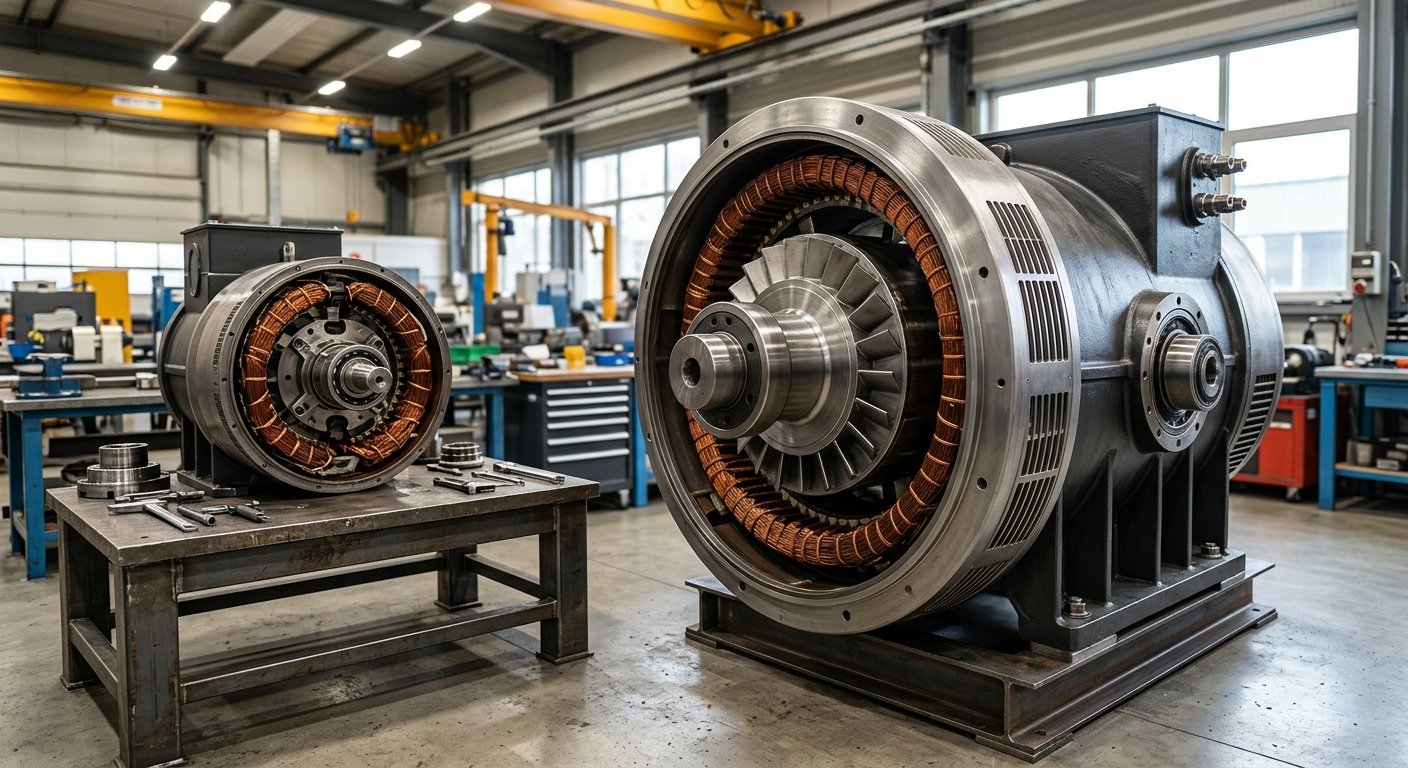
In the standby and prime power world, generator end refers to the entire alternating-current generating assembly that bolts to a diesel or gas engine. It includes the rotor, stator, exciter, automatic voltage regulator (AVR), and end brackets — everything except the engine itself. The two halves are married at the bell housing, aligned at the coupling disc, and together they make what the industry calls a generator set, or genset.
A single-bearing generator end shares one bearing with the engine flywheel housing. A two-bearing unit is self-supported and can be coupled to almost any prime mover. The distinction matters during replacement: a single-bearing end requires precise flywheel-housing compatibility, while a two-bearing end offers more flexibility but adds length to the overall package.
When MTS Power Products builds a custom generator set — on John Deere, Cummins, Mitsubishi, or GM engines — selecting the generator end is one of the first engineering decisions. Frame size, bearing configuration, and AVR type are matched to the engine before a single bolt is torqued. That same discipline applies when sourcing a replacement alternator end for an existing unit.

The term generator head is used most often in portable and light-construction applications. A portable generator has an engine on one end and a generator head on the other, typically sharing a single bearing and bolted directly to the engine adapter. The two terms — generator end and generator head — describe functionally identical components, but “generator head” tends to appear in smaller, lower-kW machines.
When a facility manager at a data center says “generator end,” and a landscaping contractor says “generator head,” they’re describing the same class of component at very different power levels. A 20 kW residential standby unit and a 500 kW prime power unit both have a generator end. The engineering complexity scales with the kVA rating, but the core concept is identical.
A PTO generator head is specifically designed to be driven by the power take-off shaft of an agricultural tractor. This is where the terminology really diverges from standard standby equipment:
A PTO generator head is not interchangeable with a standard generator end. If you’re buying one to power a farmstead during a grid outage, understand that it is purpose-built for tractor-drive and should not be coupled directly to a diesel engine genset. According to OSHA’s electrical safety guidelines, improper coupling of power generation equipment is a leading cause of field injuries — getting the right unit type matters beyond just performance.
Modern standby generators use brushless synchronous alternators — machines that generate AC power through electromagnetic induction without the wear-prone carbon brushes used in older designs. Technically, calling this component an “alternator end” is the most precise label, distinguishing it from DC generators (which do use brushes and produce direct current).
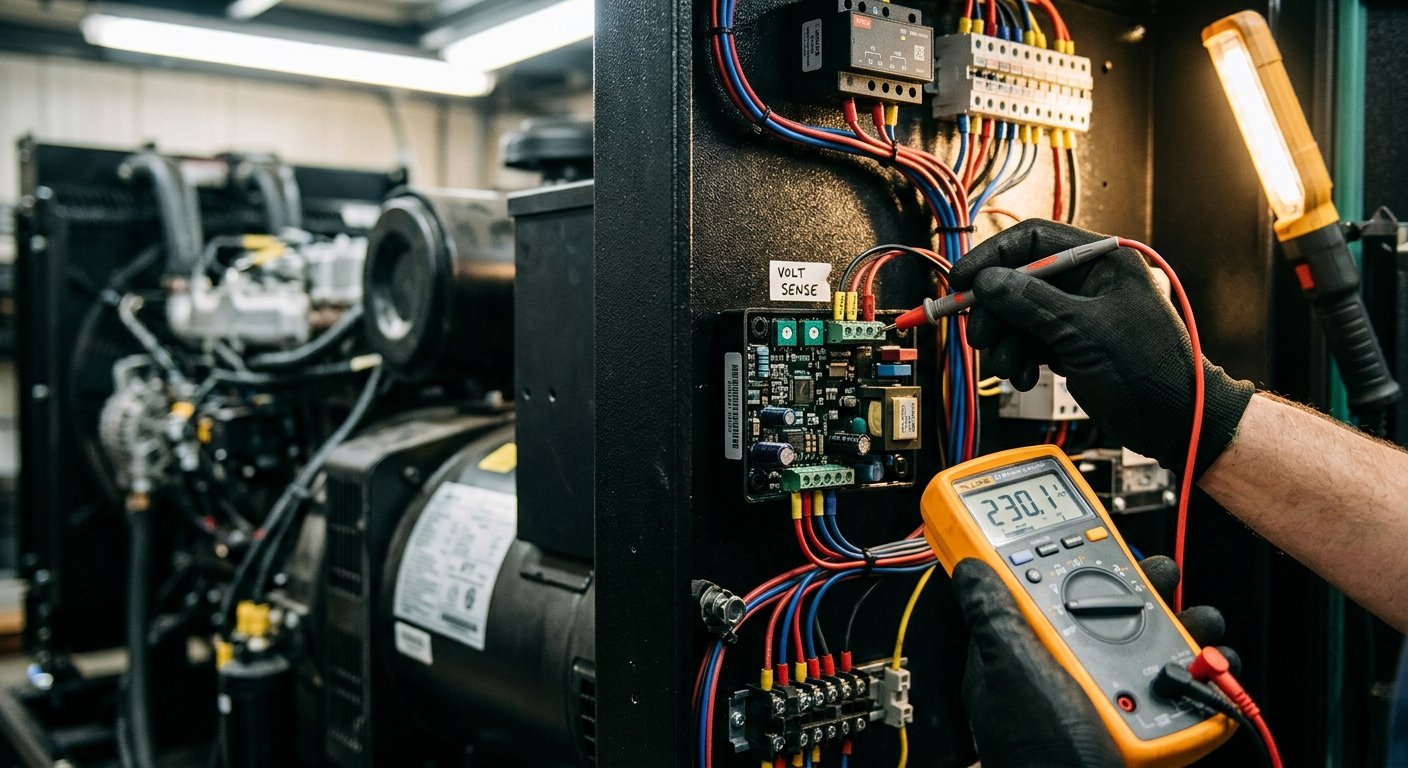
For technicians and engineers, this matters during troubleshooting. A brushless alternator end has an exciter winding and a rotating rectifier (diode pack) on the rotor. When output voltage drops or hunting occurs, the fault path runs through the AVR, exciter, diode pack, and main stator — in that diagnostic sequence. Understanding that you’re working with a brushless alternator end, not an old brush-type generator head, changes your test procedure from the first step.
| Criterion | Generator End / Generator Head | PTO Generator Head |
|---|---|---|
| Prime mover | Diesel or gas engine (direct couple) | Tractor PTO shaft |
| Typical speed | 1,800 RPM (60 Hz) or 3,600 RPM | 540 or 1,000 RPM input |
| Coupling method | Bell housing / coupling disc | Universal joint / slip clutch |
| Duty cycle | Standby, prime, or continuous | Intermittent agricultural use |
| AVR fitted? | Yes, standard on modern units | Sometimes; varies by model |
| Common application | Standby power, commercial gensets | Farm, rural emergency power |
Whether you call it a generator end, generator head, or alternator end, the ordering checklist is the same. Getting any one of these wrong means the unit goes back:
Match the standby and prime power ratings exactly. A 100 kW engine doesn’t automatically pair with a 100 kW alternator end — the power factor, efficiency curve, and thermal limits must align.
120/240V single-phase for residential, 120/208V or 277/480V three-phase for commercial. The stator winding configuration must match your distribution system.
Single-bearing or two-bearing. Single-bearing ends require the engine flywheel housing SAE adapter plate to match precisely.
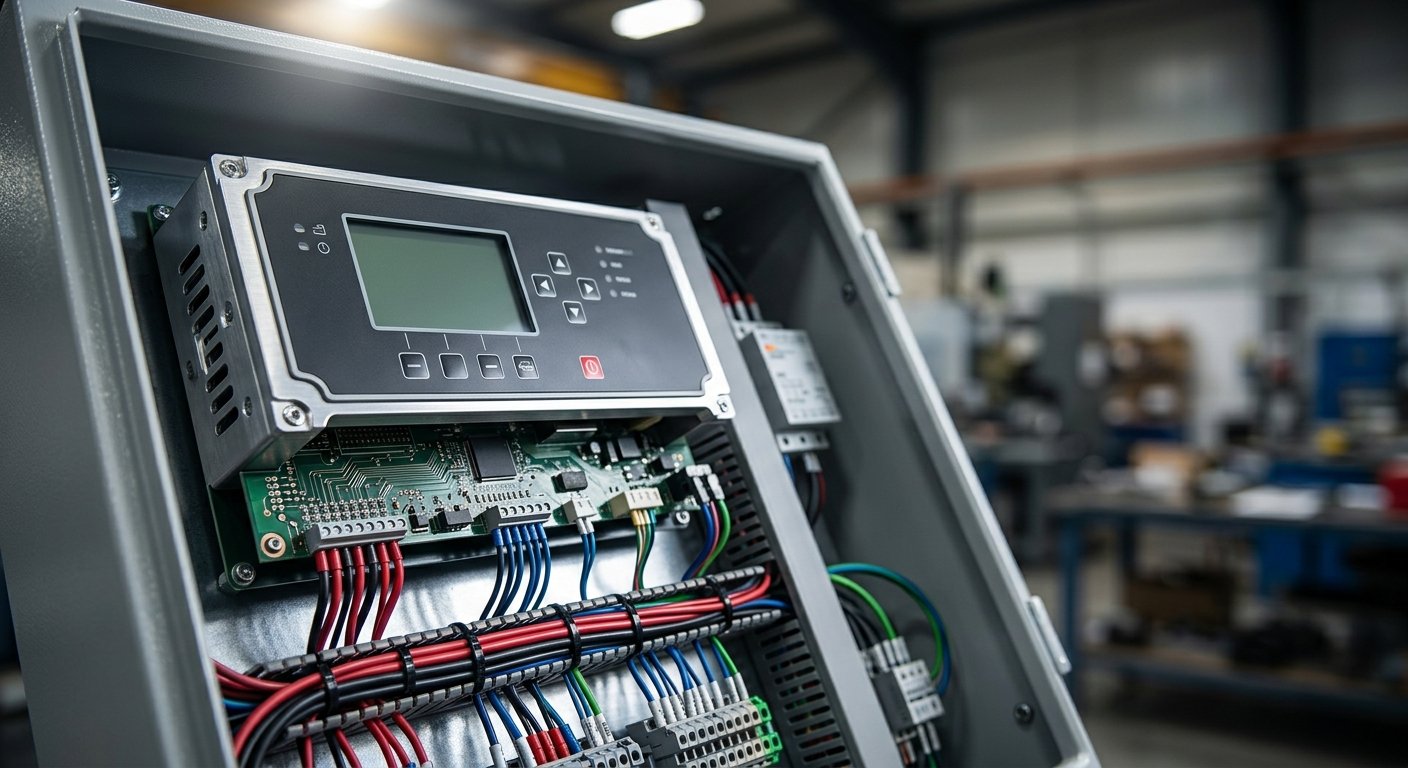
The AVR controls output voltage. Replacing the alternator end but keeping an incompatible AVR will cause voltage instability. MTS stocks a range of AVR units — confirm compatibility before ordering.
Frame dimensions and coupling disc size must fit the existing engine adapter plate. When in doubt, pull the original nameplate data — model, serial, and frame designation.
The NEMA generator standards provide reference frame designations that many North American alternator manufacturers follow, which gives technicians a reliable cross-reference baseline when sourcing replacement units.
Never assume that two generator ends with the same kW rating are interchangeable. Rotor inertia, exciter winding resistance, and AVR input voltage all vary by manufacturer. A mismatch can damage the AVR, cause voltage collapse under load, or prevent the genset from accepting load at all.
The alternator end doesn’t operate in isolation. When a generator end fails or underperforms, the fault often lies with a supporting component rather than the alternator winding itself. Before you replace the entire generator end, check these parts — all of which are available as individual generator replacement parts:
A systematic approach to generator replacement parts diagnosis saves real money. The full MTS generator parts catalog covers AVRs, governors, battery chargers, transfer switches, and more — sourced direct from manufacturers, which means you’re getting engineering-grade components, not aftermarket substitutes of uncertain provenance. According to the U.S. Department of Energy’s distributed energy resources program, maintaining generator components to OEM specifications is critical to ensuring reliable backup power performance.
Yes, in most contexts. Both terms describe the AC-generating assembly that couples to a prime mover engine. “Generator head” is more common in portable and light-duty applications, while “generator end” is standard terminology in standby and commercial power. The component itself — rotor, stator, exciter, AVR — is functionally identical across both names.
A PTO generator head is designed to be driven by a tractor’s power take-off shaft, typically at 540 or 1,000 RPM, using a universal joint coupling. It is not interchangeable with a standard generator end, which is direct-coupled to a diesel or gas engine and designed for 1,800 or 3,600 RPM operation. Using one in place of the other will produce incorrect frequency output and can damage both units.
“Alternator end” is the technically precise term for a brushless synchronous AC generating assembly. It distinguishes modern brushless designs from older brush-type DC generators. In practice, generator technicians use all three terms — generator end, generator head, alternator end — interchangeably for AC standby equipment. For parts ordering purposes, the nameplate data matters far more than the terminology.
Start with the cheapest components first. Check the AVR, rotating diodes, and capacitors before condemning the entire alternator end. A no-output fault with no visible winding damage is almost always a failed AVR, diode, or capacitor — not a failed stator. Use a multimeter to check stator and rotor winding resistance against the manufacturer’s spec sheet. Only replace the full generator end when winding resistance is out of spec or there’s confirmed physical damage.
MTS Power Products supplies generator replacement parts — including AVRs, rotating diodes, governors, battery chargers, and transfer switches — direct from manufacturers to customers across the US. Contact the Miami-based team at 305-634-1511 or visit the online store to identify compatible parts for your specific alternator model and frame size.
The MTS team in Miami works directly with technicians, facility managers, and homeowners across the US to identify compatible generator replacement parts — no guesswork, no wrong orders.
MTS Power Products is a Miami-based, manufacturer-direct supplier of generator parts — including AVRs, transfer switches, battery chargers, and governors — serving commercial, marine, and residential backup power needs nationwide. They combine deep technical expertise with personalized service, helping generator technicians, electricians, facility managers, marine operators, and homeowners select the right parts and keep their backup power systems running reliably. Their direct-from-manufacturer model delivers fair pricing and knowledgeable support that big-box distributors cannot match. Visit mtspowerproducts.com →