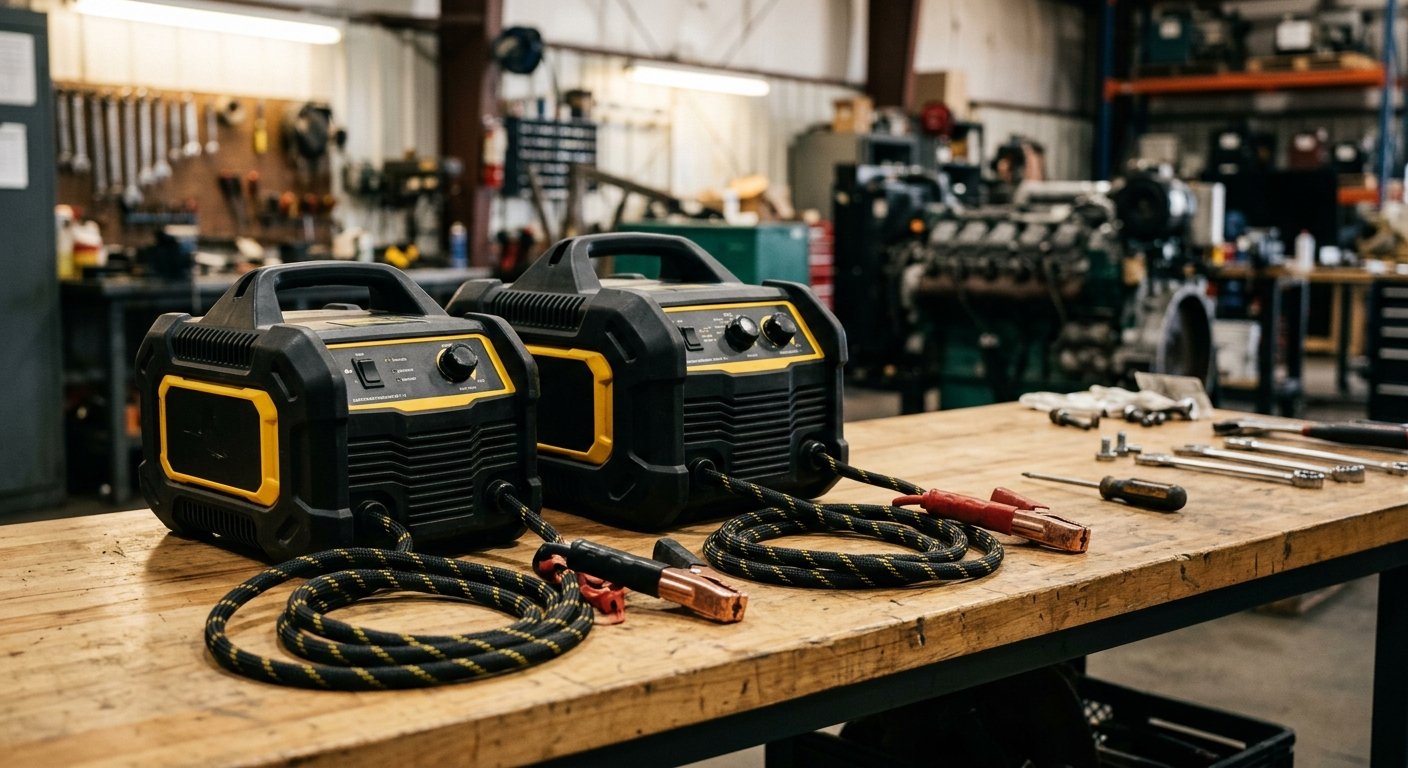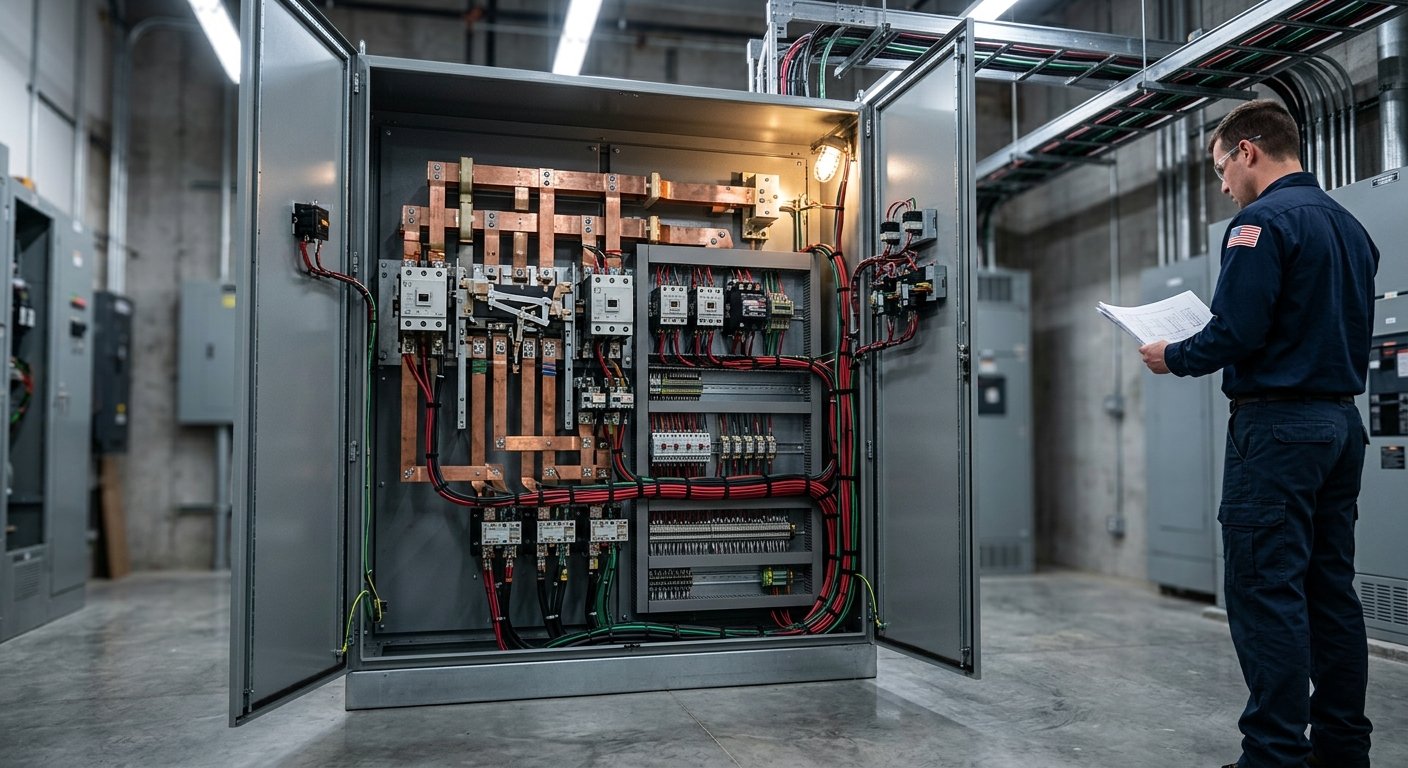



A dead starting battery is one of the most preventable causes of generator failure — and one of the most embarrassing. The facility loses power, the transfer switch does its job, and the genset cranks over once and dies. Nine times out of ten, the root cause is a neglected battery that sat on trickle charge from the wrong charger — or no charger at all.
If you’re replacing or upgrading a generator battery charger, the first decision is straightforward: 12V or 24V? Get it wrong and you either undercharge the battery or damage it. This guide breaks down exactly how to determine which voltage you need, what to look for in an automatic battery charger for generator applications, and when the wrong choice can take down a whole control panel.
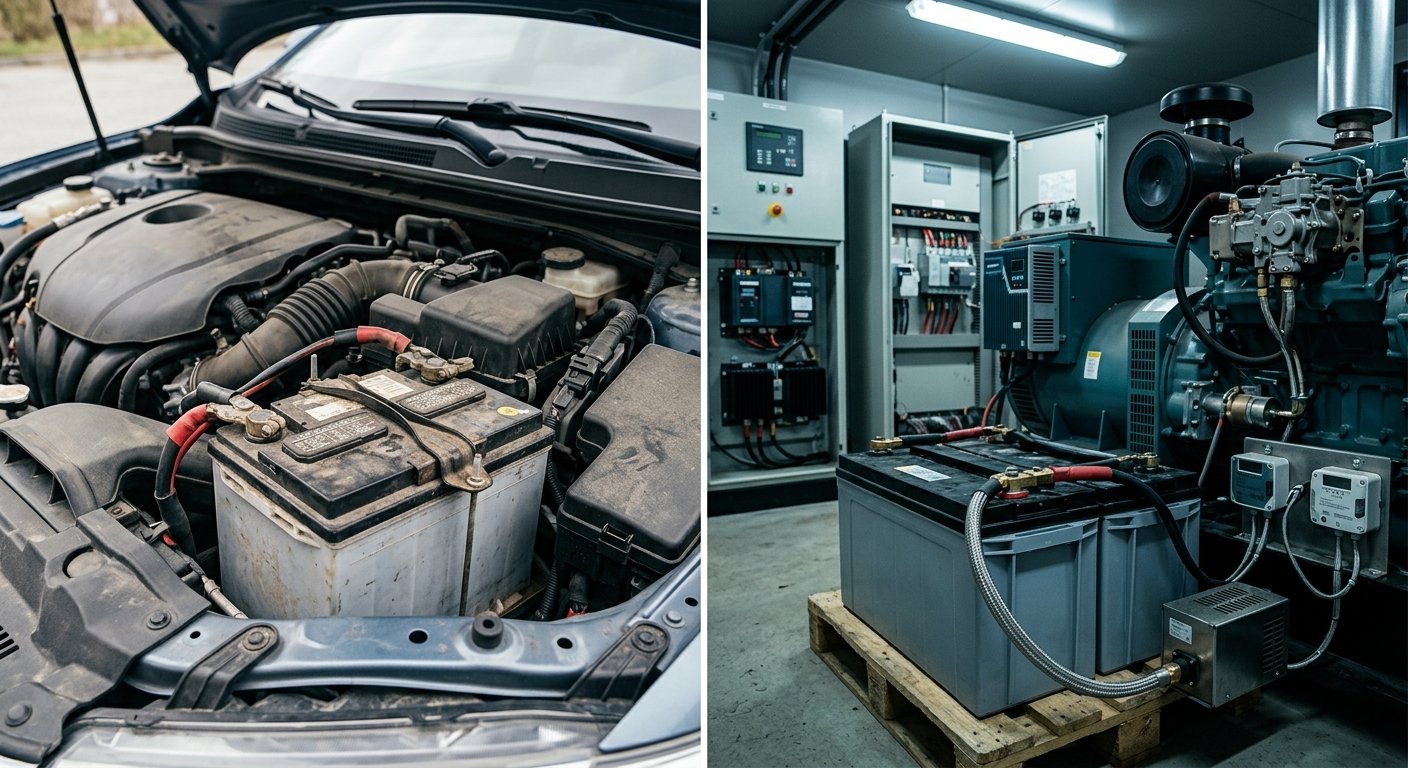
A generator’s starting battery doesn’t behave like an automotive battery. It sits in standby for weeks or months, drawing parasitic current from the generator control panel, block heater, and monitoring circuits. Without a dedicated float charger maintaining it, the battery sulfates and loses cold cranking capacity — often without any warning on a panel that only checks for low voltage, not true battery health.
A standard automotive trickle charger isn’t designed for this. You need a charger specifically rated for standby generator service — one that delivers a stable float voltage continuously without overcharging, is compatible with the genset’s DC bus, and can handle the temperature swings common to generator rooms, outdoor enclosures, and marine engine bays.
According to the NFPA 110 standard for emergency and standby power systems, automatic battery chargers are required equipment for Level 1 and Level 2 standby systems — those protecting life-safety loads. That’s not a suggestion; it’s a code requirement for hospitals, high-rise buildings, and emergency facilities.
The voltage of your generator battery charger must match the DC starting system voltage of your genset. This isn’t configurable on most chargers — it’s fixed hardware. Here’s how the two systems break down in practice:
The critical point: if you install a 12V float charger for generator battery use on a 24V system, you’ll never fully charge the bank. If you wire a 24V charger to a 12V battery, you’ll boil it dry and potentially damage the battery and surrounding equipment.
Don’t guess. Before ordering a replacement charger, verify the starting system voltage using these methods:
If you’re working on a marine generator or a Caribbean-bound custom build, assume 24V until confirmed otherwise — the majority of marine gensets above 8 kW run 24V starting systems.
For any standby generator application, a manual charger is the wrong tool. Manual chargers require someone to disconnect them before the battery overcharges — and in a generator room, that doesn’t happen reliably.
An automatic battery charger for generator use operates in stages: bulk charge to bring the battery up quickly, absorption to top it off, and float to maintain it indefinitely without overcharging. Better units also include equalization cycles for flooded lead-acid batteries and temperature compensation, which matters in South Florida where generator enclosure temperatures can exceed 110°F in summer.
Look for these features in a standby generator charger:
A significant percentage of generator won’t start battery problems trace directly to charger failure, not the battery itself. The battery tests fine on a load tester in the shop but won’t crank the engine because the charger has been outputting 11V instead of 13.8V for months — or nothing at all after an AC input fuse blew unnoticed.
Symptoms that point to charger failure rather than battery failure:
The U.S. Department of Energy consistently identifies preventive maintenance — including battery and charging system checks — as the most cost-effective strategy for reducing equipment downtime in commercial facilities. For generator reliability, that means monthly battery voltage checks and annual charger output verification.
Charger amperage matters. A 1A charger is appropriate for maintaining a fully charged battery in a low-drain environment. If your generator control panel draws significant standby current — block heater controls, annunciator panels, remote monitoring — you may need a 2A or 5A charger to keep pace.
For 24V industrial systems with large battery banks (200Ah and above), a 10A charger with automatic multi-stage charging is the practical minimum. Running an undersized charger on a large bank means the battery never reaches full charge, which accelerates sulfation and shortens service life.
MTS Power Products carries automatic battery chargers designed specifically for generator standby applications, in both 12V and 24V configurations. As a manufacturer-direct supplier, the Miami-based team can help match the right charger output to your specific battery bank and control panel load — call 305-634-1511 if you need to talk through the specs before ordering.
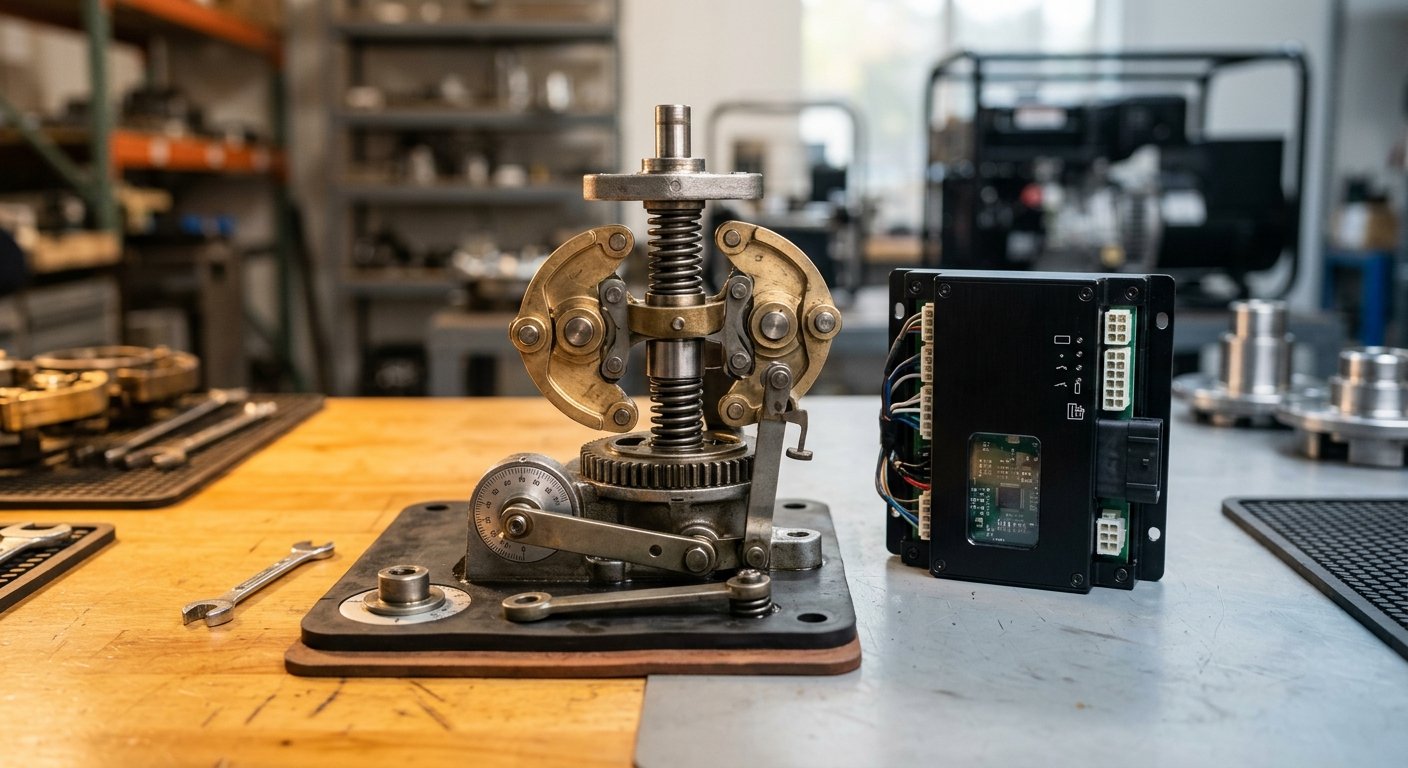
For deeper troubleshooting across the full generator electrical system, the generator parts resource covers AVRs, governors, and transfer switch components alongside charger selection guidance.
Check the generator nameplate, count the batteries and verify series vs. parallel wiring, or measure the DC bus voltage with a multimeter. Two 12V batteries in series = 24V system; a single 12V battery or two in parallel = 12V system. The generator control panel wiring diagram will confirm it definitively.
Not for long-term standby maintenance. Automotive chargers aren’t designed for continuous float operation and can overcharge or cycle on and off in ways that stress the battery. Use an automatic float charger rated for generator standby service.
The most common causes are a failed or aging battery charger that no longer maintains full charge, a battery past its service life (typically 3–5 years for standby lead-acid), corroded terminals, or high parasitic loads from the control panel exceeding charger output. Check charger output voltage first before replacing the battery.
For most residential and light-commercial generators with a single 12V battery, a 1–2A automatic float charger is sufficient for maintenance. Larger commercial and industrial systems with 24V battery banks or high standby current draw may need 5–10A chargers to maintain full charge reliably.
Yes. NFPA 110 requires automatic battery chargers for Level 1 and Level 2 emergency standby systems. These are systems protecting life-safety loads in hospitals, high-rises, and emergency facilities. The charger must be capable of restoring the battery to full charge within the timeframes specified by the standard.
Need help selecting the right charger for your genset? MTS Power Products is a manufacturer-direct source for automatic battery chargers, AVRs, transfer switches, and generator parts — serving technicians, facilities teams, and contractors nationwide from Miami. Browse the battery charger inventory or reach the team directly at 305-634-1511 for application support before you order.