


Your generator starts, the engine runs fine, but the lights flicker, the voltage meter swings wildly, or sensitive equipment keeps tripping. Before you chase a fuel issue or rebuild the carburetor, check the automatic voltage regulator. A failing AVR is one of the most common causes of generator voltage problems — and one of the most misdiagnosed.
This guide walks through how to diagnose a bad AVR, the symptoms that tell you it’s done, and what to consider when sourcing a replacement. Whether you’re a field technician running through a diagnostic checklist or a facility manager trying to keep a standby unit ready before hurricane season, the information here will help you make the right call fast.
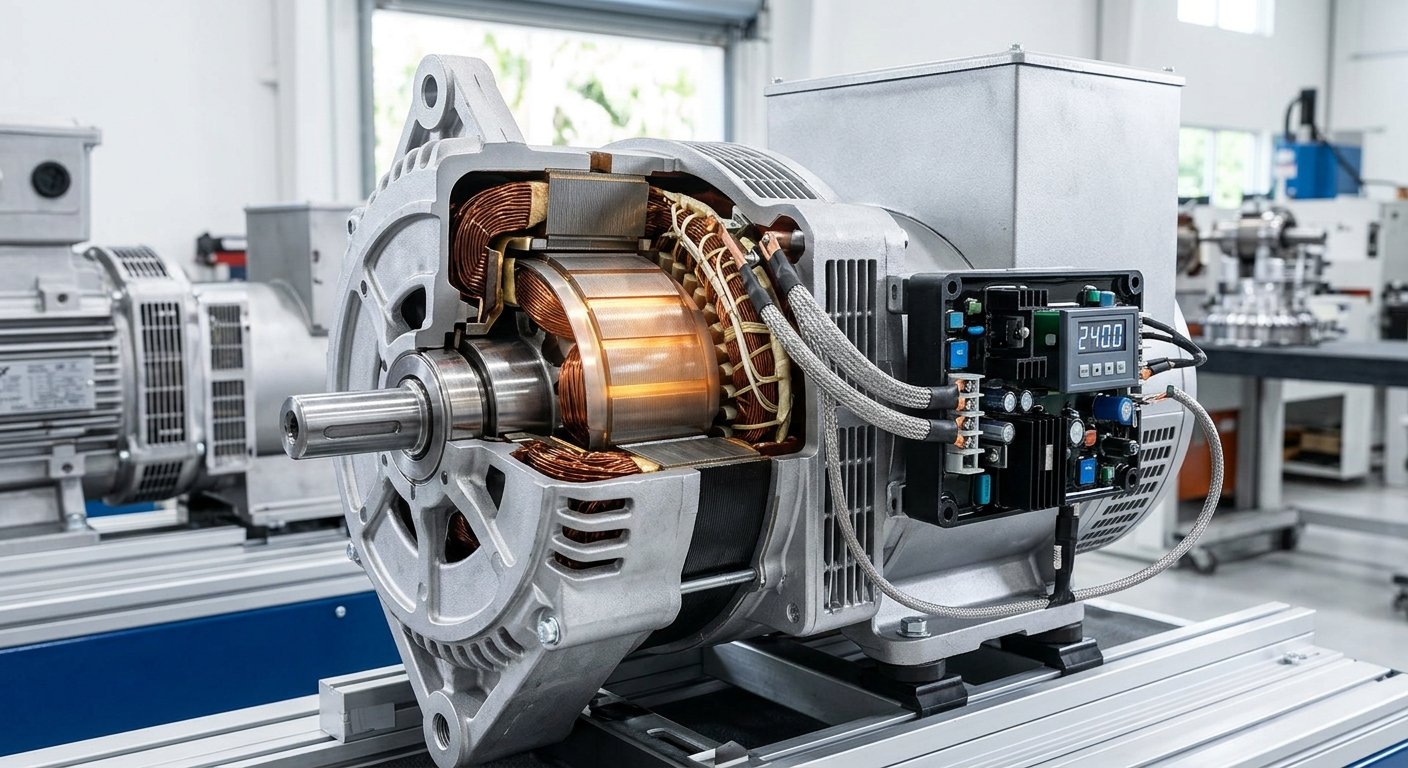
The automatic voltage regulator monitors the generator’s output voltage and continuously adjusts excitation current to the alternator’s field winding to keep output stable — typically within ±2% of the rated voltage under changing load conditions. Without it, every time a load kicks on or drops off, voltage swings freely.
A healthy AVR keeps a 120/240V single-phase unit steady at its rated output. A healthy three-phase AVR does the same across all legs simultaneously, which matters enormously in commercial and industrial applications where an imbalanced phase can damage motors, HVAC compressors, or data center UPS systems. According to the U.S. Department of Energy’s guidance on power quality, voltage instability is a leading cause of premature equipment failure in commercial facilities.
These symptoms don’t always appear together, but any one of them warrants a close look at the AVR before assuming the problem lies elsewhere.
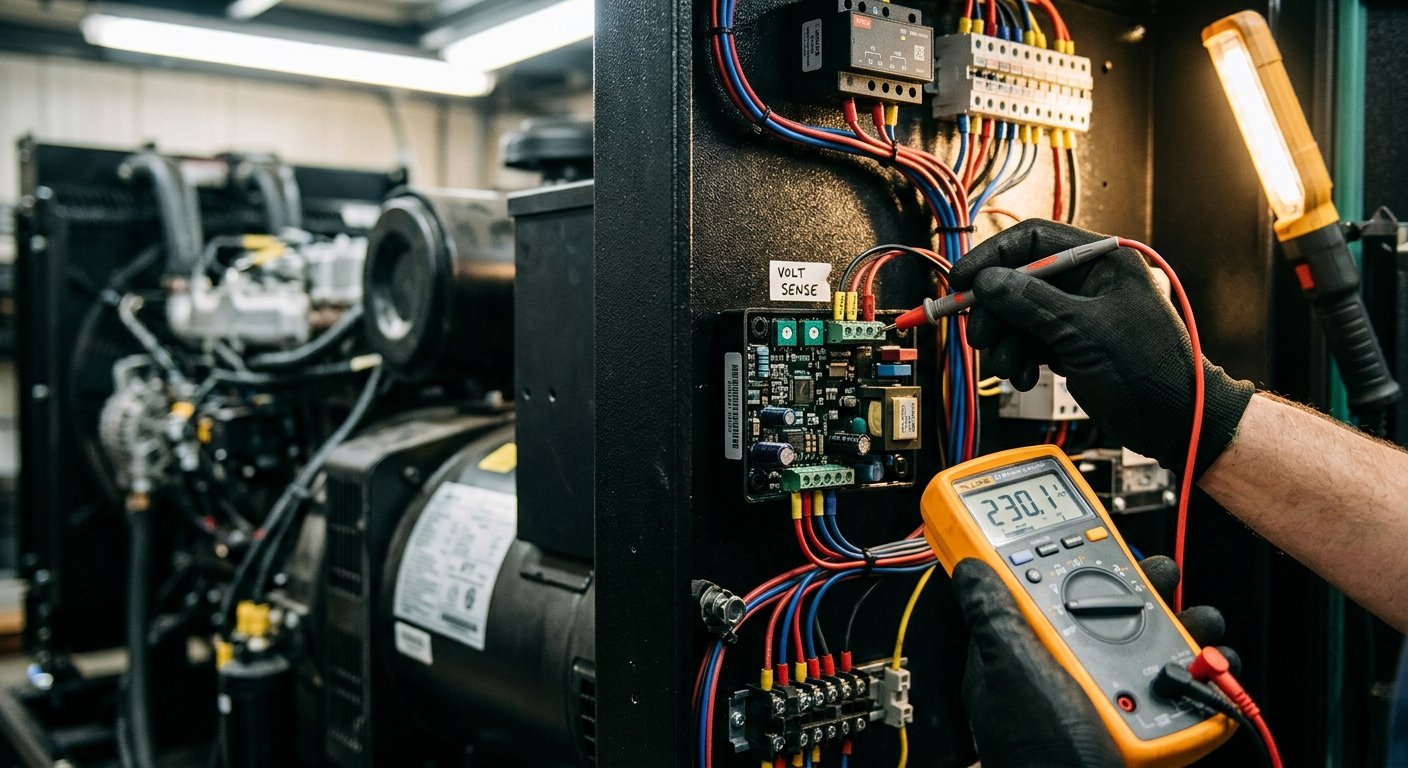
Measure output voltage at the generator terminals with a true RMS multimeter — not at the panel, where downstream wiring issues can confuse the reading. If you’re seeing consistently 10% or more above or below rated voltage with no load applied, the AVR is likely the culprit. A unit running at 260V when it should hold 240V isn’t a calibration quirk — it’s a regulation failure.
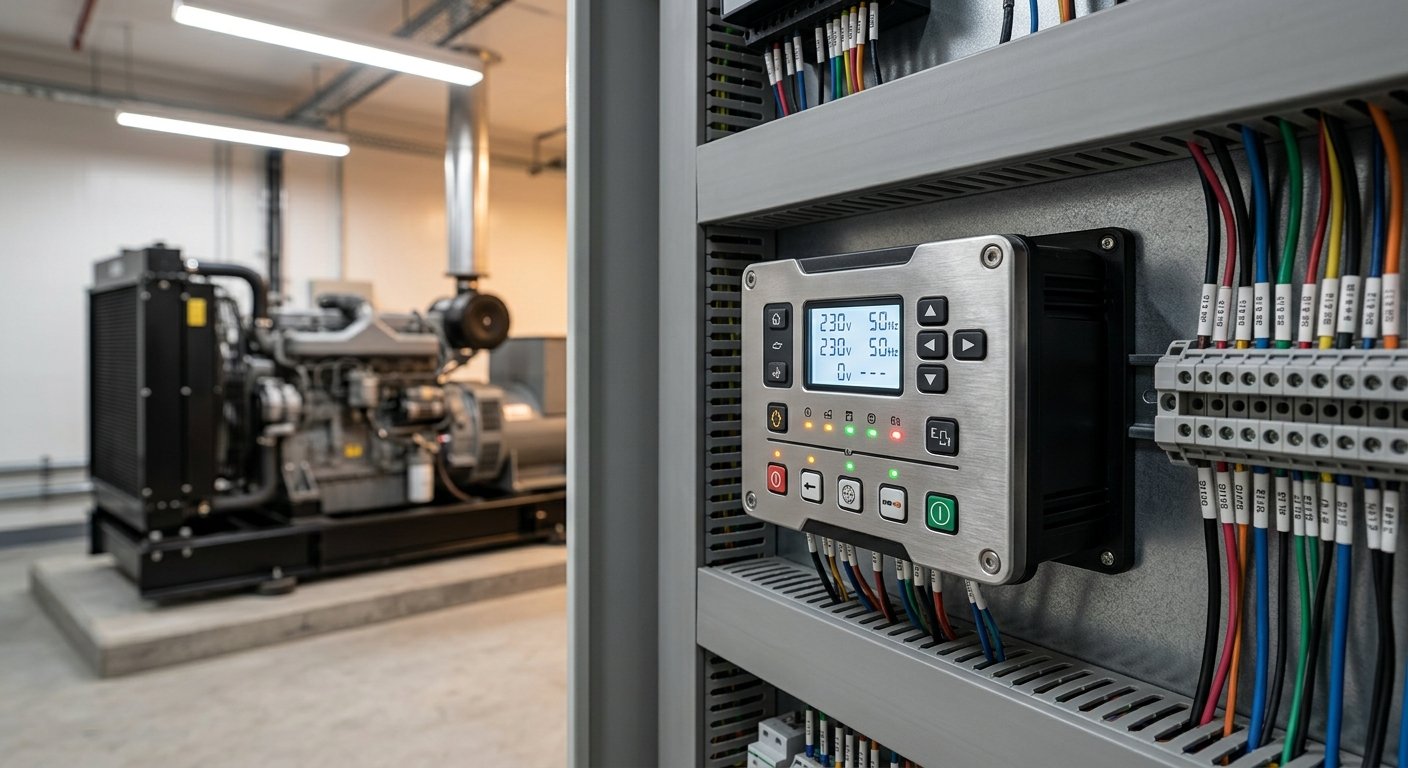
Hunting — where output voltage cycles up and down rhythmically — is a classic AVR failure mode. You’ll often see it as flickering lights or hear it as a pulse in motor-driven equipment. Some technicians confuse this with a governor issue. Here’s a quick field distinction: if the frequency (Hz) is stable but voltage fluctuates, suspect the AVR. If both Hz and voltage are unstable together, the governor and AVR both need evaluation.
A completely failed AVR can cause loss of residual magnetism excitation, leaving the alternator with zero output despite the engine running at correct RPM. This is often called a “loss of excitation” fault. Before condemning the AVR outright, perform a flash test to confirm whether the excitation circuit is the issue — but if the AVR tests open or shorted, replacement is the answer.
Pull the AVR and inspect it visually. Burn marks, swollen capacitors, cracked potting compound, or a strong electrical burn smell are all evidence of thermal or electrical failure. An overloaded generator running beyond its rated kW rating will stress the AVR hard. A 20 kW residential standby unit being asked to carry 25 kW of load consistently will shorten AVR life dramatically.
If voltage reads correctly at no-load but drops significantly — say, from 240V to 190V — when you apply even a modest load, the AVR is likely unable to increase excitation fast enough or at all. This symptom also resembles a weak excitation winding in the alternator itself, so test both before ordering parts.
Follow this sequence before pulling the trigger on a generator AVR replacement:
The NFPA 110 standard for emergency and standby power systems requires regular load testing of standby generators, which is where voltage regulation faults are most reliably caught before an emergency. Monthly exercise runs at load — not just no-load spin-ups — are where AVR problems surface.
This is where technicians run into trouble. AVRs are not universal. The wrong unit will either do nothing or cause worse regulation than the failed part. Before ordering, confirm:
When in doubt, the serial number plate on the alternator and the part number stamped on the old AVR are your starting points. If neither is legible, an experienced parts supplier can often cross-reference based on the generator set’s make, model, and output rating.
At MTS Power Products, our team works directly with technicians and facility managers across the country to identify the right AVR for their application — whether it’s a commercial standby unit at a Miami-Dade hospital or a marine generator on a vessel out of Biscayne Bay. As a manufacturer-direct source, we carry a range of AVRs and can help you avoid the costly mistake of ordering a close-but-wrong substitute. Browse our AVR selection or call us at 305-634-1511 to talk through your application with someone who knows generator systems firsthand.
Sometimes the AVR is a casualty, not the root cause. If you’ve replaced the AVR and voltage problems persist, investigate:
A thorough AVR replacement paired with a resistance and insulation check of the rotor and stator windings is the correct approach for any unit with a history of voltage complaints.
For facilities running critical loads — data centers, healthcare, industrial processing — consider whether the generator’s overall condition justifies continued repair investment. MTS Power Products also builds custom generator sets in-house using proven engine platforms from John Deere, Cummins, and Mitsubishi, paired with our McPherson Controls panels, when a complete solution makes more sense than stacking repairs on an aging unit. That’s a conversation worth having before hurricane season, not during it.
You can explore the full range of generator parts we carry, including transfer switches, battery chargers, and governors, all available through our online store with direct manufacturer support.
The most reliable indicators are output voltage that is consistently too high or too low at no load, voltage that hunts or oscillates under changing loads, and complete loss of AC output despite correct engine RPM. Confirm with a multimeter: measure AC output at the terminals and DC excitation voltage at the AVR field output. Zero DC field output with normal AC sensing input points directly to AVR failure.
Briefly, in an emergency, and only if you understand the risk. An unregulated generator can produce dangerously high voltage that damages connected equipment, or output so low that it’s useless. Running critical or sensitive loads — electronics, variable-speed drives, medical equipment — on an unregulated generator is not advisable.
No. AVRs are specific to alternator brands, sensing voltage ranges, excitation output requirements, and frequency settings. Using a close-but-wrong AVR can result in no regulation improvement or cause additional damage. Always match by alternator model and OEM part number when possible.
In a well-maintained generator running at appropriate loads, an AVR can last 10 to 20 years. Units that are regularly overloaded, exposed to moisture, or subjected to voltage spikes from poor utility power will fail much sooner. Generators used as prime power in harsh environments see shorter AVR service life than well-exercised standby units.
AVR hunting produces voltage oscillation with stable frequency. A governor problem affects engine speed, causing both frequency and voltage to fluctuate simultaneously. Checking your Hz reading while the unit hunts will tell you which system to investigate first. A stable 60 Hz with unstable voltage points to the AVR; unstable Hz points to the governor. Both should be evaluated together on any generator with persistent instability.
According to the U.S. Energy Information Administration, power outages cost US businesses billions annually — a number that makes the cost of a replacement AVR look very reasonable when it’s the component standing between your facility and a blackout during the next weather event.
Need help identifying the right AVR for your generator? Contact MTS Power Products at 305-634-1511 or use our online contact form. Our Miami-based team provides personalized technical support for technicians, facility managers, and homeowners across the country — and we back every part with manufacturer-direct knowledge, not a call center script.