Why Your Electronics Are at Risk from Unstable Power
A power stabilizer (also called a voltage stabilizer or Automatic Voltage Regulator) is a device that automatically maintains a constant output voltage to protect your equipment from voltage fluctuations. It works by either stepping down (buck) or stepping up (boost) the incoming voltage to deliver a steady, safe level to your connected devices.
Quick Guide to Power Stabilizers:
- What they do: Correct voltage sags, surges, and brownouts to provide consistent power
- Main types: Relay-type (basic), Servo-motor (industrial), Static/Electronic (high-end)
- Key specs: Capacity (VA/kVA), input voltage range, output accuracy
- Common uses: Refrigerators, air conditioners, computers, medical equipment, industrial machinery
- Not the same as: Surge protectors (which only block short spikes, not long-term fluctuations)
A reliable power supply isn’t just convenient—it’s essential. Whether you’re running a manufacturing facility in South Florida or protecting your home electronics from hurricane-season power issues, unstable voltage can wreak havoc on your equipment.
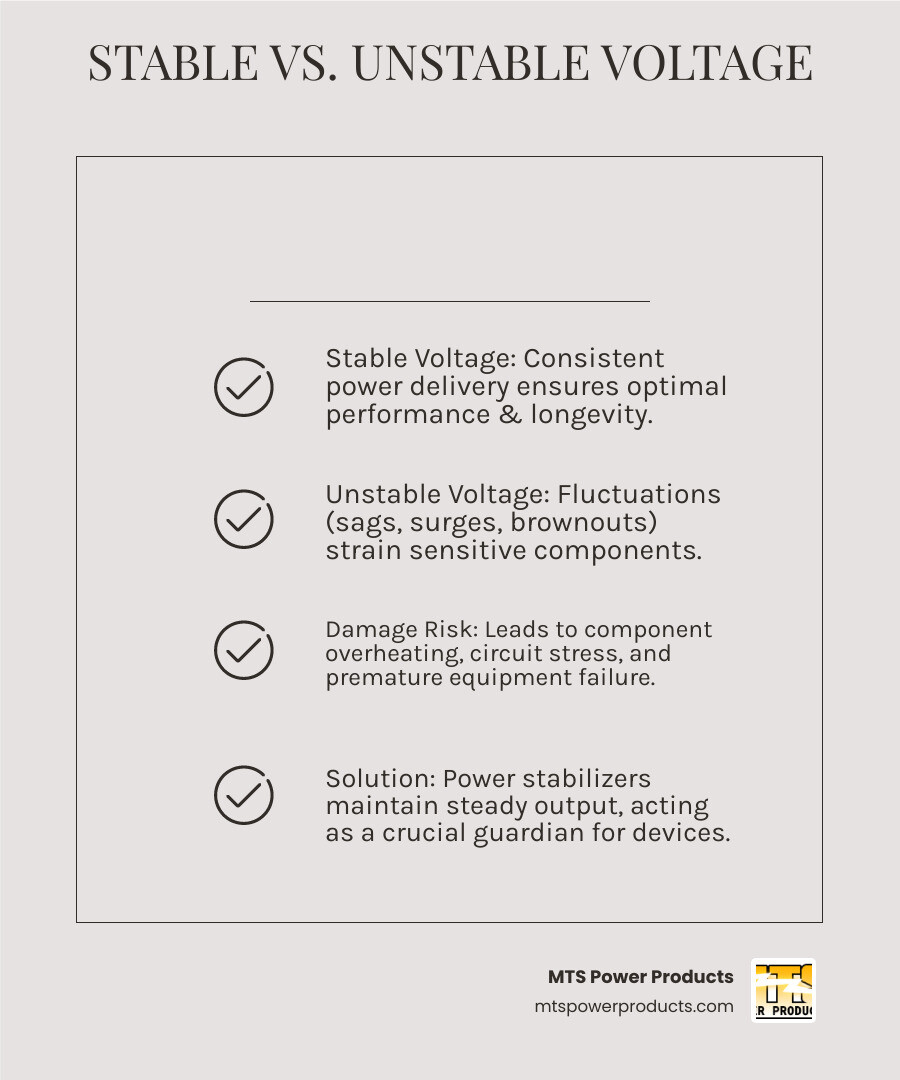
The power grid delivers inconsistent voltage more often than you might think. Voltage can sag during peak demand, spike when heavy loads switch off, or fluctuate due to aging infrastructure. These aren’t dramatic power outages—they’re the subtle, ongoing variations that slowly damage sensitive electronics.
Your expensive equipment wasn’t designed to handle these swings. Computers, medical devices, refrigerators, and industrial machinery all expect consistent power within a narrow range. When voltage drops too low or climbs too high, components overheat, circuits strain, and lifespans shrink dramatically.
That’s where power stabilizers come in. They act as guardians between your equipment and the unpredictable grid, automatically adjusting incoming voltage to deliver the steady power your devices need. Think of them as shock absorbers for your electrical system—constantly working to smooth out the bumps before they reach your valuable equipment.
What is a Power Stabilizer and How Does It Protect Your Devices?
At its core, a power stabilizer, often referred to as an Automatic Voltage Regulator (AVR), is an electrical appliance engineered to deliver a constant output voltage to a connected load, irrespective of fluctuations in the input or incoming supply voltage. Its primary mission is to protect your valuable equipment against the damaging effects of overvoltage, undervoltage, and other voltage surges.
The working mechanism of a power stabilizer is quite ingenious, constantly monitoring the incoming voltage and making real-time adjustments. Modern, intelligent AC voltage stabilizers often embed microprocessor chip technology and power electronic devices, allowing them to produce a high-quality, stable electric power supply even when the mains voltage deviates significantly.
Here’s how it generally works:
- Sensing: A control circuit, often incorporating operational amplifiers, continuously detects the level of the incoming AC voltage.
- Comparing: This detected voltage is then compared against a pre-set desired output voltage.
- Correcting (Buck and Boost):
- If the input voltage is too low (an undervoltage or brownout), the stabilizer initiates a “boost” operation. This typically involves engaging a relay or a servomotor to switch to a higher tap on a transformer, effectively stepping up the voltage to the desired level. For instance, if our equipment needs 220 volts but the input is only 195 volts, the stabilizer might kick in a boost relay to add 25 volts, delivering a steady 220 volts to our equipment.
- Conversely, if the input voltage is too high (an overvoltage), the stabilizer performs a “buck” operation. It switches to a lower tap on the transformer, stepping down the voltage. If the input jumps to 260 volts, the stabilizer might activate a buck relay to reduce 30 volts, ensuring our equipment receives a safe 225 volts.
- Protecting: If the voltage falls below a critical low cutoff (e.g., 180 volts) or rises above a critical high cutoff (e.g., 270 volts), the stabilizer will cut off the power completely to prevent severe damage to the connected appliances. This is an essential safeguard against extreme voltage events.
- Powering Control: A rectifier circuit converts a small portion of the AC input to DC, which powers the internal electronic control components and relay coils.
So, how does this process help extend the lifespan of our connected devices?
By providing a consistent and stable voltage, a power stabilizer significantly reduces electrical stress on internal components. Fluctuating voltage forces electronics to work harder, generating excess heat and accelerating wear and tear. Imagine a car engine constantly revving too high or too low – it won’t last as long. Similarly, stable voltage prevents overheating, reduces the likelihood of component failure, and ensures that devices operate within their optimal design parameters. This ultimately translates to a longer, more reliable operational life for everything from our home refrigerators to sensitive laboratory equipment.
For a deeper dive into the mechanics, read more about What is a Voltage Stabilizer and How Does It Protect Your Devices?.
Choosing the Right Type of Power Stabilizer for Your Needs
Not all power stabilizers are created equal. Depending on the sensitivity of your equipment, the severity of voltage fluctuations in your area, and your budget, different types of stabilizers offer varying levels of performance and protection. Let’s explore the main categories:
Relay-Type Stabilizers
These are the most common and often the most affordable type of voltage stabilizer. They use a series of relays to switch between different transformer taps to correct voltage.
- Pros: Cost-effective, compact, and suitable for general home appliances. They are easy to install and operate.
- Cons: They correct voltage in discrete steps, which can lead to noticeable voltage jumps. This stepping action also often produces an audible “clicking” sound as the relays engage. Their response time is slower compared to other types, and the output voltage accuracy is typically around ±5% to ±10%.
- Best for: Less sensitive appliances like refrigerators, older air conditioners, and televisions where minor voltage fluctuations are tolerable. For example, models like the V-Guard VG 400 are popular choices for protecting air conditioners in residential settings.
Servo-Motor Controlled Stabilizers
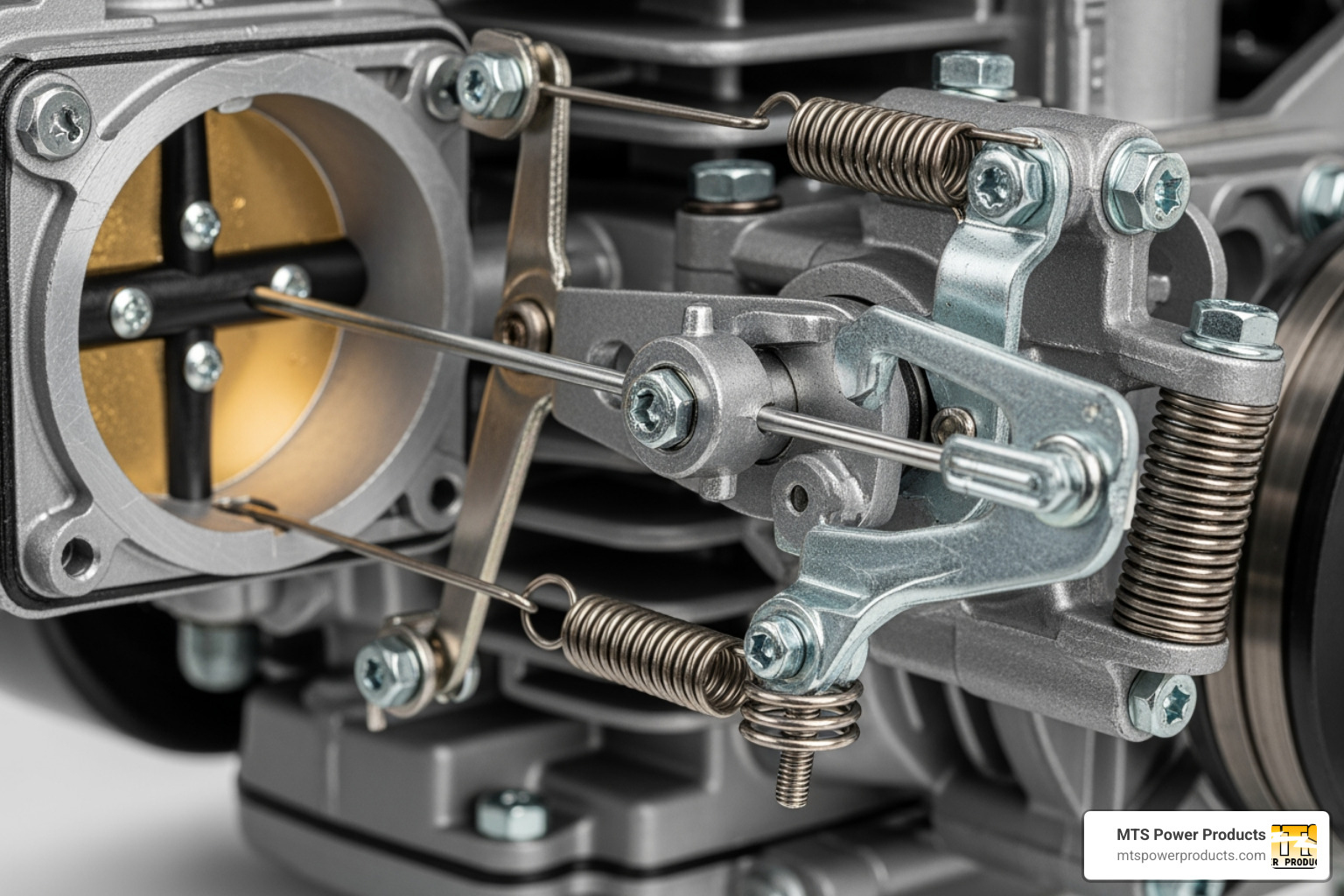
As the name suggests, these stabilizers employ a servomotor to precisely adjust the voltage. A servomotor moves a rotating arm over a variable transformer, providing continuous and smooth voltage correction.
- Pros: Offer high output voltage accuracy (typically ±1%), smooth and stepless voltage correction, and can handle a wide input voltage range (up to ±50% variations). They are more robust and efficient than relay types.
- Cons: Involve mechanical parts (the servomotor and moving brush), which means they can be slower in response than static types, require occasional maintenance, and can produce a low humming sound. They are generally more expensive than relay-type stabilizers.
- Best for: Industrial machinery, high-end home appliances, medical equipment, and other sensitive devices that require precise voltage regulation. While our McPherson Controls line offers heavy-duty options, consumer-grade models like the APC Line-R also use this technology for protecting home and office electronics.
Static Voltage Stabilizers (SVS)
These represent the cutting edge of voltage stabilization technology. Static stabilizers are solid-state devices that use power electronic converter circuits, such as Insulated Gate Bipolar Transistors (IGBTs) and pulse width modulation (PWM) to regulate voltage. They have no moving parts.
- Pros: Offer instant voltage correction (often in milliseconds), excellent output voltage accuracy (typically ±1%), silent operation, and require minimal maintenance. They are highly efficient and can handle significant voltage variations without mechanical wear.
- Cons: They are generally the most expensive type of stabilizer due to their advanced technology.
- Best for: Highly sensitive and critical electronic equipment like data servers, medical diagnostic tools (CT scanners, precision instruments), laboratory equipment, telecommunication systems, and CNC machines where even a momentary voltage deviation can cause significant issues. Leading industrial suppliers like Eaton offer SVS solutions for these critical applications.
Here’s a quick comparison of the types:
| Feature |
Relay-Type |
Servo-Motor Controlled |
Static (SVS) |
| Speed |
Slow (seconds) |
Moderate (seconds) |
Fast (milliseconds) |
| Accuracy |
Low (±5% to ±10%) |
High (±1%) |
Very High (±1%) |
| Cost |
Low |
Medium |
High |
| Noise |
Audible clicking |
Low hum |
Silent |
| Maintenance |
Low |
Moderate (mechanical parts) |
Very Low (no moving parts) |
| Best For |
General home appliances |
Industrial, high-end electronics |
Sensitive electronics, medical, IT |
Key Factors to Consider Before You Buy a Power Stabilizer
Choosing the right power stabilizer is crucial for effective protection. It’s not a one-size-fits-all solution. Here are the critical factors we consider when advising our clients in South Florida and beyond:
Capacity (VA/kVA)
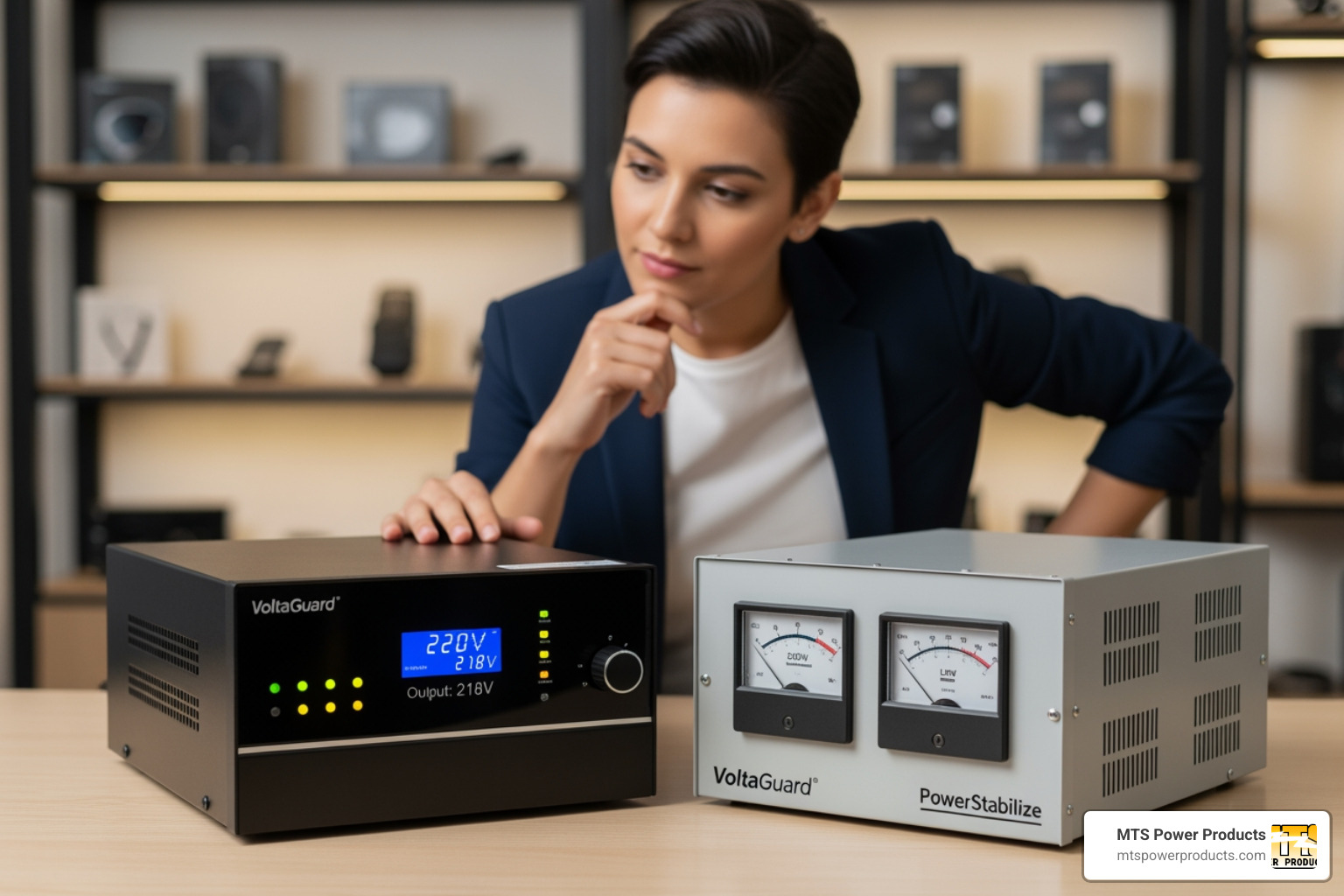
This is perhaps the most important factor. The capacity of a stabilizer, typically rated in Volt-Amperes (VA) or kiloVolt-Amperes (kVA), must match or exceed the total power consumption of the appliances you intend to connect. If a stabilizer is rated in kVA, we can calculate the wattage by multiplying the voltage by the maximum rated current. If your appliance is rated in watts, remember to consider the power factor, especially for inductive loads like motors.
How to calculate your load:
- List all appliances: Identify every device you plan to connect to the stabilizer.
- Find the wattage: Check the nameplate details or user manual for each appliance’s wattage (W) or current (Amps) and voltage (V). If only current and voltage are given, multiply them (V x A = W).
- Sum the wattages: Add up the wattages of all appliances to get the total load in watts.
- Add a safety margin: We always recommend adding a safety margin of 20-25 percent to the total wattage. This accounts for startup currents (especially for appliances with motors like refrigerators and ACs) and allows for future expansion.
- Convert to kVA (if needed): If your total load is in watts and you need to compare it to a kVA-rated stabilizer, divide the total watts by the power factor (typically 0.8 for mixed loads) to get VA, then divide by 1000 for kVA. For example, a 1kVA air conditioner or refrigerator, with a 20% safety margin, would require a 1.2 kVA (1200 VA) stabilizer.
Common Appliance Wattages (Approximate):
- Refrigerator: 100-800 W (startup much higher)
- Air Conditioner (small window unit): 500-1500 W (startup much higher)
- Television (LED/LCD): 50-200 W
- Desktop Computer: 100-500 W (monitor extra)
- Washing Machine: 500-2000 W
- Microwave Oven: 600-1500 W
This specifies the range of incoming voltage that the stabilizer can accept and still provide a stable output. If your local grid experiences extreme voltage fluctuations, a stabilizer with a wider input voltage range (e.g., 90V-260V) will be more effective than one with a narrower range (e.g., 180V-240V). Understanding the typical voltage variations in your area, like those common during peak demand or after storms in South Florida, is key to selecting the appropriate range.
Output Voltage Accuracy
This indicates how precisely the stabilizer maintains the output voltage near the desired level, expressed as a ± percentage. For instance, a stabilizer with ±1% accuracy will keep the output voltage within 1% of the target (e.g., 220V ± 2.2V). For sensitive electronics like medical devices or high-fidelity audio equipment, higher accuracy is paramount. Less sensitive appliances can tolerate a wider deviation.
Features and Protections
Modern power stabilizers come with a host of features designed to improve protection and user convenience:
- Time-Delay System: Essential for appliances with compressors (refrigerators, ACs). This feature provides a delay before restarting the appliance after a power cut or fluctuation, protecting the compressor from immediate re-start damage.
- Overload Protection: Shuts off the stabilizer if the connected load exceeds its capacity, preventing damage to both the stabilizer and the appliances.
- High/Low Voltage Cut-off: Automatically disconnects power if the input voltage goes beyond the stabilizer’s corrective range, offering ultimate protection.
- Digital Display: Provides real-time information on input voltage, output voltage, load current, and other operational parameters, making monitoring easy.
- Wall-Mountable Design: Convenient for space-saving installation.
- Smart Features: Some advanced units include features like RS232/RS485 communication for remote monitoring of data such as input/output voltage, frequency, and load current from a control room.
For more detailed information on maintaining consistent power, explore our resources on automatic voltage regulation.
Power Stabilizer vs. Surge Protector: What’s the Difference?
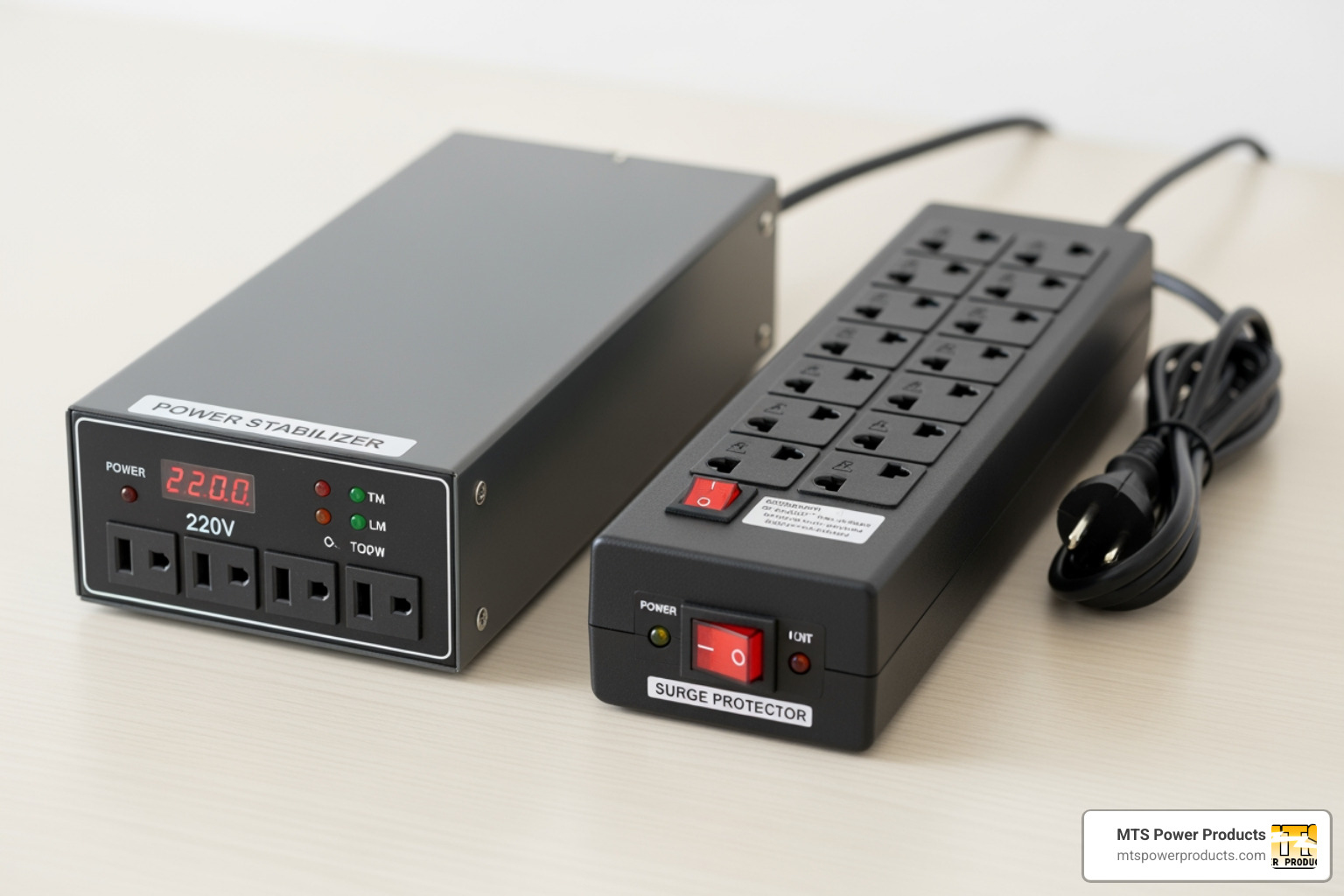
It’s a common misconception that a power stabilizer and a surge protector are interchangeable. While both aim to protect your electronics, they address fundamentally different types of power disturbances. Understanding this distinction is crucial for comprehensive electrical protection.
Defining Each Device
- Power Stabilizer (Voltage Stabilizer/AVR): As we’ve discussed, a power stabilizer is designed to correct long-term, sustained voltage fluctuations. This includes undervoltage (brownouts) and overvoltage conditions where the voltage deviates significantly from the nominal level for an extended period. Its core function is to maintain a constant output voltage by actively stepping up or stepping down the incoming power.
- Surge Protector: A surge protector, on the other hand, is built to block short, sudden, high-voltage spikes, also known as transient voltages or surges. These are extremely brief (microseconds) but can carry thousands of volts, typically caused by lightning strikes, power grid switching, or the switching of heavy inductive loads within a facility. A surge protector, like the common power strips from brands like Belkin, diverts this excess voltage away from your devices, often sacrificing itself in the process.
When to Use Each
Can They Be Combined?
Absolutely! In fact, for optimal protection, we often recommend using both. Many modern power stabilizers come with built-in surge protection, offering a dual layer of defense against both chronic voltage fluctuations and sudden, destructive spikes. However, a basic surge protector might not offer comprehensive voltage stabilization. If you’re in an area prone to both unstable voltage and lightning, a high-quality stabilizer with integrated surge protection, or separate, complementary units, is your best bet.
At MTS Power Products, we understand the importance of comprehensive power protection. You can learn more about high-quality voltage regulators that often incorporate advanced protection features.
Common Applications and Product Examples
The demand for reliable power supply is growing globally, with the voltage stabilizer market projected to reach USD 5.1 billion by 2030. This growth is driven by the increasing adoption of sensitive electronic equipment across all sectors. From our homes to vast industrial plants, power stabilizers play a crucial role in safeguarding investments and ensuring operational continuity, especially in regions like South Florida where power quality can be impacted by weather events like hurricane season.
Residential Power Stabilizer Applications
Our homes are filled with increasingly sophisticated and sensitive electronics. Voltage fluctuations, even minor ones, can significantly impact their performance and longevity.
- Refrigerators and Air Conditioners: These appliances use compressors that are highly susceptible to voltage variations. A stabilizer protects the compressor from damage due to low or high voltage, extending its life and preventing costly repairs. Our Voltage Stabilizer for Refrigerators and TVs are specifically designed to meet these needs. Similarly, brands like Microtek offer a wide range of stabilizers for various home appliances.
- Televisions and Home Theater Systems: Modern flat-screen TVs, sound systems, and streaming devices contain delicate circuitry. Stable voltage ensures optimal picture and sound quality and prevents premature component failure.
- Computers and Gaming Consoles: These are arguably the most sensitive devices in a home. Voltage sags can cause data corruption, system crashes, and damage to power supplies or motherboards. Overvoltage can instantly fry components. A stabilizer ensures a consistent power feed, crucial for uninterrupted work or play.
Commercial and Industrial Power Stabilizer Applications
In commercial and industrial settings, the stakes are much higher. Downtime due to power issues can lead to significant financial losses, data corruption, and safety hazards.
- Commercial Settings:
- Offices: Protecting computer networks, servers, printers, and other office equipment from voltage dips and spikes ensures business continuity and data integrity.
- Data Centers: Absolutely critical for maintaining stable power to servers, storage devices, and networking equipment, preventing data loss and service interruptions.
- Medical Facilities: Hospitals and clinics rely on highly sensitive and expensive medical equipment like CT scanners, X-ray machines, precision instruments, and diagnostic devices. Even slight voltage fluctuations can compromise accuracy, lead to misdiagnoses, or damage equipment. This is why specialized static stabilizers, such as those from industrial providers like Ortea, are often specified for these environments. Power stabilizers are non-negotiable here.
- Industrial Settings:
- CNC Machines and Production Lines: Automated manufacturing processes and precision machinery require extremely stable voltage for accurate operation and to prevent costly breakdowns.
- Welding Equipment and Heavy Machinery: While often robust, consistent voltage helps optimize performance and extend the lifespan of these power-hungry machines.
- Oil Fields, Railroads, Construction Sites: In harsh environments with often unreliable power, stabilizers protect critical control systems, communication equipment, and specialized tools.
- Hotels and Schools: Ensuring stable power for lighting, HVAC systems, kitchen equipment, and educational technology.
The global voltage stabilizer market is experiencing significant growth, driven by the increasing demand for reliable power supply in residential, commercial, and industrial sectors. This trend is evident in regions like South Florida, where the adoption of sensitive electronic equipment continues to rise. For robust solutions custom to these demanding environments, explore our Heavy-Duty Voltage Converter & Stabilizer options.
Frequently Asked Questions about Power Stabilizers
We often get asked common questions about power stabilizers. Here are some of the most frequent inquiries and our expert answers.
What maintenance does a power stabilizer require?
One of the great advantages of modern power stabilizers, especially static types, is their minimal maintenance requirements. However, a little care goes a long way in ensuring their longevity and optimal performance:
- Keep Vents Clear: Ensure that the stabilizer’s ventilation openings are not obstructed. Good airflow prevents overheating.
- Dust-Free Environment: Operate the stabilizer in a clean, dust-free environment whenever possible. Dust accumulation can impede cooling and affect internal components.
- Check Connections Periodically: Ensure all electrical connections are secure and free from corrosion. For stabilizers with a capacity of 2KVA or more, we recommend checking terminal screws periodically, ensuring they are tightened and using a single copper wire for connection.
- Turn Off When Not in Use: If connected equipment won’t be used for a long time, it’s a good practice to turn off the power switch to the stabilizer. This reduces power consumption and can prolong its life.
- Professional Check for Servo Models: If you own a servo-motor controlled stabilizer, a periodic professional inspection might be beneficial to check the motor, brushes, and mechanical parts for wear.
When the utility voltage is low, the stabilizer’s output capacity might be reduced, so it’s wise to reduce the connected load accordingly to prevent strain.
Are power stabilizers noisy?
The level of noise a power stabilizer produces largely depends on its type:
- Relay-Type Stabilizers: These are known for making an audible “clicking” sound each time the voltage fluctuates and the internal relays switch between transformer taps. While not excessively loud, it can be noticeable in a quiet environment.
- Servo-Motor Controlled Stabilizers: These stabilizers contain a servomotor that moves to adjust voltage. This mechanical movement can produce a low, continuous humming sound, which is generally quieter than the clicking of a relay type but still present.
- Static Voltage Stabilizers (SVS): These are solid-state devices with no moving parts. As such, they operate silently, making them ideal for environments where noise is a concern, such as bedrooms, offices, or medical facilities.
Can a power stabilizer increase my electricity bill?
Yes, a power stabilizer will consume a small amount of electricity to operate, which will result in a minor increase in your electricity bill. This consumption is due to the stabilizer’s internal circuitry and the energy lost during the voltage correction process (its efficiency isn’t 100%).
However, the benefits of using a power stabilizer typically far outweigh this small additional cost:
- Protection of Expensive Equipment: The cost of replacing damaged appliances due to unstable voltage is usually much higher than the marginal increase in your electricity bill.
- Extended Lifespan: By providing stable power, the stabilizer extends the operational life of your devices, delaying replacement costs.
- Optimal Performance: Appliances operating under stable voltage perform more efficiently and reliably, preventing potential energy waste from inefficient operation under fluctuating power.
Consider it a small insurance premium that protects your much larger investments and provides peace of mind, especially in areas with known power quality issues like parts of South Florida.
Conclusion: Secure Your Investment with Stable Power
In an increasingly electrified world, where our homes and businesses rely heavily on sensitive electronics, the stability of our power supply is paramount. We’ve explored how power stabilizers act as essential guardians, diligently correcting voltage fluctuations that can otherwise silently degrade and destroy our valuable equipment.
From the cost-effective relay types suitable for basic home appliances to the highly accurate servo-motor models for industrial needs, and the silent, instantaneous static stabilizers for critical medical and IT infrastructure, there’s a solution custom for every requirement. Understanding key factors like capacity, input voltage range, and crucial protection features ensures you select the right device for your specific needs. It’s also vital to differentiate stabilizers from surge protectors, recognizing that while both protect, they tackle different threats – with stabilizers handling chronic voltage variations and surge protectors guarding against sudden, powerful spikes.
Investing in a power stabilizer isn’t just about adding another device to your electrical system; it’s about investing in the longevity, reliability, and optimal performance of your valuable assets. It’s about securing your peace of mind against the unpredictable nature of the power grid.
At MTS Power Products, we pride ourselves on being a leading manufacturer and provider of professional-quality power control solutions, including our specialized McPherson Controls line. We offer products with advanced features like remote monitoring and high safety standards, ensuring that whether you’re in Miami, FL, or anywhere else requiring robust power solutions, you have access to the best in voltage regulation.
Don’t leave your electronics vulnerable to the whims of an unstable power supply. Take control and secure your investment. Find the right voltage regulator for your needs with MTS Power Products today.