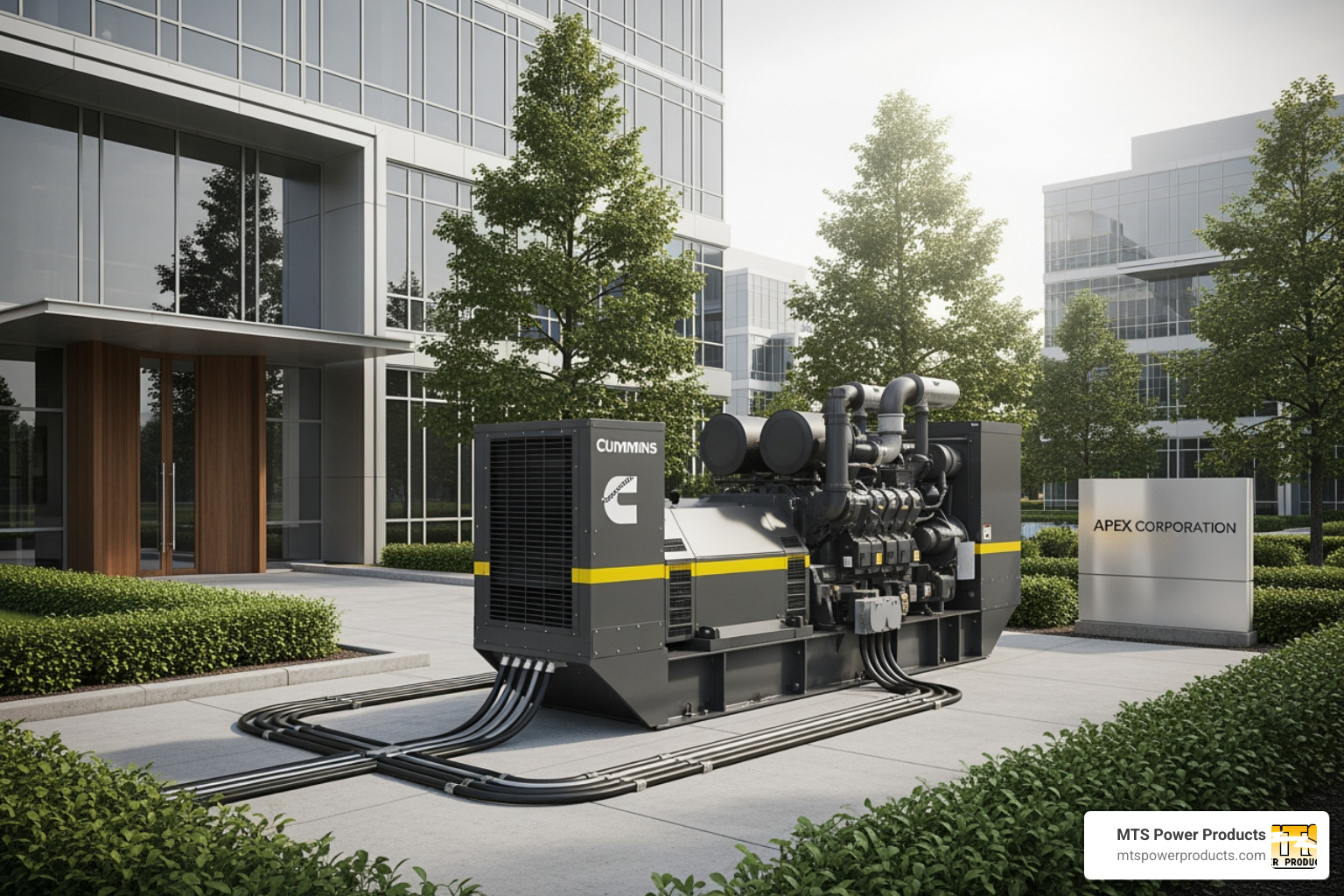
Why Home Backup Power Matters Now More Than Ever
A backup diesel generator for home is a permanently installed system that automatically supplies electricity during outages. Residential units typically range from 15kW to 48kW, costing $13,000-$30,000+ plus installation. They run on diesel from integrated tanks, providing power for 24-48 hours or more.
Quick Decision Guide:
- Small Home (Essentials): 10-15kW diesel generator ($10,000-$15,000)
- Medium Home (Most Circuits): 20-30kW diesel generator ($16,000-$20,000)
- Large Home (Whole House): 40-48kW diesel generator ($21,000-$30,000+)
- Key Diesel Advantages: Fuel efficiency, long lifespan (20k-30k hours), long fuel shelf life, lower fire risk.
- Installation Cost: Add $3,000-$10,000 for professional installation.
Power outages are more than just an inconvenience; they disrupt our entire lives. For homeowners in South Florida facing hurricane season, reliable electricity is a necessity. When the grid fails, a standby diesel generator automatically detects the outage and restores power within seconds, protecting your food, comfort, and security.
Unlike portable units, these systems are hands-free. And unlike natural gas, diesel fuel can be stored on-site for long periods without degrading, making it a robust solution for emergencies. This guide will help you choose the right diesel generator by explaining how they work, how to select the right size, and what features matter most for reliable backup power.
Understanding the Diesel Standby Generator
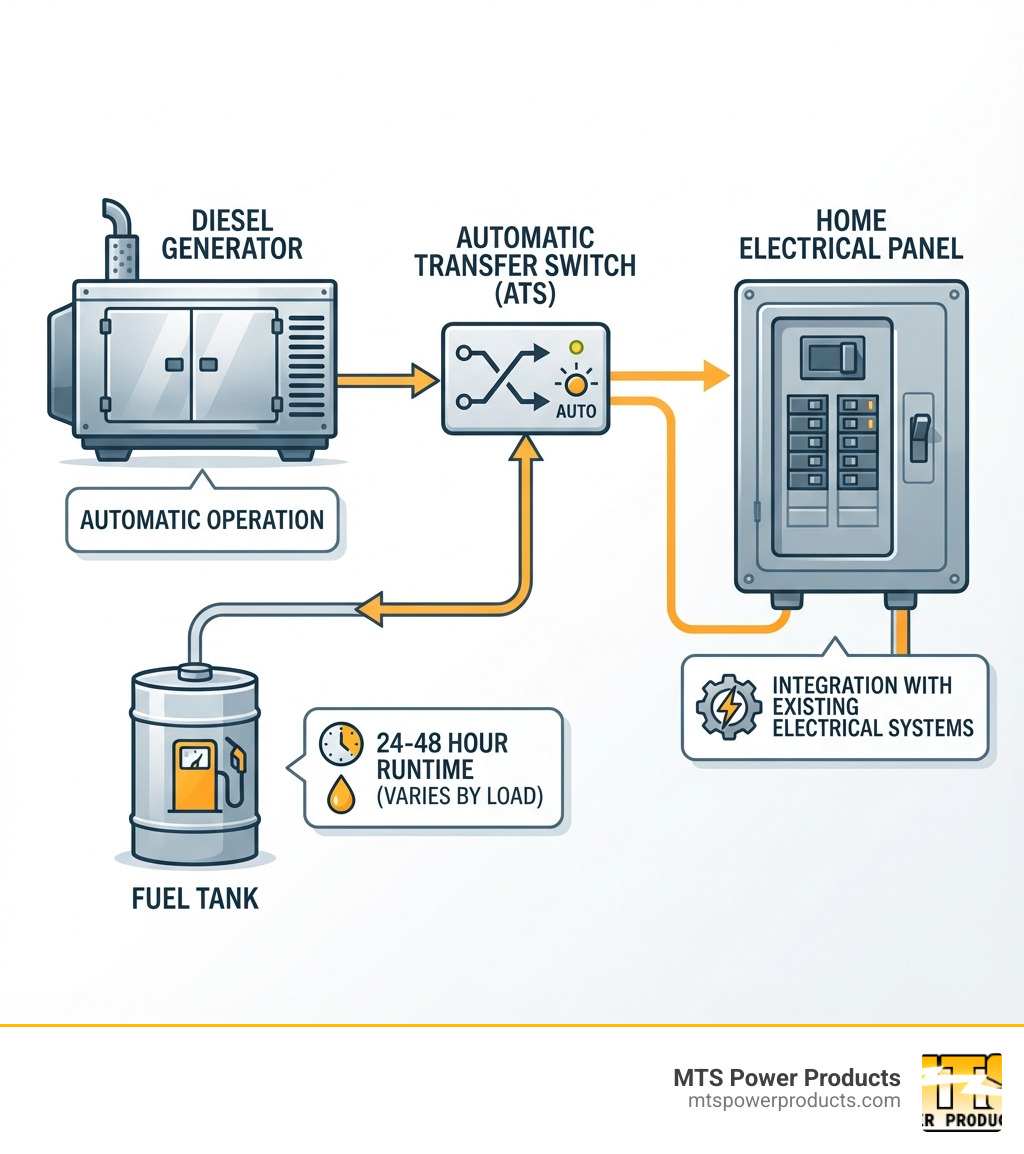
When we talk about a backup diesel generator for home, we’re referring to a complete system that integrates with your home’s electrical setup to provide seamless power when the utility grid fails.
How It Works
A diesel generator converts the chemical energy in diesel fuel into electrical energy for your home.
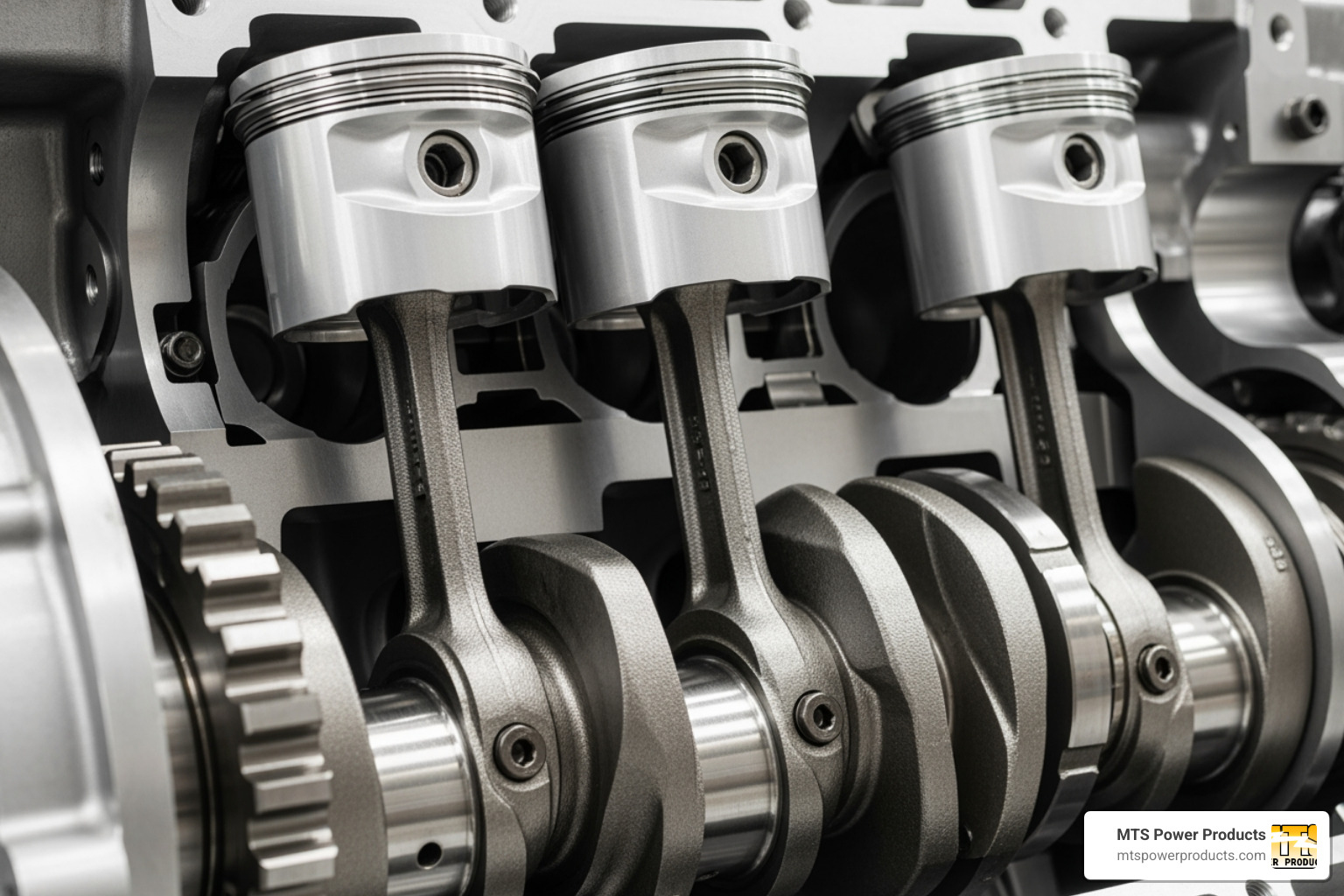
- The Engine: A diesel engine burns fuel to create mechanical energy.
- The Alternator: The engine’s mechanical energy spins an alternator, which converts it into AC (alternating current) electricity—the same type your home uses.
- Generating Electricity: The power is then routed through safety controls to your home’s electrical panel.
The Brains of the Operation: The Automatic Transfer Switch (ATS)
The key to a standby generator’s convenience is the Automatic Transfer Switch (ATS). This device is installed between your home’s electrical panel and the utility line.
- Sensing Power Loss: The ATS constantly monitors the grid. The moment it detects an outage, it acts.
- Seamless Transition: Within seconds, the ATS signals the generator to start. Once stable power is produced, the ATS disconnects your home from the grid and switches its power source to the generator. The transition is often so fast you’ll barely notice.
- Safety: Disconnecting from the grid is a critical safety feature that prevents “back-feeding” electricity onto utility lines, protecting utility workers.
- Power Restoration: When grid power returns, the ATS switches your home back, signals the generator to shut down, and resets for the next outage.
Standby vs. Portable Diesel Generators
- Standby Diesel Generators: These are the focus of our guide. They are permanently installed, connected to your home via an ATS for automatic, hands-free operation, and have large fuel tanks for extended run times (24-48+ hours).
- Portable Diesel Generators: These are smaller, wheeled units you must manually start and connect to appliances with extension cords. They have smaller tanks and offer limited, non-automatic protection.
Core Components of a Standby Diesel Generator
- Fuel Tank: An integrated tank that stores diesel fuel, determining runtime.
- Control Panel: The system’s brain for monitoring status and adjusting settings. Our McPherson Controls line features advanced programmable displays.
- Enclosure: A weather-resistant, sound-attenuating housing that protects the generator.
- Battery: A starter battery, similar to a car’s, to start the engine.
Why Choose Diesel? The Advantages for Home Backup Power
When choosing a backup generator, you’ll find options like natural gas, propane, and diesel. While each has its place, diesel offers compelling advantages, especially for homeowners in South Florida who need reliability during hurricane season.
Diesel Benefits for Home Backup
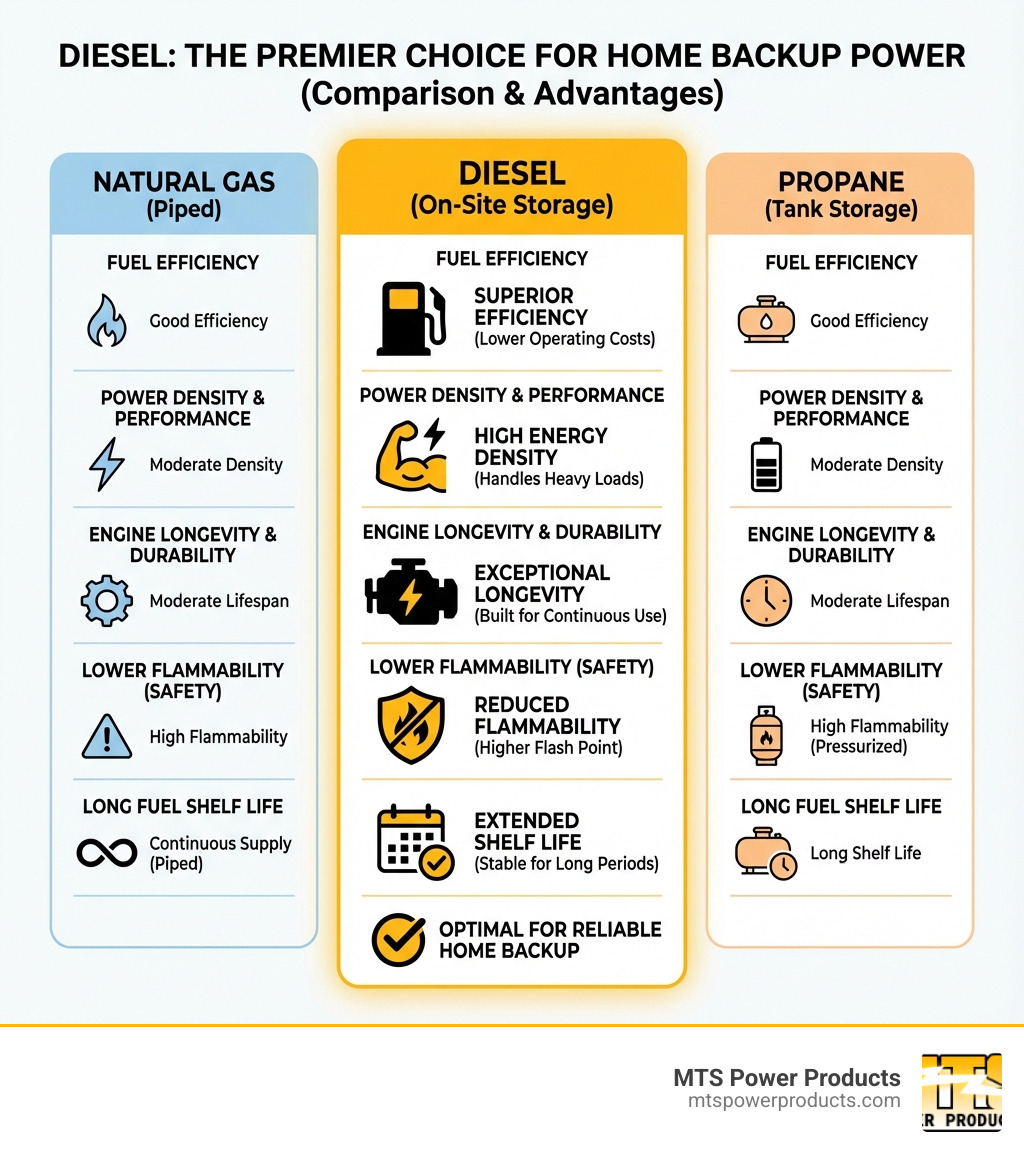
- Fuel Efficiency: Diesel engines are highly efficient, converting more fuel into usable power. This means lower operating costs, especially during long outages.
- Power Density & Performance: Diesel fuel contains more energy per gallon, allowing generators to handle large electrical loads like central air conditioners and well pumps.
- Engine Longevity and Durability: Built for heavy-duty use, diesel engines have a long lifespan. A well-maintained backup diesel generator for home can provide 20,000 to 30,000 hours of service.
- Lower Flammability (Safety): Diesel is less volatile than gasoline or propane, making it significantly safer to store on your property.
- Long Fuel Shelf Life: Unlike gasoline, diesel fuel can be stored for long periods (especially with stabilizers) without degrading. This ensures your generator is ready when an emergency strikes and fuel deliveries are disrupted.
Considerations for Your Diesel Backup Solution
While diesel is an excellent choice, keep these points in mind. You’ll need adequate space for the generator and its on-site fuel tank, and you must adhere to local storage regulations in Miami, FL. Diesel generators can have a higher initial cost than gas or propane units, but their efficiency and durability often result in a lower total cost of ownership. Like any engine, they require regular maintenance, such as filter changes and fuel polishing, to ensure reliability.
Sizing Your Fortress: How to Choose the Right Backup Diesel Generator for Home Use
Selecting the right size is the most critical step. An undersized generator won’t meet your needs, while an oversized one is inefficient and costly. The goal is to match the generator’s output (in kilowatts, or kW) to your home’s power requirements.
Essential Circuits vs. Whole-House Power
First, decide on your backup strategy:
- Essential Circuits: This economical approach powers only critical items like the refrigerator, freezer, a few lights, a well pump, and medical devices. This requires a smaller generator.
- Whole-House Power: This strategy aims to maintain your normal lifestyle by powering most or all circuits, including central AC, electric ovens, and clothes dryers. This requires a larger, more powerful generator.
Calculating Your Power Needs
To estimate your needs, you must account for both “running watts” (continuous power) and “starting watts” (the surge needed for motors in AC units or refrigerators).
- List all items you want to power.
- Find their running and starting wattages (often on the appliance label).
- Add up the total running watts of everything you’d use simultaneously.
- Add the single largest starting wattage to that total. This gives you a peak power estimate.
Sizing Chart Example (General Guidelines)
This chart offers a rough guide, but a professional assessment is always best.
- Small Homes (10-15kW): Powers essential circuits. Example: Generac Protector 15kW (RD01525) costs around $13,437 – $14,930 MSRP.
- Medium Homes (20-30kW): Handles critical appliances plus a central AC unit. Example: A Generac Protector 20kW (RD02025) is about $14,797 – $16,447 MSRP, while a 30kW (RD03022) is $16,997 – $18,887 MSRP.
- Large Homes (40kW+): Ideal for whole-house backup, running multiple AC units and all modern conveniences. Example: A Generac Protector 48kW (RD04833ADAE) is around $19,507 – $21,677 MSRP.
The Importance of a Professional Assessment
Don’t guess your power needs. We strongly recommend a professional site survey and electrical load analysis. A technician will accurately measure your home’s electrical load, account for unique appliances, and ensure your installation complies with all local codes in Miami, FL. This guarantees you invest in the right backup diesel generator for home that perfectly fits your requirements. For a wide selection of solutions, you can Shop Generators, Transfer Switches & Backup Power Solutions.
Key Features to Demand in Your Home Diesel Generator
Beyond kW output, certain features improve a generator’s performance, convenience, and safety. Here are the key attributes to look for in your backup diesel generator for home.
Power Output (kW)
As discussed, this is paramount. Your generator’s kW rating must meet your calculated needs. It’s wise to slightly oversize to accommodate future additions like a new appliance or home extension.
Fuel Tank Size
The integrated fuel tank’s size determines your generator’s runtime. Standard tanks may offer 24 hours of operation at full load, but extended run tanks can provide 48 hours or more. For hurricane season in South Florida, an extended runtime is a major advantage.
Noise Level
Modern diesel generators are quieter than you might think. Look for models with sound-attenuated enclosures that operate around 65dB or lower—comparable to a normal conversation. Some, like Generac models, feature a “Quiet-Test™” mode that runs weekly self-tests at a lower, quieter RPM.
Weatherproof Enclosure
Your generator lives outdoors, so its enclosure must be robust. In a coastal climate like Miami, FL, aluminum casings are superior for corrosion resistance. Also, look for enclosures rated to withstand high winds, a crucial feature for hurricane readiness.
Advanced Controls
The control panel is the generator’s brain. Look for features like remote monitoring (e.g., Generac’s Mobile Link™), which lets you check status from a smartphone. Our McPherson Controls line offers programmable displays and switch mechanisms for superior command and safety, integrating seamlessly with your system.
Warranty and Support
A generator is a major investment. A 5-year limited warranty is standard for reputable brands. Ensure the brand has a strong local dealer network for installation and service, like MTS Power Products, and offers 24/7 customer support for help when you need it most.
Top Backup Diesel Generators for Home Use: A 2024 Roundup
Choosing the right backup diesel generator for home means matching power output to your needs. Here are common standby diesel generator sizes to guide your search. Prices are estimates and vary by features and installation.
Category 1: Compact Diesel Generators (10-15kW)
Suited for smaller homes or essential circuit backup in medium-sized residences, these generators keep critical appliances running.
- Purpose: Powering essentials like the refrigerator, lights, furnace fan, and well pump.
- Features: Typically include electric start, sound-attenuated enclosures, and automatic operation.
- Price Range: Approximately $10,000 – $15,000 for the unit.
- Example: A Generac Protector 15kW Standby Diesel Generator (RD01525) is listed around $13,437 – $14,930 MSRP.
Category 2: Medium Standby Diesel (20-30kW)
This popular range for medium homes balances comprehensive backup and cost, handling most circuits plus a central AC unit.
- Purpose: Powering a significant portion of a home, including one central AC unit and other large appliances.
- Features: Automatic operation, advanced controls, remote monitoring, and optional extended run fuel tanks.
- Price Range: Unit costs are typically $16,000 – $20,000.
- Example: A Generac Protector 20kW (RD02025) costs about $14,797 – $16,447 MSRP, while a 30kW model (RD03022) is in the $16,997 – $18,887 MSRP range.
Category 3: Whole-House Standby Diesel (40kW+)
For large homes or those wanting uninterrupted power for every convenience, these units handle heavy loads, including multiple AC units.
- Purpose: Provides full whole-house backup, allowing you to maintain your lifestyle without compromise.
- Features: High-capacity engines, robust enclosures, advanced diagnostics, and commercial-grade components.
- Price Range: Units start around $21,000 and can exceed $30,000+.
- Example: A Generac Protector 48kW (RD04833ADAE) is priced around $19,507 – $21,677 MSRP. Cummins also offers a 50kW Quiet Connect Diesel Generator for around $25,836.
We offer a complete range of custom solutions. You can Explore various models on our website.
Essential Questions to Ask a Dealer
Before buying, ask your dealer:
- What is the total installed cost (generator, ATS, electrical, pad, permits)?
- What is the estimated fuel consumption at 50% and 100% load?
- Does this model comply with local noise ordinances in Miami, FL?
- What are the maintenance requirements and annual service costs?
- What does the warranty cover (parts and labor) and who performs the service?
- Are remote monitoring options available and what are the costs?
- What is the installation timeline?
- Are financing options available?
- Can you provide local references?
For comprehensive information, you may also review competitor diesel generator options.
Installation, Maintenance, and Lifespan
Proper installation and ongoing care are essential to get decades of reliable performance from your backup diesel generator for home.
Installation and Regulations
Standby generator installation is not a DIY project. Professional installation is required for safety, performance, and compliance with local codes in Miami, FL.
- Professional Installation: Always use certified electricians and licensed generator installers. At MTS Power Products, we can connect you with experienced professionals.
- Siting and Permits: Generators must be installed outdoors on a concrete pad, a safe distance from windows and doors, per local building codes. Installation requires permits, and your installer will handle this process. Ensure your generator is UL 2200 listed for safety compliance.
Maintenance Tips for Your backup diesel generator for home
Regular maintenance is the key to longevity. Like a car, a generator needs routine care.
- Automatic Self-Tests: Your generator should run a weekly or bi-weekly self-test to ensure it’s ready. Features like “Quiet-Test™” mode reduce noise during these checks.
- Fluid and Battery Checks: Periodically check engine oil and coolant levels. Keep the starter battery clean and fully charged.
- Annual Service: Schedule an annual service with a qualified technician for an oil and filter change, and a comprehensive inspection.
- Fuel Care: For long-term storage, diesel fuel may require “polishing” (filtering) to remove contaminants and ensure it’s ready for an emergency.
Lifespan of a backup diesel generator for home
A well-maintained diesel generator is a long-term asset. Diesel engines are often rated for 20,000 to 30,000 hours of operation. For typical residential backup use (a few hundred hours a year at most), this translates to decades of reliable service. The single most important factor influencing longevity is adhering to the manufacturer’s recommended maintenance schedule.
Frequently Asked Questions about Home Diesel Generators
Here are answers to some of the most common questions we hear from homeowners considering a backup diesel generator for home.
How much does it cost to install a whole-house diesel generator?
Installation is a separate, significant expense. Expect to add $3,000 to $10,000+ to the generator’s purchase price. This cost covers:
- The Automatic Transfer Switch (ATS) and complex electrical work.
- Running wiring and conduit.
- Pouring a concrete pad for the generator.
- Securing local permits and inspections in Miami, FL.
- Site preparation, such as trenching.
As Cummins notes for its generators, the MSRP doesn’t include the ATS or installation, highlighting these as additional costs. We provide transparent quotes covering the entire project.
Are diesel generators too loud for a residential neighborhood?
Modern diesel generators are surprisingly quiet. They come with advanced sound-attenuated enclosures that significantly reduce noise. Many residential models operate at around 65dB or lower, which is comparable to the sound of a normal conversation or an air conditioner. Features like “Quiet-Test™” mode run weekly self-tests at an even quieter RPM. Your installer will be familiar with local noise ordinances in Miami, FL, and can ensure proper placement to minimize sound impact.
How long can a diesel generator run continuously?
The runtime of a backup diesel generator for home depends on two main factors:
- Fuel Tank Size: Standard tanks often provide 24 hours of runtime at full load. Many models, like the Generac Protector series, offer extended run tanks that can power your home for 48 hours or more.
- Load: The amount of power you’re drawing affects fuel consumption. A generator running at 50% load will run much longer on a tank of fuel than one at 100% load.
For extended outages, like those during a South Florida hurricane, having a refueling plan is crucial. Because diesel fuel has a long shelf life, storing extra fuel safely on-site is a viable strategy.
Conclusion: Secure Your Power, Secure Your Peace of Mind
A backup diesel generator for home is a critical investment in your family’s safety and comfort. In a world of increasingly frequent power outages, diesel generators offer a robust, reliable solution, particularly for homeowners in Miami, FL, facing hurricane season.
Key takeaways:
- Sizing is Crucial: A professional load assessment ensures you get the right generator for your needs, whether for essential circuits or whole-house power.
- Demand Key Features: Prioritize models with sound-attenuated, weatherproof enclosures, remote monitoring, and strong warranties.
- Rely on Professionals: Professional installation and regular maintenance are non-negotiable for safety, compliance, and longevity.
At MTS Power Products, we are a Miami-based manufacturer and provider of professional-quality generator sets, control panels, and automatic transfer switches. Our McPherson Controls line offers advanced programmable displays for superior control and safety. Centrally located near the Miami International Airport and the Port of Miami, we offer customized solutions and worldwide delivery.
Secure your power and peace of mind. Explore our complete range of diesel-powered generators to find the right solution for your home.