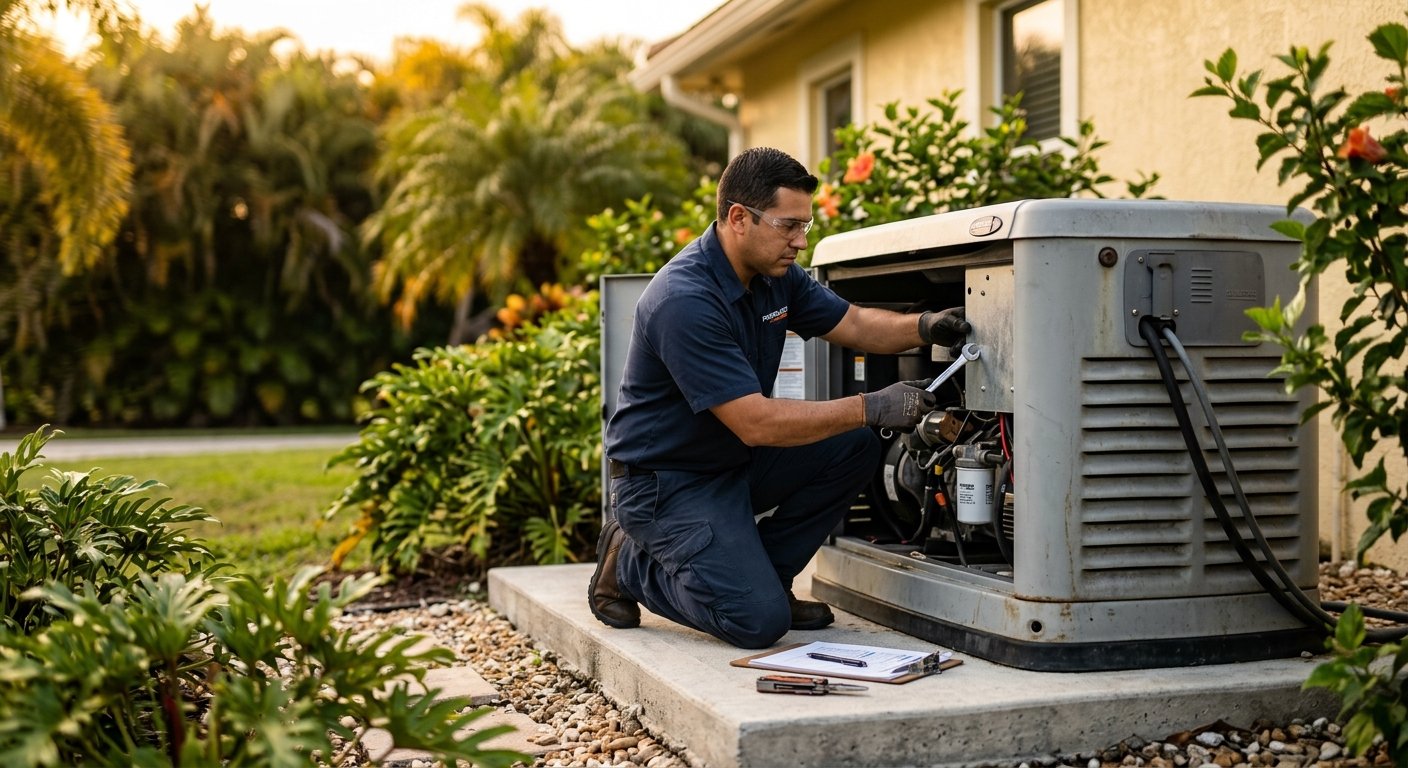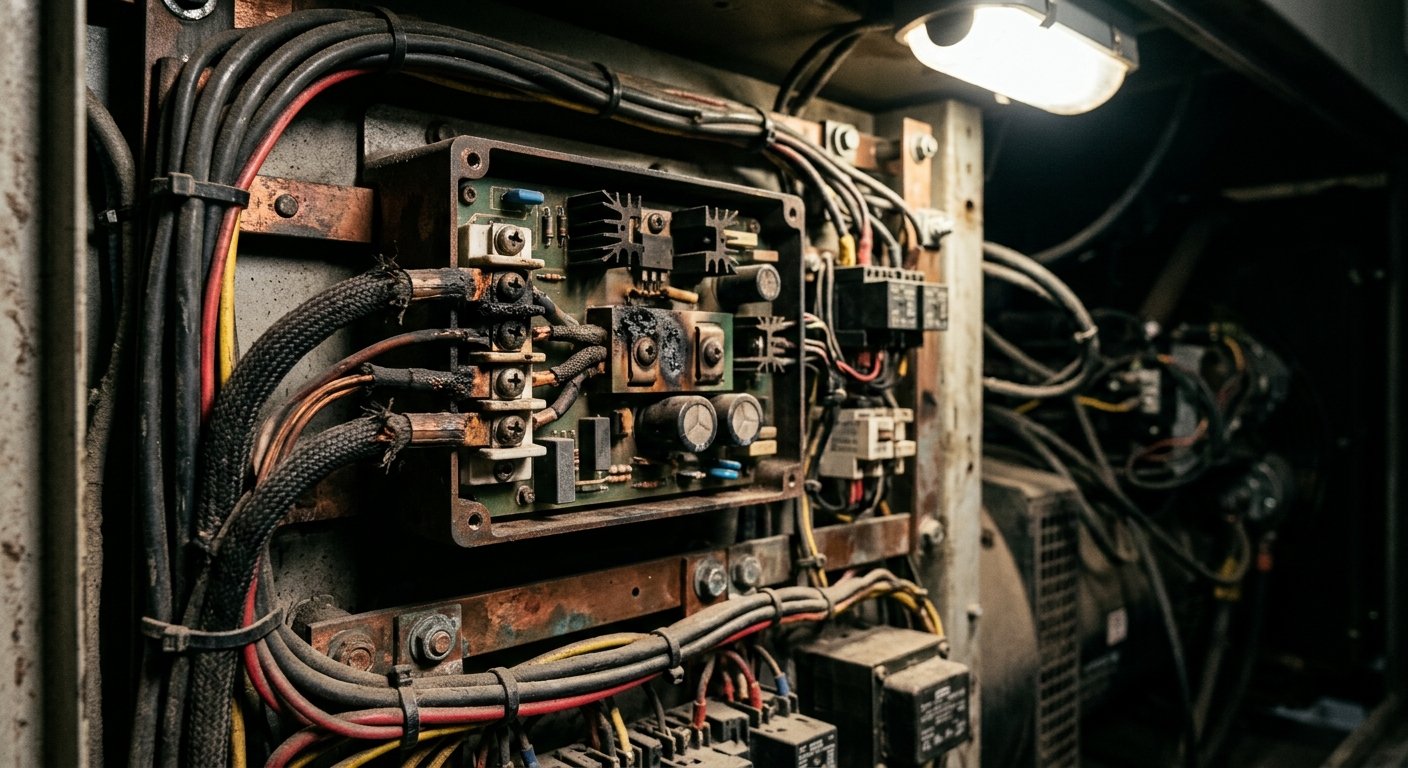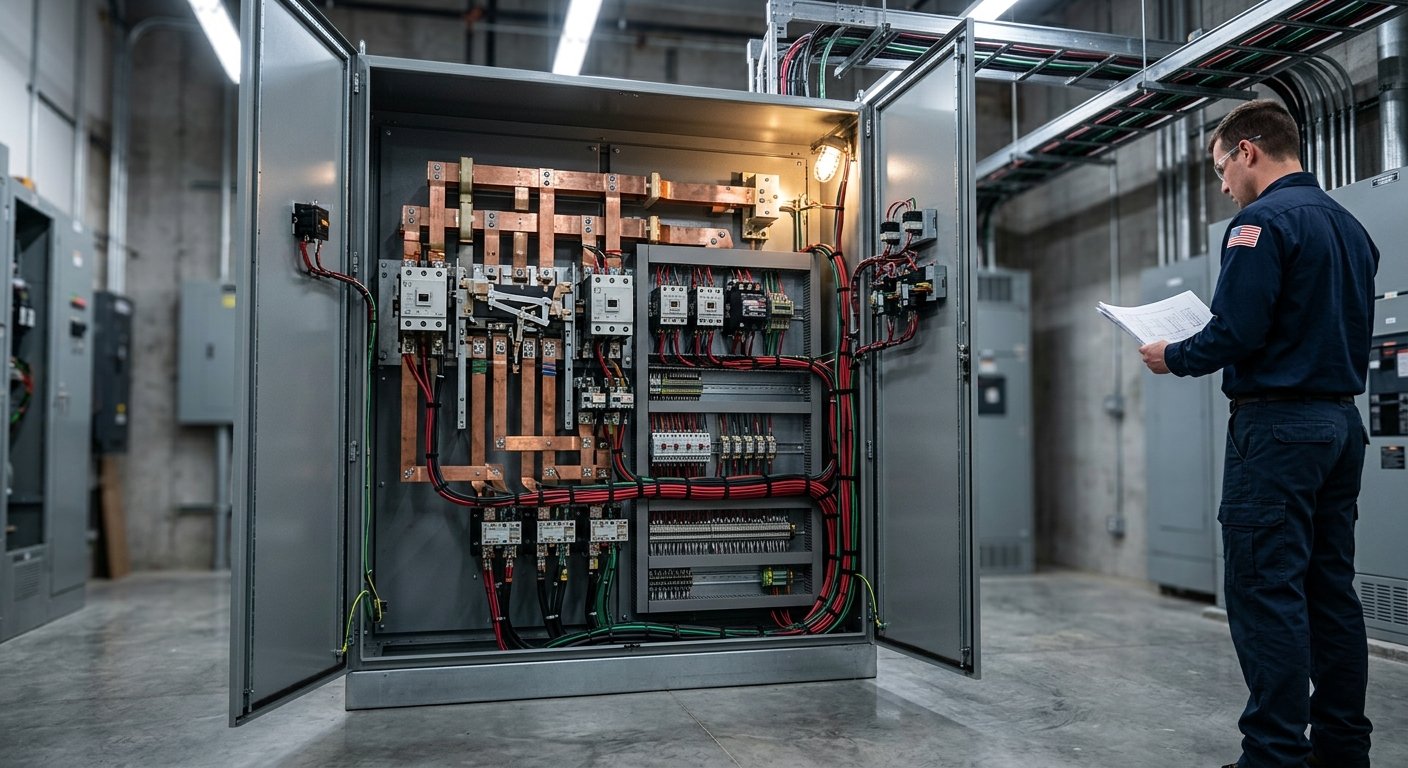



A generator changeover switch 3 phase is a critical device that safely transfers electrical power between your utility supply and a backup generator. In commercial and industrial settings, where power outages mean lost revenue and productivity, these switches are essential for business continuity.
Unlike single-phase switches used in homes, three-phase switches are built to handle the higher power demands of commercial equipment. When the power goes out, a three-phase changeover switch ensures your critical operations keep running by automatically or manually switching power sources.
Key Features of 3-Phase Changeover Switches:
The global automatic transfer switch market is projected to reach USD 2.3 billion by 2030, driven by the critical need for backup power. Whether you’re managing a manufacturing plant that can’t afford downtime or a commercial building with essential systems, understanding these switches is key to protecting your operations.
This guide breaks down everything you need to know: manual vs. automatic switches, correct system sizing, leading brands, and installation requirements. We’ll help you make an informed decision that keeps your facility powered when it matters most.
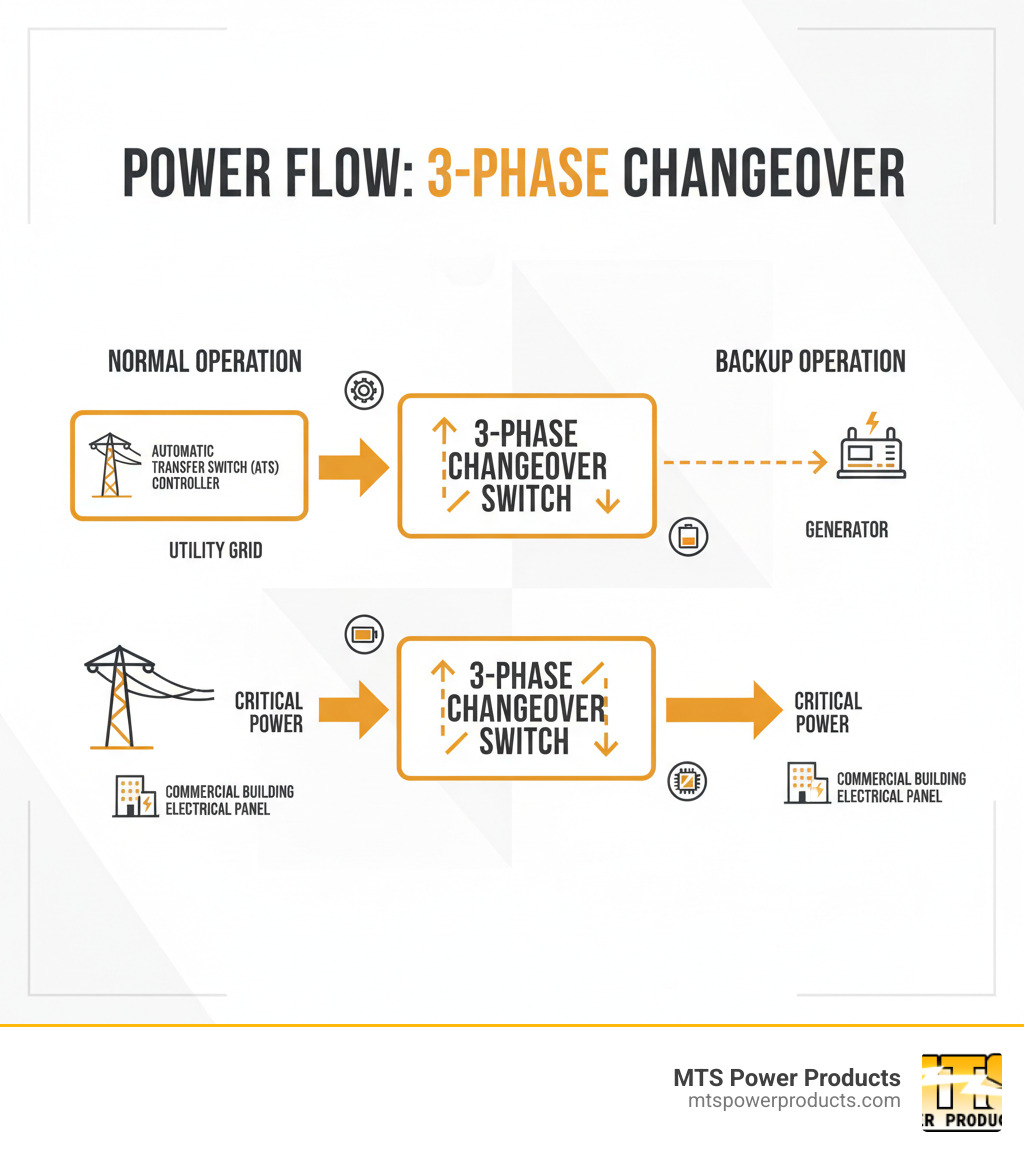
Key terms for generator changeover switch 3 phase:
To choose the right backup power system, you must understand the difference between single-phase and three-phase power. This distinction clarifies why a generator changeover switch 3 phase is vital for your business.
Single-phase power is standard in most homes, delivering electricity with a single alternating current waveform. It’s sufficient for residential appliances like refrigerators and laptops.
Three-phase power is the workhorse of industry. It uses three separate, offset alternating current waveforms to create a constant, smooth, and highly efficient flow of electricity. This steady power is exactly what’s needed for industrial machinery, large HVAC systems, and data centers. Think of it this way: if single-phase power is like pedaling a bike with one leg, three-phase is like having three legs pedaling continuously. The result is more power, a balanced load, and greater power consistency for your commercial power needs.
Transfer switches for these systems are fundamentally different. A single-phase switch handles lower voltages and simpler wiring. A three-phase switch must manage three hot lines simultaneously, coordinate higher voltages, and maintain the critical balance between phases. This complexity requires more robust components and sophisticated controls.
| Parameter | Single-Phase Transfer Switch | Three-Phase Transfer Switch |
|---|---|---|
| Voltage | 120V, 240V | 208V, 240V, 480V, 600V |
| Wiring | 2 or 3 wires (1 hot, 1 neutral, ground) | 3 or 4 wires (3 hot, 1 neutral, ground) |
| Load Capacity | Lower, typically up to 200A | Higher, 100A to 800A and beyond |
| Applications | Residential, small offices, light commercial | Commercial, industrial, data centers, hospitals |
| Power Delivery | Pulsating, less consistent | Constant, smooth, more efficient |
| Relative Cost | Lower | Higher |
The bottom line is simple: if your facility runs on three-phase power—as most commercial and industrial facilities do—you absolutely need a three-phase transfer switch. A single-phase switch cannot do the job safely or reliably. It’s a matter of matching the switch to your electrical service type. To learn more, check out more info about transfer switches to understand sizing, installation, and features.
When selecting a generator changeover switch 3 phase, the first question is: how quickly do you need power restored during an outage? Both manual and automatic switches safely transfer power from the utility to your generator, but they operate in fundamentally different ways.
A manual switch is like a stick shift—it requires you to be there to operate it. An automatic switch handles the transfer for you. Your choice depends on your operational requirements, downtime tolerance, and budget. For critical operations where minutes of downtime are costly, automatic switches are a necessity. For facilities where a brief, supervised interruption is acceptable, manual switches are a smart, cost-effective solution.
The difference in power outage response can make or break your business continuity plan. For a deeper dive into automatic systems, see our guide on power-shift-all-you-need-to-know-about-automatic-transfer-switches.
Manual transfer switches require a person to physically operate a physical lever to disconnect from the utility and connect to the generator. This straightforward, mechanical process doesn’t rely on complex electronics, which is a key strength. Fewer electronic components mean fewer potential points of failure and simpler troubleshooting.
The primary appeal of manual switches is cost-effectiveness. They are significantly less expensive than automatic units, making them ideal for businesses on a tight budget or those that can tolerate some downtime.
The trade-off is guaranteed downtime during switchover. An operator must start the generator, wait for it to stabilize, and then manually operate the switch. This process can take several minutes, which may be too long for some businesses. Manual intervention also means a trained person must be on-site and available during an outage. For facilities that are unstaffed at night or on weekends, this can lead to extended outages.
For operations where immediate power restoration isn’t mission-critical, manual switches offer solid reliability at a lower price. The 3KC0 manual transfer switching equipment MTSE from Siemens is a robust example, and we offer our own line of professional-grade McPherson Controls basic transfer switches.
If downtime is not an option—if every second without power means data loss, halted production, or compromised safety—an automatic transfer switch (ATS) is the only answer. An ATS provides utility power monitoring 24/7. The moment it detects a voltage drop or complete outage, it acts immediately without human intervention.
The ATS sends a start signal to your generator. Once the generator produces stable power (usually in 10-30 seconds), the ATS automatically completes the transfer. This ensures uninterrupted power for your critical systems, often with just a brief flicker. For data centers, hospitals, and manufacturing facilities, this seamless response is invaluable.
Safety is another major advantage. An ATS is designed with interlocks to prevent “backfeeding”—a dangerous condition where generator power flows back to the utility grid. Many modern ATS units, including our McPherson Controls line, also feature remote monitoring and programmable displays. This allows you to check system status, receive alerts, and adjust settings from anywhere, providing peace of mind.
A modern ATS controller display, like those on our McPherson Controls TCV2 units, provides real-time status and control. Learn about ATS controls.
While the upfront cost is higher, the cost vs. convenience calculation heavily favors automatic switches for critical applications. When you factor in the cost of downtime, an ATS often pays for itself quickly. With an automatic switch, your generator kicks in and operations continue, whether anyone is on-site or not.
After deciding between manual and automatic, you must match a generator changeover switch 3 phase to your facility’s specific needs. The right specifications ensure your switch integrates seamlessly, withstands your environment, and supports future growth. Our automatic-transfer-switch-generator-guide offers a detailed walkthrough of this process.
Getting the voltage and amperage right is non-negotiable. Your three-phase system likely runs at 208V, 240V, or 480V. The transfer switch must match your system voltage exactly for safe and efficient operation.
For amperage, three-phase switches typically range from 100A to 800A and beyond. Proper sizing is critical. We calculate your total continuous load and then factor in surge loads from equipment like large motors, which can draw several times their normal current on startup. Your switch must handle these surges without tripping.
We always recommend sizing slightly above your current needs. Planning for future expansion now saves you from a costly upgrade later. For facilities with substantial power needs, explore high-amperage ATS options that can manage loads from 2000A to 4000A.
In South Florida, equipment must be protected from humidity, salt air, and rain. NEMA ratings indicate an enclosure’s level of protection.
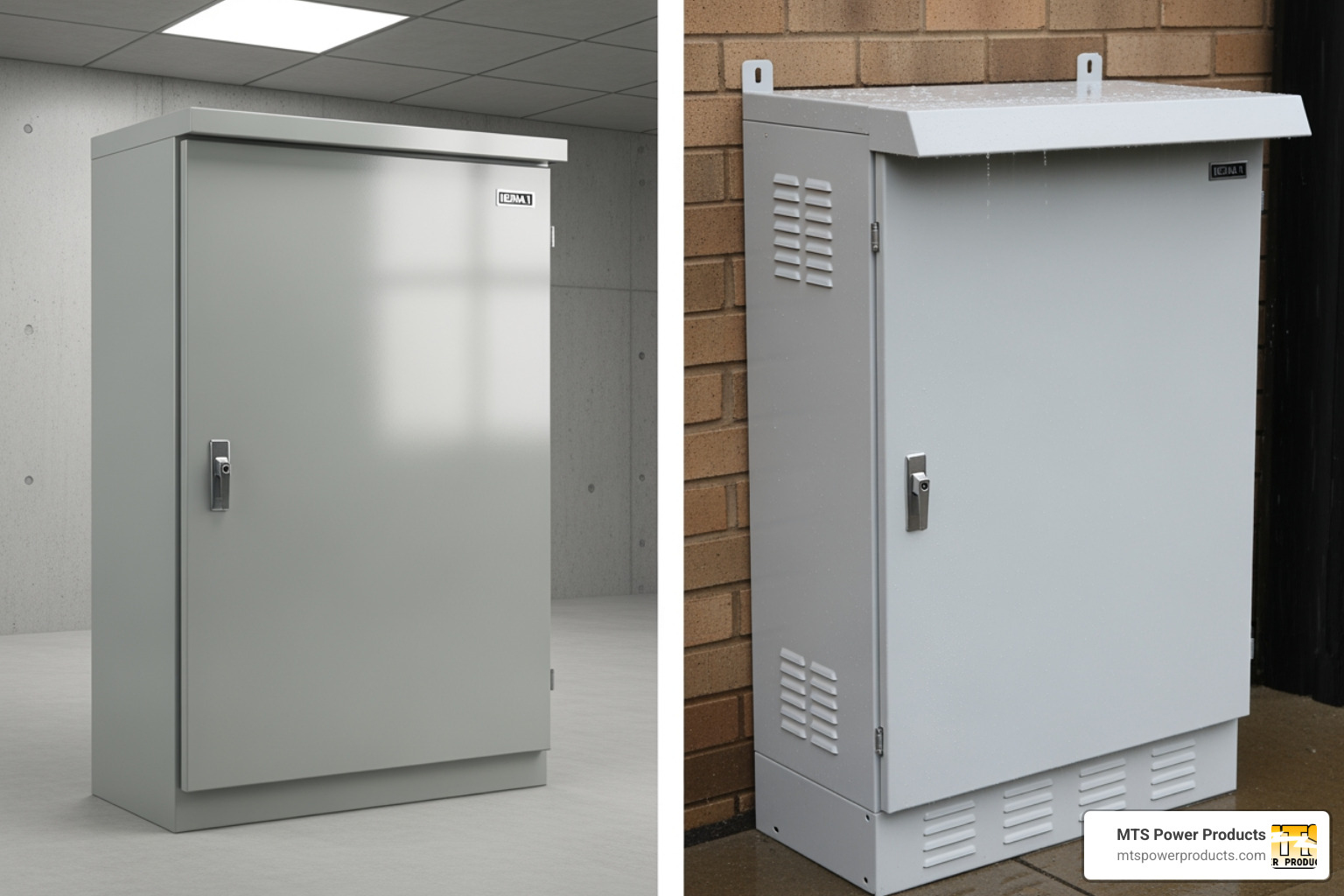
A comparison of a NEMA 1 (indoor) and a NEMA 3R (outdoor) enclosure, highlighting the latter’s weather-resistant features.
How the switch transfers power is a key consideration. There are two main types:
Load shedding and load management are advanced features that allow your generator changeover switch 3 phase to prioritize critical circuits. When on generator power, the ATS can automatically disconnect non-essential loads (e.g., break room appliances) to ensure critical systems receive full power. This allows you to use a smaller, more efficient generator while still protecting what matters most.
You can choose between whole-house coverage, which powers everything, or essential circuits only, which focuses backup power on critical systems. We help clients decide based on their operational needs and budget. Our McPherson Controls line includes advanced load management features, giving you precise control during an outage.
Choosing the right generator changeover switch 3 phase involves more than just specs; brand reputation, reliability, and support are crucial. The market includes major players like Generac, Kohler, Eaton, and Schneider Electric, each with distinct strengths.
Warranties typically range from 2 to 5 years, and most reputable brands offer solid technical support and parts availability. Cost varies widely based on amperage, features, and brand. A basic manual switch is the most economical option, while a feature-rich automatic unit is a larger investment. The goal is to balance your budget with the long-term value of uninterrupted power. You can Shop Generator Automatic Transfer Switches from General Power to see the range of available options.
Generac is well-known in the residential and light commercial markets. Their transfer switches integrate seamlessly with their generators, simplifying installation.
The RTS Series is a popular open transition line for three-phase applications, built to handle all load classes. Many Generac ATS units include load management, helping to optimize generator performance. For example, their 100A Service Entrance Rated Three Phase Automatic Transfer Switch (model RTSW100G3) includes load shedding and a NEMA 3R enclosure. Generac offers a 5-Year Limited Warranty on many models, like the 800-Amp 277/480-Volt 3-Phase Generator Transfer Switch (Model RTSN800K3). Explore their range at Transfer-Switches | Miami, FL | Generac Power Systems.
Kohler is synonymous with reliable power equipment. Their transfer switches are known for customization and flexibility. The RXT and KSS series cover a wide range of needs, with the KSS series allowing for individual option specification, which is invaluable for complex installations.
Many Kohler switches are available as service-rated options, functioning as the main service disconnect to simplify installation. Most of their three-phase switches come standard with NEMA 3R enclosures, which is essential for South Florida’s climate. Kohler’s warranties range from 2 to 5 years. Prices vary by capability, from the Kohler RXT-JCTC-0100A (100A, 3-phase) at around $1,339 to the KUS-DCTC-800WS (800A, service-rated) at $21,489.
For large industrial facilities with demanding requirements, we often recommend Eaton and Schneider Electric. These manufacturers specialize in heavy-duty, industrial-grade solutions.
High amperage capacity is their specialty. Eaton’s enclosed changeover switches are available up to 100A in their T5 series, as seen at Eaton Enclosed Changeover Switches | iLECSYS. Schneider Electric’s manual source changeover switch INS630 handles up to 630A in a 3-pole configuration, showcasing their industrial capability. Their robust construction and adherence to IEC standards like IEC 60947-3 ensure top-tier safety and performance.
At MTS Power Products, we offer our own line of professional-grade solutions through McPherson Controls. Our ATS units are designed for demanding commercial and industrial clients, incorporating advanced features like remote monitoring and programmable displays. As a direct manufacturer, we provide cutting-edge technology and personalized support, building the exact generator changeover switch 3 phase your facility needs.
Correctly installing your generator changeover switch 3 phase is as important as selecting the right model. Professional installation and adherence to safety codes are non-negotiable for a reliable backup power system. For detailed technical guidance, our how-to-wire-an-automatic-transfer-switch-for-a-generator article provides a step-by-step overview.
Automatic transfer switches are essential wherever three-phase power meets mission-critical operations. Key applications include:
Installing a three-phase ATS is a complex job that requires a licensed electrician. They must understand three-phase wiring, load balancing, and grounding. All installations must comply with the National Electrical Code (NEC) and local codes, requiring permits to ensure safety and pass inspection.
Key challenges include:

A certified electrician wiring a generator changeover switch 3 phase, highlighting the expertise required for a safe installation. For more, View our installation guide.
At MTS Power Products, we support you through the entire process. Our Miami location allows for quick delivery locally and worldwide. We are your direct source for professional-quality solutions that work right the first time.
Here are answers to common questions we receive about generator changeover switch 3 phase units.
Determining the correct amperage is crucial. The process involves a few key steps:
No, you absolutely cannot. A 3-phase switch is designed for three hot lines, while a single-phase system uses one. Attempting to mix them is dangerous and will lead to severe electrical issues.
The difference lies in how the switch handles the neutral conductor.
Choosing between them depends on your electrical system and local codes. Our experts can help you determine the correct type for your application.
Choosing the right generator changeover switch 3 phase is a critical decision for protecting your facility from power outages. Let’s recap the key takeaways.
The first choice is between manual and automatic transfer switches. While manual switches offer upfront cost savings, automatic systems provide the seamless power continuity that most commercial and industrial operations require. For critical facilities like hospitals or data centers, an automatic system is essential.
Next, getting the specifications right is vital. You must match the amperage and NEMA rating to your facility’s power demands and environment. An undersized switch will fail, and the wrong enclosure will leave your investment vulnerable to the weather.
Finally, professional installation cannot be overstated. A three-phase ATS involves complex wiring and must adhere to the National Electrical Code and local regulations. This is a job for a licensed electrician to ensure safety and reliability.
At MTS Power Products, we are your direct source for professional-grade generators, control panels, and automatic transfer switches. Our in-house McPherson Controls line offers advanced features like remote monitoring and programmable displays, designed for demanding commercial clients.
Located minutes from the Miami International Airport and the Port of Miami, we serve clients locally and ship worldwide. There is no better company in South Florida to provide custom generators and transfer switches.
Ready to ensure your facility never goes dark? Explore our comprehensive range of generator automatic transfer switches to find the perfect solution. Our team is here to help—because when the lights go out, we make sure yours come right back on.